

Social media campaign ideas work best when you treat them like measurable experiments, not random bursts of content. In practice, that means picking one goal, one audience, one primary metric, and a clear offer or story. Before you brainstorm formats, lock the basics: what action should a person take, and what would convince them to do it today. Then you can choose a campaign structure that matches the buying cycle, your budget, and the platform’s strengths. This guide gives you ready-to-run campaign concepts, plus the math and checklists to plan, price, and evaluate them.
Start with the campaign math and key terms
If you cannot define success in numbers, you will end up debating “vibes” in reporting. So first, align on a small set of terms and how you will calculate them. Use these definitions in your brief and reporting doc so creators, agencies, and internal stakeholders speak the same language.
- Reach – unique people who saw the content at least once.
- Impressions – total views, including repeat views by the same person.
- Engagement rate – engagements divided by impressions or reach (pick one and stick to it). A common formula is: (likes + comments + shares + saves) / impressions.
- CPM (cost per mille) – cost per 1,000 impressions. Formula: CPM = (spend / impressions) x 1000.
- CPV (cost per view) – cost per video view. Formula: CPV = spend / views.
- CPA (cost per acquisition) – cost per purchase, signup, or other conversion. Formula: CPA = spend / conversions.
- Whitelisting – the brand runs paid ads through a creator’s handle (often called “creator licensing”). This usually requires extra permissions and a fee.
- Usage rights – permission for the brand to reuse creator content (for ads, email, website, etc.) for a defined time and scope.
- Exclusivity – the creator agrees not to promote competitors for a set period and category. This reduces their earning options, so it should be paid.
Example calculation: you spend $2,000 boosting a creator video that gets 250,000 impressions and 1,000 link clicks. Your CPM is (2000 / 250000) x 1000 = $8. If 40 purchases happen, your CPA is 2000 / 40 = $50. Those two numbers tell different stories, so decide upfront which one is the primary KPI.
Social media campaign ideas by objective: pick one primary KPI
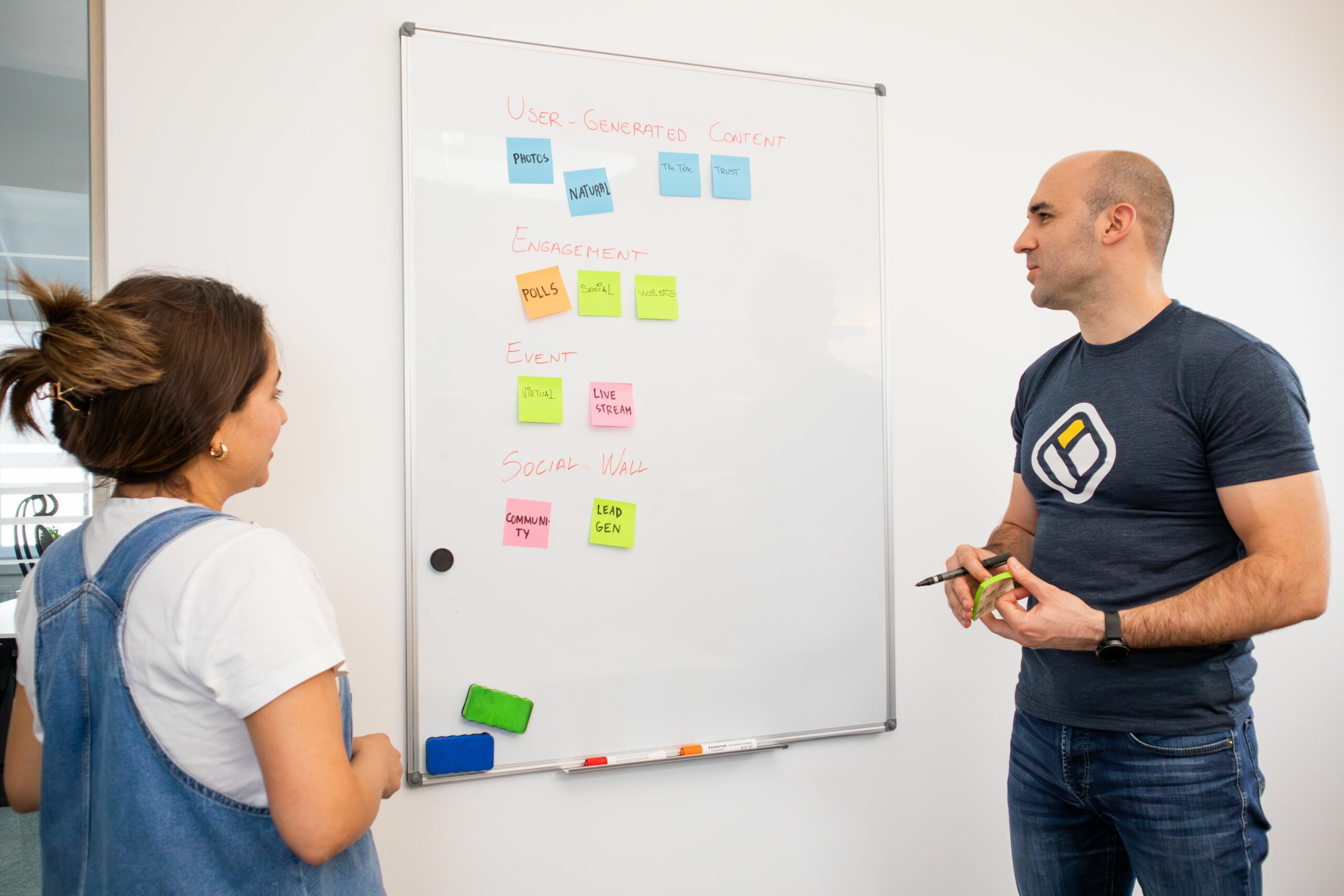
Most campaigns fail because they try to do awareness, consideration, and conversion in one creative concept. Instead, choose an objective and a primary KPI, then select a campaign format that naturally produces that outcome. The list below is designed so you can match “what we need” to “what we run” without overthinking it.
- Awareness (primary KPI: reach or CPM) – run a creator-led “problem story” series, a trend remix, or a behind-the-scenes drop.
- Consideration (primary KPI: video completion rate, saves, clicks) – run comparisons, tutorials, myth-busting, or a live Q&A with pinned links.
- Conversion (primary KPI: CPA, ROAS, conversion rate) – run limited-time bundles, creator-specific landing pages, or whitelisted Spark Ads/Branded Content Ads.
- Retention (primary KPI: repeat purchase rate, email signups, community growth) – run UGC challenges, customer spotlights, and “how to get more value” content.
Takeaway: write your KPI at the top of the brief in one line, then ban any idea that does not plausibly move that metric. If you want more planning templates and measurement tips, keep a tab open on the InfluencerDB Blog and build your internal playbook as you test.
15 campaign formats you can launch in 30 days
These formats are built for speed: each has a clear hook, a production approach, and a measurement plan. Mix two formats at most per month so you can learn what actually drives results. Also, reuse winning scripts across creators instead of constantly reinventing concepts.
- Creator cold open demo – first 2 seconds show the outcome, then the steps. Best for TikTok and Reels. Measure: 3-second view rate, completion rate, clicks.
- Before and after proof – show a transformation with timestamps or receipts. Measure: saves, comments asking “how,” landing page CVR.
- Myth vs fact carousel – 5 to 8 slides, each addressing one misconception. Measure: saves, shares, profile visits.
- “I tried it for 7 days” diary – daily short clips stitched into one recap. Measure: returning viewers, watch time, branded search lift.
- Price breakdown transparency – explain what you get for the price, who it is for, who should skip. Measure: clicks, qualified comments, CPA.
- Duet or stitch reactions – react to customer questions or trending takes, then demonstrate. Measure: engagement rate and follower growth.
- Live shopping Q&A – creator hosts, brand provides talking points and offers. Measure: live peak viewers, click-through, conversions.
- Challenge with a constraint – “make a meal in 10 minutes,” “style one jacket 3 ways.” Measure: UGC volume, hashtag views, reach.
- Micro-influencer neighborhood rollout – 10 to 30 small creators in one city or niche. Measure: CPM, local store visits, coupon redemptions.
- Giveaway with qualification – entry requires a meaningful action (quiz, email signup), not just “tag 3 friends.” Measure: CPA, lead quality.
- Expert co-sign – partner with a credentialed voice for trust. Measure: saves, click-to-purchase rate.
- Customer spotlight series – real customers explain why they switched. Measure: comment sentiment, conversion rate.
- UGC casting call – recruit creators with a prompt and pay a flat fee per asset. Measure: asset volume, ad performance when repurposed.
- Seasonal “starter kit” – bundle content around a moment: back-to-school, summer travel, new job. Measure: AOV, CPA.
- Referral code ladder – creators unlock higher commission tiers based on performance. Measure: incremental sales, creator retention.
Takeaway: for each format, write one sentence that describes the hook and one sentence that describes the proof. If you cannot state both, the concept is not ready to brief.
Planning framework: brief, timeline, and asset checklist
A strong campaign brief is short, specific, and measurable. It should tell creators what matters without scripting every word. To keep quality consistent across multiple creators, standardize the inputs and let creators own the delivery.
| Brief section | What to include | Decision rule |
|---|---|---|
| Objective and KPI | One goal, one primary metric, target benchmark | If the KPI is not measurable in-platform or via links, revise it |
| Audience | Who it is for, pain point, context of use | If you cannot name a “moment,” the creative will be generic |
| Offer | Discount, bundle, free trial, shipping terms, deadline | If there is no reason to act now, expect weaker conversion |
| Key messages | 3 bullets max: benefits, proof, differentiator | If you need 6 points, you need multiple posts |
| Do and do not | Claims to avoid, brand safety, competitor mentions | If legal review takes days, pre-approve claim language |
| Tracking | UTM links, codes, landing pages, attribution window | If tracking is not ready 48 hours before posting, delay launch |
Now map the work to a simple timeline. Even a small campaign benefits from owners and deliverables, especially when you add whitelisting or usage rights.
| Phase | Tasks | Owner | Deliverables |
|---|---|---|---|
| Week 1 | Pick objective, shortlist creators, confirm budget | Marketing lead | Creator list, KPI targets |
| Week 2 | Send brief, negotiate terms, finalize tracking | Influencer manager | Signed agreements, UTM sheet |
| Week 3 | Content drafts, review, revisions, whitelisting setup | Creator + brand | Approved assets, ad permissions |
| Week 4 | Publish, monitor comments, optimize paid support | Community + paid social | Live posts, optimization notes |
| Post-campaign | Report, learnings, reuse plan, creator rebook | Analyst | Performance report, next test plan |
Takeaway: treat the brief as a contract for outcomes and constraints. If you want creativity, be strict about the goal and flexible about the script.
Budgeting and pricing: how to compare creators and formats
Pricing is messy because you are buying both distribution and production. To make it comparable, translate proposals into effective CPM, CPV, and CPA expectations. You will still pay for talent and fit, but at least you will know when a quote is wildly out of range for the expected reach.
Use this quick method:
- Estimate expected impressions (use past averages, not follower count).
- Compute effective CPM: (fee / expected impressions) x 1000.
- Add fees for add-ons: usage rights, whitelisting, exclusivity, rush turnarounds.
- Decide your ceiling CPM or CPA based on your margins and funnel conversion rates.
Example: a creator charges $1,200 for one Reel. You expect 60,000 impressions. Effective CPM is (1200 / 60000) x 1000 = $20. If you also need 3-month paid usage rights for $600, your all-in fee is $1,800 and effective CPM becomes $30. That may still be worth it if the content performs well as an ad, but now you can compare it to other options.
For ad and measurement definitions that align with platform reporting, cross-check Meta’s documentation on ad metrics at Meta Business Help Center. Takeaway: if a creator quote looks high, ask whether the fee includes usage rights or whitelisting. Those terms often explain the gap.
Measurement setup: tracking links, attribution, and reporting
Campaign reporting should answer three questions: did it reach the right people, did it change behavior, and should you scale it. To get there, you need consistent tracking across creators and platforms. Start with UTMs for every link, unique codes for every creator, and a shared reporting sheet that updates daily during the launch window.
- UTM template: utm_source=creatorname, utm_medium=influencer, utm_campaign=campaignname, utm_content=assettype.
- Code rules: one code per creator, same discount if you want clean comparisons, or tiered discounts if you are testing price sensitivity.
- Attribution window: define it upfront (for example, 7-day click, 1-day view) and keep it consistent across reports.
- Holdout: if you can, keep one similar audience segment unexposed for a week to estimate incrementality.
When you run whitelisting, separate reporting for organic performance versus paid performance. A creator post can be a mediocre organic performer and still be an excellent ad, especially if the hook is strong and the audience targeting is tight. For UTM standards and campaign URL building, Google’s reference is clear and widely used: Google Analytics campaign URL parameters.
Takeaway: decide your “scale rule” before launch. For example: scale any asset with CPM under $12 and CTR above 1.0% after 20,000 impressions, then test two new hooks against it.
Common mistakes that waste budget
Most underperforming campaigns share the same avoidable problems. Fixing them does not require more spend, just better decisions earlier in the process.
- Picking creators by follower count instead of audience fit and past content performance. Ask for recent reach and average views per post.
- Vague briefs that do not specify the offer, the proof, or the call to action. Creators need constraints to deliver clarity.
- No tracking plan until the day of posting. If links and codes are late, your data will be incomplete.
- Over-editing creator voice until it sounds like an ad. Authenticity is not a style choice, it is a performance variable.
- Ignoring usage rights and exclusivity until after content performs. You will pay more later or lose the chance to scale.
Takeaway: run a pre-flight check 48 hours before posting: links tested, disclosures approved, whitelisting permissions confirmed, and comment response plan ready.
Best practices to scale winners and build a repeatable engine
Once you have a few campaigns under your belt, the goal is not just one viral hit. You want a repeatable system that produces predictable results and improves over time. That means documenting learnings, standardizing what works, and negotiating smarter with creators you want to keep.
- Build a hook library – save the first 2 seconds of every top-performing video and label it by angle (price, speed, transformation, social proof).
- Separate creative testing from creator testing – test one script across three creators, then test three scripts with one creator.
- Pay for performance fairly – use a base fee plus bonuses tied to measurable outcomes (qualified leads, purchases, or view thresholds).
- Negotiate add-ons upfront – define whitelisting duration, usage scope, and exclusivity category in writing before content goes live.
- Repurpose systematically – turn winning creator videos into paid ads, email embeds, and landing page testimonials if rights allow.
For disclosure and endorsement rules, keep your team aligned with the FTC’s guidance: FTC Endorsements and Testimonials. Takeaway: when you scale, compliance risk scales too, so bake disclosure checks into your workflow rather than treating them as a last-minute edit.
Quick launch kit: choose one idea and execute this week
If you want momentum, pick one format and run it with discipline. Start with a creator cold open demo or a myth vs fact carousel because both generate clear signals fast. Then use the same measurement setup across all posts so your results are comparable. Finally, schedule a 30-minute retro within 72 hours of the last post to decide what to repeat and what to cut.
- Pick one objective and one KPI.
- Select 3 creators with proven recent reach, not just big follower counts.
- Write a one-page brief with offer, proof, and CTA.
- Set up UTMs and unique codes before content review.
- Define your scale rule and your stop rule in advance.
Takeaway: the fastest path to better social performance is not more ideas, it is better iteration. Run one of these social media campaign ideas, measure it cleanly, and you will have a real baseline to beat next month.