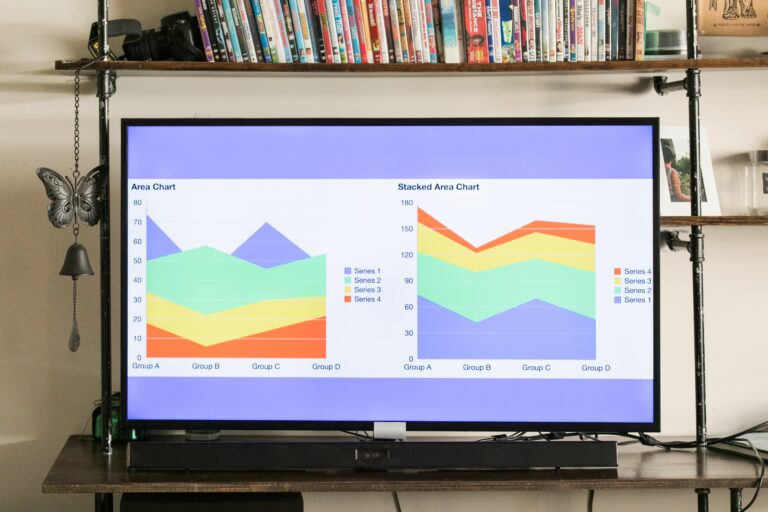

Fake Influencers are easier to buy than most marketers want to admit, and they can quietly wreck your campaign results if you do not audit before you pay. In practice, the problem is not only bots – it is also inflated reach, recycled audiences, engagement pods, and misleading reporting. The fix is not complicated, but it does require a repeatable process: define what “real” performance looks like, verify it with platform-native signals, and lock the expectations into your contract. This guide gives you a practical framework, simple formulas, and decision rules you can use whether you are a brand, agency, or creator who wants to prove legitimacy.
What counts as fake – and why it matters
When people say “fake,” they often mean purchased followers. However, fake performance shows up in several forms, and each one damages measurement differently. First, there are fake followers (bots or low-quality accounts) that inflate audience size but rarely view, click, or buy. Next, there is fake engagement (likes, comments, saves) generated by bots, click farms, or engagement pods. Finally, there is misrepresented influence, where an account looks legitimate but the audience is mismatched (wrong country, wrong age, wrong language) for your offer.
It matters because influencer marketing is priced on attention. If the attention is synthetic, your CPM, CPA, and lift calculations become fiction. Even worse, fake performance can push you into the wrong creative decisions, because you will optimize for what looks like “high engagement” rather than what actually drives reach and sales. A useful rule: treat suspicious audience quality as a measurement risk first, then as a brand safety risk second. That framing keeps your team focused on verification.
- Takeaway: Separate “fake followers,” “fake engagement,” and “misrepresented audience” – they require different checks and different contract language.
Key terms you need before you audit
Before you evaluate creators, align on the metrics and deal terms you will use to judge performance. Otherwise, you will argue after the campaign instead of preventing problems upfront. Here are the core terms, defined in plain language:
- Reach: Unique people who saw the content at least once.
- Impressions: Total views, including repeat views by the same person.
- Engagement rate (ER): Engagements divided by reach or followers (you must specify which). A common post-level formula is: ER by followers = (likes + comments + saves + shares) / followers.
- CPM: Cost per 1,000 impressions. CPM = cost / impressions x 1000.
- CPV: Cost per view (often for video). CPV = cost / video views.
- CPA: Cost per acquisition (purchase, signup, install). CPA = cost / conversions.
- Whitelisting: Brand runs paid ads through the creator’s handle (also called creator licensing). This changes pricing because you are buying both content and distribution leverage.
- Usage rights: Permission to reuse creator content (organic, paid, website, email). Scope and duration matter.
- Exclusivity: Creator agrees not to work with competitors for a period. This usually increases fees.
To keep audits consistent, decide one engagement rate definition and stick to it. For example, if your team uses ER by reach for Stories but ER by followers for Reels, document that in your brief. If you need a quick refresher on how marketers interpret these metrics in the real world, the InfluencerDB Blog regularly breaks down measurement and campaign planning in practical terms.
- Takeaway: Write your ER definition and your pricing metric (CPM, CPV, or CPA) into the brief before you look at creators.
Fake Influencers red flags you can spot in 10 minutes
You do not need advanced tooling to catch many bad fits. Start with a fast screen that flags accounts for deeper review. Look for patterns that are hard to fake consistently over time: audience location stability, comment quality, and the relationship between views and engagement. Also, compare recent performance to older posts. Sudden spikes often have an explanation, but they deserve a question.
- Follower growth spikes with no corresponding viral content or press.
- Engagement mismatch – high likes but very low comments, or repetitive comments that read like templates.
- View-to-like oddities – for short-form video, extremely low views relative to followers can indicate a low-quality audience.
- Audience geography mismatch – a local service brand but the creator’s audience is mostly overseas.
- Content inconsistency – frequent niche switching can attract low-intent followers who do not convert.
- Overly polished media kit with no platform-native screenshots or dates.
Use a simple decision rule: if you see two or more red flags, move the creator into a “verify” lane and request proof before discussing price. That keeps your outreach polite while protecting your time.
- Takeaway: Run a 10-minute screen and only invest deeper effort when the account clears basic consistency checks.
A step-by-step audit framework (with proof you can request)
A good audit is not about accusing creators. It is about validating that the inventory you are buying is real and relevant. The most reliable signals come from platform-native analytics screenshots or exports, because they are harder to fabricate convincingly. Ask for data from the last 30 to 90 days, not lifetime averages, since fraud often hides in the recent window.
- Confirm identity and ownership: Verify the handle, email domain, and payment details match the creator or their registered management.
- Request audience breakdown: Top countries, top cities, age, gender, and language. Ask for dated screenshots from Instagram Insights, TikTok Analytics, or YouTube Studio.
- Check reach consistency: Compare median reach across the last 10 posts, not just the best-performing one.
- Analyze engagement quality: Sample 50 comments across several posts. Look for relevance, sentence variety, and real questions.
- Review video retention: For video-first platforms, ask for average watch time and completion rate where available.
- Validate brand lift proxies: If the creator claims sales impact, require proof like link clicks, swipe-ups, or affiliate dashboards.
When you need a neutral standard for what “valid measurement” looks like, align your reporting with established ad definitions. For example, the Google Ads help center definition of impressions is a useful reference point for internal consistency, even if you are not running Google Ads. It keeps stakeholders from mixing reach and impressions interchangeably.
Finally, document everything in a one-page audit note: what you checked, what you found, and what you still need. That note becomes your internal paper trail if performance disputes happen later.
- Takeaway: Ask for last 30 to 90 days of platform-native screenshots and evaluate medians, not cherry-picked peaks.
Benchmarks table: healthy patterns vs suspicious patterns
Benchmarks vary by platform and niche, so treat these as directional signals rather than hard rules. Still, a table helps your team make consistent calls. Use it as a “smell test” before you spend time negotiating.
| Signal | Healthier pattern | Suspicious pattern | What to do next |
|---|---|---|---|
| Follower growth | Gradual growth with occasional spikes tied to viral posts | Large spikes on random days with no content explanation | Ask for dates of top posts and growth chart screenshot |
| Comments | Specific references to the content, questions, varied language | Generic praise, repeated emojis, identical phrasing | Sample comments across multiple weeks and formats |
| Audience geography | Matches the brand’s shipping or service area | Top countries do not match the offer | Adjust creator list or change targeting expectations |
| Views vs followers | Video views vary but cluster around a believable median | Extremely low views across many posts despite large following | Request retention metrics and recent reach screenshots |
| Story link clicks | Clicks scale with reach and CTA strength | Clicks are near zero across multiple campaigns | Use unique links and require click reporting |
- Takeaway: Focus on consistency across time. Fraud often shows up as volatility without a content reason.
Pricing and ROI: simple formulas plus an example calculation
Fake performance becomes expensive when you price on follower count alone. Instead, anchor negotiations to the metric that matches your goal: CPM for awareness, CPV for video views, CPA for conversions. Then, require the reporting that makes those metrics auditable. If a creator cannot provide impressions or reach after posting, you cannot compute CPM reliably.
Here is a simple example. Suppose you pay $2,000 for one Reel and the creator reports 80,000 impressions. Your CPM is: $2,000 / 80,000 x 1000 = $25 CPM. If you also track 120 link clicks from a UTM link, your cost per click is: $2,000 / 120 = $16.67. Those numbers might be fine or terrible depending on category, but at least they are measurable. If the impressions are inflated by bots, your CPM looks artificially low, and you will overpay next time.
To make pricing discussions more concrete, use a deliverables table that ties each line item to what you can verify. This also helps creators who are legitimate, because it clarifies what you are buying.
| Deliverable | Primary KPI | Proof to request | Pricing notes |
|---|---|---|---|
| Short-form video post | Impressions or views | Platform insights screenshot with date range | Price on CPM or CPV, not followers |
| Story set with link | Reach and link clicks | Story analytics plus UTM clicks | Strong for direct response when CTA is clear |
| Whitelisting rights | Paid CPM and CPA | Ad account reporting and spend logs | Add a licensing fee and define duration |
| Usage rights for paid ads | Creative performance in ads | Usage agreement and asset delivery | Charge more for longer duration and broader channels |
| Exclusivity clause | Competitive separation | Contract clause with category definition | Increase fee based on length and category tightness |
If you want a defensible way to talk about disclosure and paid relationships while negotiating, point stakeholders to the FTC disclosure guidance for influencers. Clear disclosure does not solve fraud, but it does reduce compliance risk and forces more transparent workflows.
- Takeaway: Tie fees to measurable KPIs and require the proof that lets you calculate CPM, CPV, or CPA after posting.
Common mistakes that let fraud slip through
Most teams do not get fooled because they are careless. They get fooled because they are rushed, or because the process is inconsistent across campaigns. A few predictable mistakes show up again and again, especially when influencer work is managed across multiple stakeholders.
- Paying on follower count: Followers are a weak proxy for distribution. Price on impressions, views, or outcomes.
- Accepting “average engagement” claims: Ask for medians and recent screenshots instead of a media kit summary.
- Skipping audience fit: A real audience can still be the wrong audience. Geography and language mismatches kill conversion.
- No tracking plan: Without UTMs, unique codes, or a landing page plan, you cannot separate luck from performance.
- Vague contracts: If usage rights, whitelisting, and reporting are not defined, disputes become personal instead of factual.
- Takeaway: Treat tracking and reporting requirements as part of the deliverable, not a nice-to-have.
Best practices: a repeatable anti-fraud playbook
Fraud prevention works best when it is boring and consistent. Build a lightweight playbook your team can run in under an hour per creator, then scale it with templates. Start by standardizing what you request during outreach, because the best time to set expectations is before you negotiate. Next, store audit notes in one place so you do not re-learn the same lessons every quarter.
- Use a two-lane workflow: “Fast screen” then “verify.” Only verified creators get pricing discussions.
- Require platform-native proof: Dated screenshots for reach, impressions, and audience breakdown.
- Measure with UTMs: Use unique URLs per creator and per placement. Keep naming consistent.
- Pay in milestones: For new partners, split payment: partial upfront, remainder after posting and reporting.
- Write clear clauses: Include reporting deadlines, content removal rules, and consequences for misrepresentation.
- Keep a “trusted list”: Track creators who repeatedly deliver verified results and make them your default shortlist.
On the contract side, add a simple reporting clause: “Creator will provide screenshots of platform analytics for each deliverable within 7 days of posting, including reach, impressions, and audience demographics.” Also define usage rights and whitelisting in plain terms: where the content can run, for how long, and whether it can be edited. Those specifics reduce ambiguity, which is where bad actors thrive.
- Takeaway: Standardize proof requests, tracking, and payment milestones so you do not rely on gut feel.
Quick checklist: decide if you should hire, test, or walk away
When you are staring at a shortlist, you need a decision rule that the whole team can follow. Use this checklist to categorize each creator. It is intentionally simple, because complex scoring systems often hide weak assumptions.
- Hire now if: audience fit matches your market, recent medians are stable, and the creator provides platform-native proof without hesitation.
- Run a paid test if: one signal is unclear (for example, geography is mixed) but the creator’s content quality is strong. Use a small scope and strict reporting.
- Walk away if: multiple red flags appear, proof is delayed or inconsistent, or the creator refuses basic reporting requirements.
If you want to go deeper on building a consistent evaluation workflow, keep a running set of templates and examples from the. Over time, your best defense against fake performance is institutional memory: the ability to compare today’s pitch to what actually worked last quarter.
- Takeaway: Make the decision binary: verify and test, or decline. Ambiguity is where wasted spend accumulates.