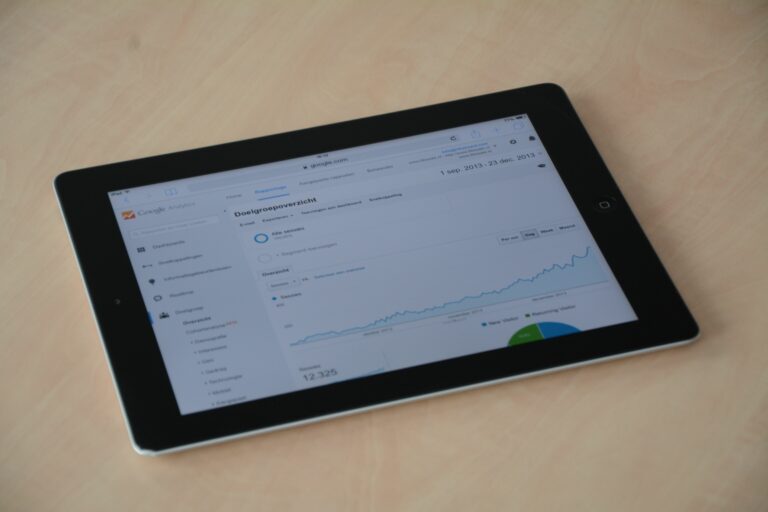

Retail performance metrics are the difference between guessing and managing a retail business with confidence. If you run ecommerce, marketplaces, or omnichannel stores, you need a small set of numbers that explain what is happening in profit, demand, inventory, and customer behavior. The goal is not to track everything, but to track what changes decisions: pricing, promotions, media spend, assortment, and fulfillment. In practice, the best metric set is consistent across teams, clearly defined, and tied to actions. This guide breaks down the most important KPIs, shows how to calculate them, and explains how to use them for better planning and faster course correction.
Retail performance metrics: the core definitions you must align on
Before you build dashboards, align on definitions so finance, marketing, and operations are not debating the basics. Start with the terms below and write them into your reporting glossary. First, reach is the number of unique people who saw your content or ad, while impressions count total views including repeats. Next, engagement rate is typically engagements divided by impressions or reach, depending on your standard, so you must choose one and stick to it. In paid media, CPM is cost per thousand impressions, CPV is cost per view (common in video), and CPA is cost per acquisition, usually a purchase or lead. Finally, for influencer and creator programs, whitelisting means running ads through a creator’s handle, usage rights define where and how long you can use their content, and exclusivity restricts the creator from working with competitors for a period.
- CPM = (Ad spend / Impressions) x 1,000
- CPV = Ad spend / Video views
- CPA = Ad spend / Conversions
- Engagement rate = Engagements / Impressions (or Reach) – choose one
Takeaway: Put these definitions in your KPI doc and require every report to reference the same formulas. That single step prevents weeks of misaligned decision-making.
Profitability KPIs: margin, contribution, and promotion reality

Revenue is loud, but margin is honest. For retail, you need at least three layers of profitability: gross margin, contribution margin, and net profit. Gross margin tells you whether your product economics work before marketing and overhead. Contribution margin tells you whether a sale is profitable after variable costs like shipping, payment fees, returns, and performance marketing. If you run frequent promotions, you also need a promotion view that separates volume growth from margin leakage.
- Gross margin = (Net sales – COGS) / Net sales
- Contribution margin = Net sales – COGS – variable fulfillment – variable marketing – returns costs
- Discount rate = Discount amount / List price
Example: You sell a product for $60 with $24 COGS, $7 shipping and pick-pack, $2 payment fees, and $12 marketing cost per order. Contribution = 60 – 24 – 7 – 2 – 12 = $15. That is the number you should protect when you negotiate shipping rates, set free-shipping thresholds, or decide whether a promotion is worth it.
Takeaway: Make contribution margin the default profitability KPI for growth decisions, because it forces marketing and ops to solve the same problem together.
Demand and conversion KPIs: traffic quality beats traffic volume
Retail growth depends on the quality of demand, not just the amount. Start with sessions, conversion rate, and average order value, then add a few diagnostic metrics that explain why conversion moved. In ecommerce, conversion rate often falls when you push low-intent traffic, when stockouts increase, or when shipping promises worsen. Therefore, pair conversion with inventory availability and delivery speed metrics so you can separate marketing issues from operational ones.
- Conversion rate = Orders / Sessions
- AOV (average order value) = Revenue / Orders
- Revenue per session = Revenue / Sessions
- Cart abandonment = (Carts – Checkouts) / Carts
Decision rule: if sessions rise but revenue per session drops, do not celebrate yet. Check whether conversion rate fell, AOV fell, or both. Then look at product availability and shipping costs in the same time window. This is also where creators can help: creator content often improves conversion by reducing uncertainty, especially for new products, as long as the landing page matches the claim.
Takeaway: Track revenue per session alongside conversion rate and AOV, because it is the fastest way to see whether growth is healthy.
Inventory and merchandising KPIs: avoid stockouts and cash traps
Inventory is where retail companies win or bleed. Too little inventory creates stockouts, lost ranking, and wasted ad spend. Too much inventory ties up cash and forces discounting. The best retail teams track availability, sell-through, and inventory turns, then connect those numbers to demand planning and campaign calendars. Additionally, merchandising teams should monitor category-level performance so winners get replenished and losers get cleared early.
- Sell-through rate = Units sold / Units received (for a period)
- Inventory turnover = COGS / Average inventory value
- Weeks of supply = On-hand units / Weekly units sold
- Stockout rate = Out-of-stock SKUs / Total active SKUs
Practical tip: set a stockout threshold that triggers action. For example, if stockout rate exceeds 5% in a top category, pause prospecting ads for those SKUs and shift budget to in-stock alternatives. That keeps your paid efficiency stable and prevents customer frustration.
Takeaway: Put stockouts on the same dashboard as ROAS and CPA, because inventory problems often look like marketing problems at first.
Customer and retention KPIs: LTV, repeat rate, and cohort truth
Retail brands often over-invest in acquisition because it is easy to measure daily. Retention is slower but usually more profitable. To manage it, track repeat purchase rate, time to second purchase, and customer lifetime value using cohorts. Cohorts matter because averages hide changes: a new customer cohort acquired through heavy discounting may repeat less, even if total repeat rate looks stable.
- Repeat purchase rate = Customers with 2+ orders / Total customers
- Time to second purchase = Median days between order 1 and order 2
- Simple LTV = AOV x Purchase frequency x Gross margin
Example calculation: If AOV is $55, customers buy 3 times per year, and gross margin is 55%, then simple annual LTV contribution is 55 x 3 x 0.55 = $90.75 gross profit before variable marketing and fulfillment. Use that number to set a ceiling on CAC and to decide whether a loyalty offer is affordable.
Takeaway: Review retention by acquisition channel and campaign, not just overall, so you can identify which growth tactics create valuable customers.
Marketing efficiency KPIs: CAC, ROAS, and incrementality checks
Marketing KPIs are only useful when they connect to profit and when attribution is treated carefully. Start with CAC, ROAS, and MER, then add a lightweight incrementality routine. CAC tells you what you pay for a new customer, ROAS tells you revenue per ad dollar, and MER (marketing efficiency ratio) tells you total revenue divided by total marketing spend. MER is blunt, but it is hard to game, which makes it a good executive metric.
- CAC = Acquisition spend / New customers
- ROAS = Revenue attributed to ads / Ad spend
- MER = Total revenue / Total marketing spend
To keep these metrics honest, run simple tests. For example, hold out one region or audience segment for a week and compare revenue change versus a similar region that kept spend constant. You can also use platform experiments when available. For measurement standards and terminology, the IAB standards library is a useful reference for aligning teams on definitions.
Takeaway: Use ROAS for channel optimization, but use MER and periodic holdouts to judge whether marketing is truly adding sales.
Creator and influencer KPIs for retail: CPM, CPA, whitelisting, and usage rights
Creators can drive both demand and conversion, but retail teams need a clear measurement plan. Start by deciding whether a creator activation is primarily for awareness, performance, or content production. Then choose the KPI that matches that goal: CPM and reach for awareness, CPA and revenue per click for performance, and cost per asset for content. If you plan to run whitelisting ads, measure separately because paid amplification changes both reach and conversion behavior.
When you evaluate creators, track three layers: platform metrics (views, reach, engagement rate), site metrics (sessions, conversion rate, AOV), and business outcomes (contribution margin, new customers, repeat behavior). For practical guidance on building measurement habits and avoiding vanity metrics, use the resources in the InfluencerDB Blog as a starting point for your team’s playbook.
| Goal | Primary KPI | Supporting KPIs | Best for |
|---|---|---|---|
| Awareness | CPM, Reach | Video completion, Engagement rate | New category launches, seasonal pushes |
| Performance | CPA, Contribution per order | CTR, CVR, AOV | Always-on sales, retargeting, bundles |
| Content production | Cost per asset | Usage rights length, Hook rate | Paid creative testing, PDP video libraries |
| Retail partner support | Store visits or retailer sales lift | Geo reach, Promo code redemptions | Omnichannel and retail media tie-ins |
Negotiation tip: treat usage rights and exclusivity as line items, not vague add-ons. If you need 6 months of paid usage across Meta and TikTok, price that separately from the organic post. For policy context on endorsements and disclosures, reference the FTC Endorsement Guides and make disclosure requirements part of your creator brief.
Takeaway: Decide the creator goal first, then select KPIs and contract terms that match, especially for whitelisting, usage rights, and exclusivity.
A practical KPI framework: how to build a retail dashboard that drives action
A dashboard is only valuable if it triggers decisions. Build it in three layers: executive health metrics, team operating metrics, and diagnostic drill-downs. Executive metrics should fit on one screen and update weekly. Operating metrics should update daily for teams that need to react fast, like paid media and fulfillment. Diagnostic views should answer “why did this move” without forcing analysts to rebuild reports every time.
| Dashboard layer | Metrics to include | Cadence | Action trigger |
|---|---|---|---|
| Executive health | Net sales, Contribution margin, MER, Stockout rate | Weekly | Reforecast, adjust promo calendar, reset spend guardrails |
| Marketing ops | CAC, ROAS, Revenue per session, CPM | Daily | Shift budgets, pause low-margin SKUs, refresh creative |
| Merch and inventory | Sell-through, Weeks of supply, Returns rate | Daily to weekly | Replenish winners, markdown slow movers, fix size gaps |
| Customer retention | Repeat rate, Time to second purchase, Cohort LTV | Weekly to monthly | Launch winback flows, improve onboarding, adjust offers |
Step-by-step setup you can follow this week: (1) pick 12 to 18 KPIs max, (2) write definitions and data sources, (3) assign an owner per KPI, (4) set thresholds that trigger action, and (5) review weekly with notes on what changed and what you did about it. If you cannot name the action, remove the metric.
Takeaway: Add owners and thresholds to your KPI list, because metrics without accountability become decoration.
Common mistakes and best practices for KPI-driven retail teams
Common mistakes are predictable, which is good news because they are easy to avoid. The first is tracking too many metrics and trusting none of them. Another is mixing definitions across tools, such as counting “new customers” differently in Shopify, GA4, and your data warehouse. Teams also over-index on last-click ROAS, which can push budget into channels that harvest demand rather than create it. Finally, many retailers ignore returns and cancellations in performance reporting, which inflates profitability and leads to overspending.
- Mistake: Optimizing to ROAS without margin. Fix: report ROAS and contribution per order side by side.
- Mistake: Treating impressions as reach. Fix: report both and explain the difference in every recap.
- Mistake: Measuring creators only on engagement rate. Fix: add site conversion and new customer rate.
- Mistake: Ignoring usage rights and exclusivity costs. Fix: price them explicitly in contracts.
Best practices are equally concrete. Use cohorts for retention, not blended averages. Build a single source of truth for orders, refunds, and customer IDs. Run at least one incrementality check per quarter, even if it is small. Also, document your KPI glossary and update it when tools change. For analytics implementation guidance, Google’s GA4 documentation can help teams standardize events and conversions.
Takeaway: Make returns, margin, and incrementality part of routine reporting, because those three areas most often explain why “good” growth turns unprofitable.
Quick KPI checklist for retail leaders
If you want a fast starting point, use this checklist to pressure-test your current reporting. You should be able to answer each item in one sentence and show the metric in one dashboard view. If you cannot, that is a clear signal to simplify and standardize.
- Do we know contribution margin by SKU and by channel?
- Do we track stockouts and weeks of supply for top sellers?
- Do we have a CAC ceiling based on cohort LTV, not hope?
- Do we separate creator organic results from whitelisting results?
- Do we include returns and cancellations in performance reporting?
Takeaway: Start with the checklist, fix the gaps, and only then add advanced metrics. Retail performance improves fastest when teams share the same numbers and act on them weekly.