
A/B testing web copy is still the fastest way to turn opinions about messaging into measurable conversion gains, but only if your tests are designed to answer one clear question at a time. In 2026, most teams do not fail because they lack tools – they fail because they pick the wrong metric, change too many elements, or stop tests early when the first spike looks promising. This guide focuses on a practical workflow you can repeat: define the decision, write variants that isolate a single idea, measure the right outcomes, and ship the winner with confidence. Along the way, you will also learn how to translate copy tests into influencer landing pages, creator whitelisting ads, and campaign pages where small wording changes can move real budget.
What to measure in A/B testing web copy (and how it maps to influencer funnels)
Before you write a single variant, lock the metric that will decide the winner. For most web copy tests, the primary metric is a conversion rate tied to a business action: purchase, lead form submit, trial start, or add to cart. Secondary metrics help you diagnose why a variant won or lost, such as click through rate from hero to pricing, scroll depth, or time to first interaction. If you work with creators, you will often care about the same funnel stages, just with different entry points: a creator link, a whitelisted ad, or a campaign landing page. The key takeaway is simple: choose one primary metric that matches the page goal, and treat everything else as supporting evidence.
Here are the core terms you should define early in your reporting so stakeholders stop arguing about definitions:
- Reach – estimated unique people who saw content or an ad.
- Impressions – total views, including repeats by the same person.
- Engagement rate – engagements divided by reach or impressions (state which). For influencer posts, define engagements (likes, comments, saves, shares) explicitly.
- CPM – cost per 1,000 impressions. Formula: CPM = (Spend / Impressions) x 1000.
- CPV – cost per view, often used for video. Formula: CPV = Spend / Views.
- CPA – cost per acquisition (purchase, lead, signup). Formula: CPA = Spend / Conversions.
- Whitelisting – running paid ads through a creator’s handle (also called creator licensing). It can change performance because the ad inherits creator trust signals.
- Usage rights – permission to reuse creator content in ads, email, site, or other channels, usually time-bound and scoped.
- Exclusivity – a restriction that prevents a creator from working with competitors for a period, which affects pricing and creative freedom.
Example calculation you can copy into a test recap: you spend $2,400 on a whitelisted ad driving to a landing page where Variant A converts at 3.0% and Variant B converts at 3.6% on 20,000 sessions each. If the average order value is $80, Variant B yields 720 orders vs 600 orders, or 120 extra orders. That is $9,600 in incremental revenue before margin. The decision rule becomes clear: if the lift holds, ship B and scale spend while monitoring CPA.
A/B testing web copy setup: hypotheses, variables, and clean test design
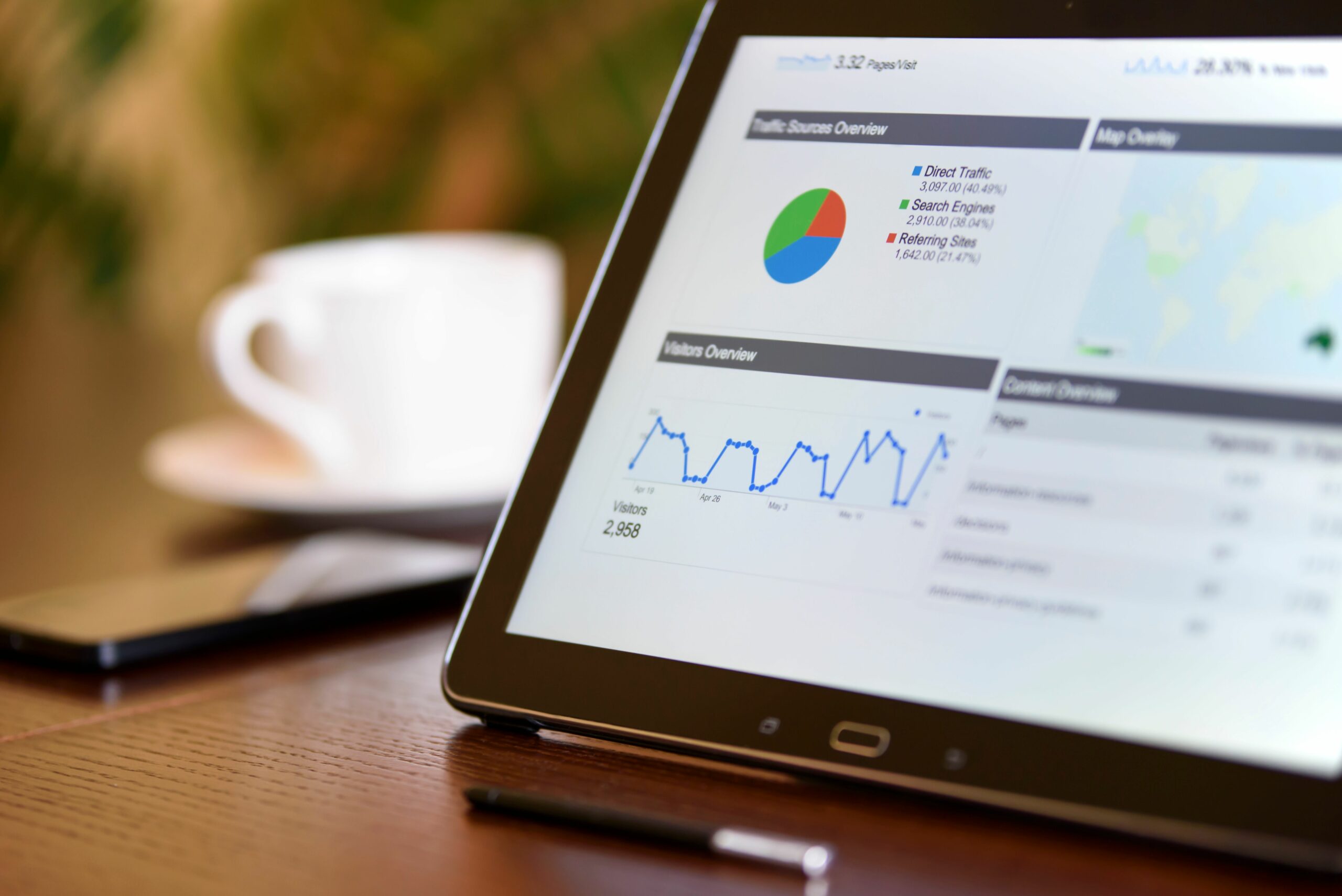
Strong tests start with a hypothesis that names the audience, the change, and the expected outcome. A weak hypothesis sounds like “shorter is better.” A useful one sounds like “For first-time visitors from creator links, a hero headline that names the problem will increase trial starts because it reduces confusion.” Next, isolate a single variable. If you change the headline, subhead, CTA, and social proof at once, you cannot learn what worked. The practical takeaway: one test should answer one question, even if that means running more tests over time.
Use this checklist to keep your design clean:
- Define the primary metric and the decision threshold (for example, at least 5% relative lift with stable CPA).
- Pick one copy element to change: headline, subhead, CTA label, value prop bullets, pricing framing, or trust proof.
- Hold constant: layout, images, offer, traffic sources, and page speed.
- Predefine the test duration and minimum sample size before you look at results.
- Segment reporting by traffic source: brand search, paid social, creator links, email, and retargeting.
If you run influencer campaigns, treat each creator as a traffic segment, not a separate experiment, unless you have enough volume. Otherwise, you will confuse creator performance with page copy performance. For more planning templates that connect landing page tests to creator campaigns, browse the InfluencerDB blog guides on campaign planning and measurement and adapt the same discipline to your briefs.
Copy elements worth testing in 2026 (with examples you can steal)
Not every copy change is worth the engineering and analysis time. Prioritize elements that sit closest to the decision point or remove a common objection. In practice, that means the hero message, the CTA, the first proof block, and pricing or guarantee language. Also, modern audiences skim, so clarity often beats cleverness. The takeaway: test the few lines that most visitors actually read, then expand to deeper sections once the top of the page is stable.
| Element to test | What it changes | Example Variant A | Example Variant B | Best for |
|---|---|---|---|---|
| Hero headline | Clarity of value prop | “All-in-one analytics for teams” | “Track creator ROI in one dashboard” | Cold traffic, creator link traffic |
| Subhead | Specificity and audience fit | “Make smarter decisions faster.” | “See reach, CPM, and CPA by creator and post.” | High intent visitors comparing options |
| CTA label | Perceived effort and risk | “Get started” | “Start free trial” | Trial products, SaaS |
| Proof block | Trust and risk reduction | “Trusted by 2,000 marketers” | “Used by teams running 10,000+ creator posts” | Enterprise, high price points |
| Offer framing | Urgency and value perception | “Save 15% annually” | “2 months free on annual plans” | Subscription pricing pages |
When writing variants, keep the “one idea” rule. If you want to test specificity, do not also change tone. Similarly, if you want to test urgency, keep the offer identical and only change the framing. This discipline makes your next test easier because you can build on what you learned instead of starting over.
Step-by-step framework: from research to launch to decision
A repeatable process beats creative bursts. Start with research: pull the top objections from sales calls, support tickets, and on-site search. Then map objections to page sections, so each section has a job. After that, write variants that target one objection and launch the test with a clear stop rule. The takeaway: if you cannot explain the test in one sentence, it is not ready to run.
- Pick the page and goal. Example: influencer landing page goal is email capture for a discount code.
- Identify the friction. Use analytics: high bounce, low CTA click, or drop-off at pricing.
- Write a hypothesis. “If we name the exact outcome in the CTA, more visitors will submit the form.”
- Create two variants. Keep everything else identical.
- QA the experience. Check mobile, load time, tracking, and that the right audience is split evenly.
- Run to a minimum sample. Do not stop because you like the early line.
- Decide and document. Ship the winner, note what you learned, and queue the next test.
For sample size, you can use a calculator, but you still need a practical rule of thumb. If your baseline conversion rate is 3% and you want to detect a 10% relative lift (to 3.3%), you will need a lot of sessions. That is why many teams start with bigger swings: clearer messaging, stronger proof, or removing a form field. If you want a reputable overview of experimentation basics and statistical thinking, Google’s documentation on experiments is a solid starting point: Google Analytics guidance on experiments and testing.
How to interpret results without fooling yourself
Most A/B testing mistakes happen after the test starts. Teams peek at results daily, call a winner at day three, and then wonder why performance regresses. Instead, focus on stability across time and segments. Look for consistency across weekdays and weekends, and check whether the lift is concentrated in one channel. The takeaway: a winner that only wins in one tiny segment is a hypothesis for a follow-up test, not a global rollout.
| Scenario | What it usually means | What to do next |
|---|---|---|
| Variant B wins overall, but loses on mobile | Copy length or hierarchy hurts small screens | Write a mobile-first version of B and retest |
| Variant B wins for creator-link traffic only | Message matches creator audience context | Create a dedicated influencer landing page using B’s angle |
| CTA clicks increase, conversions do not | Downstream friction (form, pricing, checkout) | Test the next step, not the hero |
| Conversion rate rises, but CPA rises too | Traffic mix changed or higher intent users are fewer | Segment by channel and check spend allocation |
| Big early lift disappears after a week | Novelty effect or random variance | Extend duration, then decide using the pre-set rule |
Also, watch for instrumentation issues. A broken event, double-counted conversions, or a redirect that drops UTM parameters can create fake winners. If you are testing influencer pages, verify that creator codes and affiliate parameters persist through checkout. Small tracking bugs can cost more than a month of copy improvements.
Applying copy tests to influencer campaigns: landing pages, whitelisting, and usage rights
Influencer programs add two complications: audience context and content reuse. A creator’s audience arrives with a story already in their head, so your landing page should echo the creator’s promise, not fight it. That is where A/B testing shines: you can test “creator-aligned” messaging against “brand-standard” messaging and quantify the difference. Next, if you run whitelisting ads, the ad creative and the landing page must agree on the offer and the language, or you will pay for clicks that bounce. The takeaway: treat the landing page as part of the creator deliverable, even if the creator never touches it.
Practical decision rules you can use in briefs and negotiations:
- If a creator’s traffic converts 20% higher than paid social, build a dedicated page and keep it updated for that creator’s angle.
- If whitelisted ads outperform brand-handle ads, allocate budget to the creator handle and test landing page trust signals (testimonials, guarantees, shipping clarity).
- If you buy usage rights, plan a testing roadmap for the reused content: different headlines, different CTAs, and different proof blocks.
- If you require exclusivity, test whether the higher cost is offset by higher conversion rate from cleaner positioning.
When you document results, include influencer-specific context: creator name, content type, posting date, and audience fit. That makes it easier to separate “copy lifted conversions” from “this creator drove unusually high intent.”
Common mistakes that sink web copy tests
Many teams run tests, but few run them well enough to learn. The first common mistake is changing multiple elements at once, which turns your test into a guessing game. Another frequent issue is picking vanity metrics like time on page when the business needs purchases or qualified leads. Teams also forget seasonality: a sale week and a normal week are not comparable. Finally, people often stop early because the chart looks exciting, which is how random noise becomes a roadmap. The takeaway: most mistakes are process problems, so fix the process and your win rate improves.
- Stopping the test the moment you see significance without checking stability.
- Running tests during major promo changes, site outages, or tracking migrations.
- Ignoring segmentation, especially mobile vs desktop and new vs returning visitors.
- Testing “clever” copy that reduces clarity, especially above the fold.
- Not writing down the hypothesis, which makes future learning impossible.
Best practices for A/B testing web copy in 2026
In 2026, the teams that win treat experimentation as publishing, not as a one-off project. They maintain a backlog, they document outcomes, and they make small improvements continuously. They also align copy tests with brand safety and compliance, which matters when influencer claims are involved. The takeaway: build a lightweight system that keeps tests honest and decisions fast.
- Start with clarity. Use concrete nouns and outcomes, not slogans.
- Test bigger swings first. If traffic is limited, a 1% lift is hard to detect.
- Keep a test log. Track hypothesis, variants, audience, duration, and result.
- Use guardrail metrics. Monitor refund rate, lead quality, or churn, not just conversion rate.
- Respect disclosure and claims. If you mention results, make sure they are substantiated and properly disclosed. The FTC’s guidance is a useful reference: FTC endorsements and influencer guidance.
Finally, connect your learnings back to creative. If “Track creator ROI in one dashboard” beats “All-in-one analytics for teams,” that is not just a landing page win. It is a message you can feed into creator briefs, ad hooks, and even your influencer outreach. Over time, A/B testing becomes your messaging research engine, and that is where the compounding gains come from.