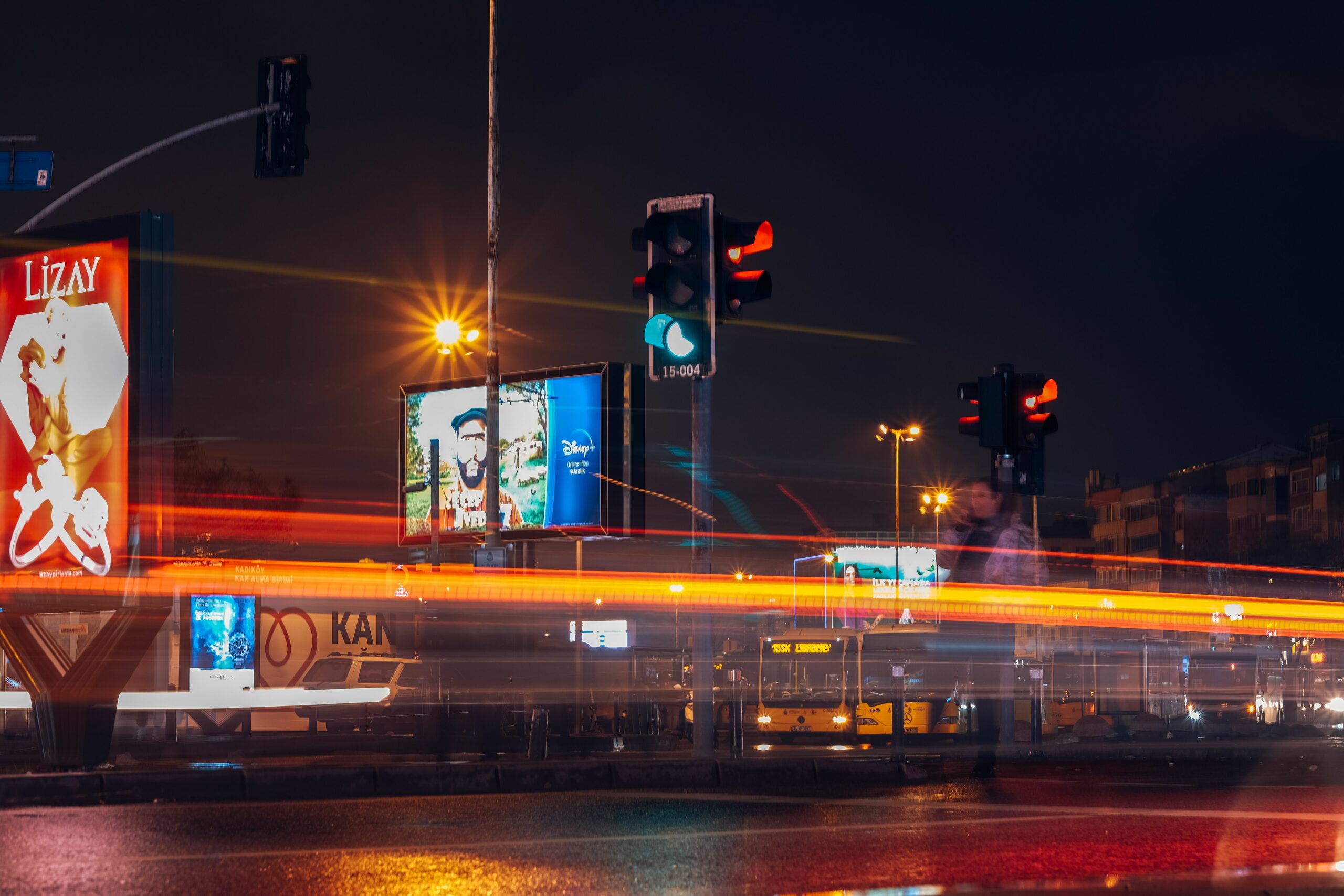

Digital out of home advertising is evolving fast in 2025, and the biggest shift is that it now behaves more like a data-driven media channel than a static billboard buy. If you are a brand, agency, or creator-led team, the opportunity is clear: DOOH can add real-world reach, social proof, and incremental lift when it is planned with the same rigor you apply to paid social and influencer activations. However, the channel punishes vague goals and loose measurement. This update breaks down the terms, the buying models, and the practical steps to plan, price, and measure DOOH alongside influencer marketing.
Digital out of home advertising in 2025 – what changed and why it matters
DOOH used to be purchased like a location-based sponsorship: pick a few premium screens, lock dates, and hope foot traffic matched your audience. In 2025, the channel is increasingly programmatic, audience-modeled, and integrated with mobile signals, which means you can plan it with clearer targeting and tighter pacing. As a result, DOOH is now useful for more than awareness. It can support store visits, app installs, and creator-led launches, especially when you coordinate timing with social content drops.
Three changes matter most. First, more inventory is sold through programmatic pipes, so you can daypart, cap frequency, and test creative variants without reprinting anything. Second, measurement has improved through better impression modeling and lift studies, even though it is not as deterministic as click-based media. Third, creative expectations are higher because audiences see DOOH as a premium signal, so weak assets stand out in the wrong way.
Takeaway: Treat DOOH like a testable channel. Start with a hypothesis, define a primary KPI, and plan a short flight that you can learn from before you scale.
Key terms you need before you buy or brief DOOH
Before you compare proposals, align your team on definitions. Otherwise, you will end up debating numbers that are not comparable across vendors, formats, and markets. Here are the terms that show up in DOOH and in influencer contracts, explained in practical language you can use in a brief.
- Reach: The estimated number of unique people exposed to your ad in a period. In DOOH, reach is modeled from footfall, traffic, and panel data.
- Impressions: The estimated number of times your ad is seen. DOOH impressions are not clicks, so ask how the vendor models viewability and dwell time.
- CPM: Cost per thousand impressions. Formula: CPM = (Cost / Impressions) x 1000.
- CPV: Cost per view. More common in video and CTV, but some DOOH networks use “viewed impressions” definitions. Confirm what counts as a view.
- CPA: Cost per acquisition. In DOOH, CPA is usually inferred via lift studies, promo codes, or geo-based attribution rather than direct clicks.
- Engagement rate: For creators, typically engagements divided by impressions or followers. DOOH does not have likes, so you measure engagement through secondary actions like branded search lift or QR scans.
- Whitelisting: In influencer marketing, this means running ads through a creator’s handle. DOOH has an analog: using creator content as paid creative, which requires explicit usage rights.
- Usage rights: Permission to use a creator’s content in paid media, including DOOH screens. Define duration, territories, and formats.
- Exclusivity: A creator agrees not to work with competitors for a period. If you are using creator assets in DOOH, exclusivity can protect the message during the flight.
Takeaway: Put these definitions in your campaign brief so vendors and creators price the same thing, not their own interpretation.
How DOOH is bought in 2025 – direct, programmatic, and hybrid
Most teams choose between direct IO buys, programmatic DOOH, or a hybrid. Direct buys still make sense for iconic placements and guaranteed share of voice. Programmatic is better for testing, flexible pacing, and audience-based planning. Hybrid is common when you want one premium “hero” placement plus a wider layer of targeted screens.
Use a simple decision rule. If your campaign depends on one location, like a flagship store or a major event, start with direct. If your campaign depends on reaching a defined audience across multiple neighborhoods, start programmatic. If you need both, split budget and use consistent creative rules so the campaign feels unified.
When you evaluate proposals, ask for three specifics: screen loop length and your spot length, estimated plays per hour, and the methodology behind impressions. For programmatic, add bid strategy, pacing controls, and frequency management. For direct, add makegoods policy if screens go dark or traffic estimates miss.
Takeaway: Do not accept “premium network” as a plan. Demand the mechanics: loop, plays, and impression model.
Pricing benchmarks and how to sanity-check a DOOH quote
DOOH pricing varies by market, format, and time of day. A single CPM number can be misleading because some networks model impressions aggressively. Still, benchmarks help you spot outliers and ask better questions. Use CPM as a starting point, then adjust for context: dwell time, screen size, congestion, and whether the placement is truly unavoidable.
| Format | Typical buy unit | Common pricing basis | Rough CPM range (USD) | Best for |
|---|---|---|---|---|
| Urban street furniture | 2 to 4 week flight | Impressions or fixed | 6 to 18 | Broad reach, neighborhood coverage |
| Transit stations | 4 week package | Fixed with est. impressions | 10 to 30 | Commuter frequency, dwell time |
| Retail and mall screens | 2 to 4 weeks | Impressions | 8 to 25 | In-market shoppers, product launches |
| Gym and office networks | 4 week flight | Impressions | 12 to 35 | Defined audience contexts |
| Large format digital billboards | 1 to 4 weeks | Fixed or impressions | 15 to 60 | Mass awareness, brand stature |
Now sanity-check with a basic calculation. If a vendor quotes $25,000 for 2,000,000 impressions, your CPM is (25,000 / 2,000,000) x 1000 = $12.50. That is plausible for many mid-tier urban networks. If the same $25,000 claims 10,000,000 impressions, the CPM is $2.50, which is possible but should trigger questions about how impressions are modeled and whether the screens are low-attention placements.
Takeaway: Always compute CPM yourself, then ask what assumptions drive the impression estimate. If the assumptions are vague, treat the number as directional, not contractual.
DOOH measurement is strongest when you plan for it upfront. The cleanest approach is to define one primary outcome and two supporting signals. For example, a store launch might use store visits as primary, branded search lift as supporting, and influencer content engagement as a creative quality signal. If you try to measure everything, you will end up trusting nothing.
In 2025, common measurement methods include geo-based lift studies, mobile location panels, and time-based correlation with spikes in branded search and direct traffic. For a practical baseline, add a unique URL or QR code, but do not over-credit it. People often see DOOH, then search later on their own device. That is why branded search lift and direct traffic are useful supporting signals.
For a standards reference, align your reporting language with the industry definitions from the Out of Home Advertising Association of America. It helps when you compare vendors and explain results to stakeholders who are used to digital dashboards.
Creators add a second measurement layer. If you use creator content on DOOH screens, track performance in three buckets: on-screen delivery (plays, impressions), online amplification (creator posts, whitelisted ads), and downstream outcomes (search, visits, sales). To keep your team consistent, document your measurement approach in a shared playbook, and update it after each flight. You can store those learnings alongside other channel notes in the InfluencerDB marketing insights hub so your next campaign starts smarter.
Takeaway: Pick one primary KPI, then triangulate with two supporting signals. DOOH performs best when it is measured like a lift channel, not a click channel.
How to integrate DOOH with influencer marketing – a practical framework
DOOH and creators work together because each channel covers the other’s weaknesses. DOOH delivers public legitimacy and repeated exposure in the real world. Influencers deliver narrative, product education, and social proof that people can act on immediately. The key is to plan them as one system, not two separate line items.
Use this 6-step framework to build an integrated plan:
- Define the moment: product drop, store opening, seasonal push, or app feature launch. Set a start date that anchors both DOOH flighting and creator posting.
- Choose the audience and geography: decide whether DOOH is for broad city reach or for specific neighborhoods near stores. Match creator selection to the same geo when possible.
- Build a creative spine: one message, one visual motif, one CTA. DOOH should be legible in 2 seconds; creators can explain the details.
- Plan the sequence: run DOOH first to seed awareness, then creators to explain and convert, then retarget with whitelisted ads using creator handles.
- Lock rights and approvals: confirm usage rights for DOOH, durations, and territories. Make sure the creator contract explicitly covers out-of-home placements.
- Set measurement and reporting: decide what you will attribute, what you will infer via lift, and what you will treat as directional.
When you negotiate creator deals for DOOH usage, be specific. Ask for raw files, confirm whether you can crop for vertical or wide screens, and define whether audio is included. Also, clarify exclusivity windows so your DOOH creative does not run while the creator posts for a competitor.
| Asset type | DOOH suitability | What to request from creator | Contract clause to include |
|---|---|---|---|
| Short vertical video | Good for transit and retail screens | Clean version without captions burned in | Usage rights for paid OOH, 6 to 12 months |
| High-res still image | Best for street furniture and billboards | RAW or highest resolution, brand-safe framing | Territory and format list (billboard, transit, retail) |
| UGC style testimonial | Works if text is minimal and bold | Multiple takes, neutral background option | Approval rights and edit permissions |
| Creator handle and CTA | Strong for social proof | Permission to display handle and likeness | Publicity rights and brand usage limitations |
Takeaway: DOOH plus creators works best when the message is unified and rights are settled early. Treat usage rights like media inventory, not an afterthought.
Step-by-step: planning and budgeting a DOOH flight (with simple math)
To make DOOH practical, you need a repeatable planning method. This approach works for both a first test and a scaled campaign. Start with a budget you can afford to learn from, then increase spend only after you can explain what drove performance.
- Set a primary KPI: awareness proxy (reach), consideration proxy (branded search lift), or action (store visits, signups).
- Choose a target reach and frequency: for a city test, a common starting point is moderate reach with frequency of 3 to 6 over 2 to 4 weeks, depending on dwell time.
- Estimate impressions needed: Impressions = Reach x Frequency. If you want 300,000 people reached at frequency 4, you need about 1,200,000 impressions.
- Back into budget using CPM: Cost = (Impressions / 1000) x CPM. If CPM is $15, cost is (1,200,000 / 1000) x 15 = $18,000.
- Allocate creative production: reserve budget for motion design, resizing, and creator usage fees if applicable. Many teams forget this and then compromise on the asset.
- Build a test plan: run two creatives or two geos, not ten variables. Keep one thing different so you can learn.
Finally, align DOOH flighting with your influencer calendar. If creators post on Tuesdays and Thursdays, consider heavier DOOH dayparts in the 24 to 48 hours around those posts to amplify recall. This is also where whitelisting can help, because you can retarget people in the same metro with creator-led ads after exposure.
Takeaway: Use reach and frequency to estimate impressions, then budget from CPM. Keep tests simple so results are interpretable.
Common mistakes (and how to avoid them)
The most expensive DOOH mistakes are not about media rates. They come from unclear objectives, weak creative constraints, and measurement that starts after the campaign ends. Fortunately, each one has a straightforward fix.
- Mistake: Buying “premium” screens without a hypothesis. Fix: write a one-sentence hypothesis, like “DOOH in three neighborhoods will lift branded search by 10%.”
- Mistake: Overloading the creative with text. Fix: enforce a 2-second rule: one message, one brand cue, one CTA.
- Mistake: Treating impression numbers as audited truth. Fix: ask for methodology and compare multiple vendors on the same assumptions.
- Mistake: Using creator content without explicit rights. Fix: add a DOOH usage rights clause with duration, territories, and formats.
- Mistake: Reporting only vanity metrics. Fix: pair delivery metrics with lift signals like search, store visits, or incremental conversions.
Takeaway: A tight brief and a simple measurement plan prevent most DOOH waste.
Best practices for 2025 campaigns
Once you have the basics, the difference between an average DOOH flight and a strong one is execution discipline. The best teams treat DOOH as a creative and operational channel, not just a media line item. They also plan for iteration, because the first flight is rarely the final answer.
- Standardize your specs: maintain a checklist of file formats, aspect ratios, and safe zones per network so creative does not get rebuilt at the last minute.
- Daypart with intent: match messaging to behavior. Morning commutes can support “try it today,” while evenings can support “visit this weekend.”
- Use consistent brand cues: logo placement, color, and a single tagline improve recall across fragmented screen networks.
- Coordinate with social: schedule creator posts during the heaviest DOOH delivery windows to increase the chance of cross-channel reinforcement.
- Document disclosures and permissions: if creator likeness is used, keep contracts and approvals organized. For broader advertising compliance context, review the FTC advertising and marketing guidance.
Also, keep a post-flight review that answers three questions: what worked, what did not, and what you will change next time. If you cannot answer those, you did not run a test, you ran a hope-based campaign.
Takeaway: Strong DOOH performance comes from repeatable operations: specs, dayparts, unified creative, and a tight learning loop.
Quick DOOH campaign checklist (copy into your brief)
Use this checklist to turn strategy into execution. It is designed to fit into a one-page brief that both a DOOH vendor and a creator manager can follow.
- Goal: primary KPI and target lift
- Audience and geo: cities, neighborhoods, proximity to stores
- Buy type: direct, programmatic, or hybrid
- Flighting: dates, dayparts, pacing rules
- Creative: 2-second message, CTA, brand cues, versions
- Creator plan: deliverables, posting dates, whitelisting plan
- Rights: usage rights for DOOH, duration, territories, exclusivity
- Measurement: delivery metrics plus lift method and reporting cadence
Takeaway: If your brief covers these eight items, you can compare vendors fairly and keep creator usage clean.