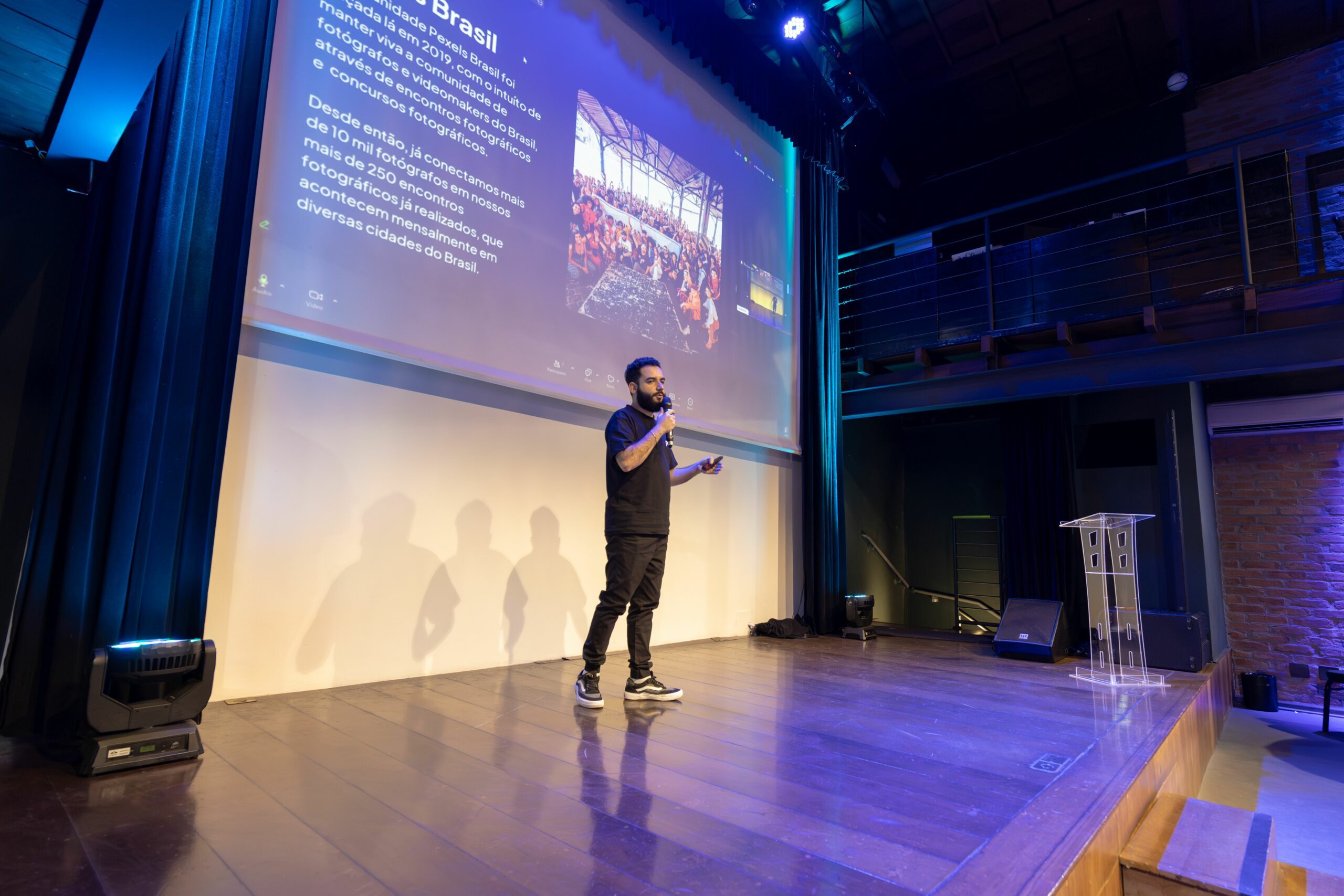

DMEXCO appearance tips are easiest to apply when you treat your slot like a measurable campaign, not a one-off stage moment. This guide uses the scenario implied by “Susanne Ullrich” as a stand-in for any speaker, creator, or brand lead preparing for DMEXCO: you want a clear message, credible numbers, and a follow-up system that turns conversations into outcomes. Because DMEXCO is noisy and time-boxed, your advantage comes from structure: what you say, what you show, and what you ask for next. Below you will find definitions, checklists, and simple formulas you can reuse for panels, keynotes, fireside chats, and booth presentations. The goal is practical – walk in with a plan, walk out with qualified leads and content you can repurpose.
DMEXCO appearance tips: Start with a measurable goal
Before you touch slides, decide what “success” means in numbers. A DMEXCO appearance can drive brand awareness, creator partnerships, pipeline, hiring, or press, but you should pick one primary outcome and two secondary outcomes. Otherwise, your talk becomes a highlight reel with no next step. For example, if Susanne Ullrich is presenting a creator program, the primary outcome could be “book 20 qualified partner calls in 10 days,” while secondary outcomes might be “collect 150 newsletter sign-ups” and “secure 3 media inquiries.” Once the goal is set, you can reverse-engineer the talk, the booth CTA, and the follow-up sequence.
- Primary KPI: meetings booked, demo requests, partner applications, or press interviews.
- Secondary KPIs: QR scans, email sign-ups, content saves, LinkedIn follows, or downloads.
- Quality filter: define what makes a lead qualified (budget range, region, vertical, timeline).
Takeaway: Write your primary KPI as a sentence you can track: “By day 10 after DMEXCO, we will have X qualified outcomes from Y total scans.”
Define the metrics and terms you will reference on stage
DMEXCO audiences include marketers, creators, agencies, and platform reps. If you use performance terms without defining them, you lose half the room and invite skepticism from the other half. Keep definitions short, then show how you apply them. Use one slide or a handout-style appendix to make your language consistent across the team, especially if you will be doing meetings at the booth right after the talk.
- Reach: the number of unique people who saw content.
- Impressions: total views, including repeat views by the same person.
- Engagement rate (ER): engagements divided by reach or impressions (state which you use).
- CPM: cost per thousand impressions. Formula: CPM = (Cost / Impressions) x 1000.
- CPV: cost per view (often video views). Formula: CPV = Cost / Views.
- CPA: cost per acquisition (purchase, lead, signup). Formula: CPA = Cost / Conversions.
- Whitelisting: running ads through a creator’s handle (also called creator licensing in some contexts).
- Usage rights: permission to reuse creator content (where, how long, paid or organic).
- Exclusivity: a restriction preventing the creator from working with competitors for a period.
Takeaway: In your speaker notes, add a one-line definition for every metric you mention, and state whether ER is based on reach or impressions.
Build a talk that earns trust in the first 90 seconds
At DMEXCO, attention is your scarcest resource. Your opening should do three things quickly: name the problem, show you have evidence, and promise a practical outcome. Avoid long personal backstories unless they directly establish authority. Instead, lead with a concrete observation: a benchmark, a cost trend, or a mistake you keep seeing in influencer briefs. Then preview your framework in three steps so the audience can follow along and take notes.
- Problem: “Brands overpay for reach they cannot verify.”
- Evidence: “We audited 200 creator partnerships and found X pattern.”
- Promise: “You will leave with a 10-minute audit checklist and a negotiation script.”
To keep the content grounded, use one short case example with real numbers (anonymized if needed). If you reference industry guidance, link it in your post-event recap. For disclosure and endorsement rules, the FTC’s endorsement guides are a reliable baseline for global audiences to understand the principles, even if local rules differ: FTC Endorsement Guides.
Takeaway: Write your first 90 seconds as a script, then cut 20 percent of the words. Brevity reads as confidence.
A practical framework: the DMEXCO talk to meeting pipeline
Most DMEXCO appearances fail after the applause because there is no bridge from stage to conversation. Fix that with a simple pipeline: capture intent, qualify fast, and follow up with a specific next step. The easiest way is to design your CTA around a single asset: a one-page checklist, a benchmark sheet, or a brief template. Put it behind a QR code that tags the source as “DMEXCO stage” so you can measure conversion.
- Offer: one asset that solves a real problem (brief template, audit checklist, pricing calculator).
- Capture: QR to a short form (name, email, role, primary goal, budget band).
- Qualify: auto-response that asks one qualifying question (timeline or platform priority).
- Route: calendar link for qualified leads, nurture email for everyone else.
- Measure: stage scans to meetings booked, plus meeting-to-deal rate.
If you need a content hub to support the CTA, publish a recap and link your asset inside it. You can also point attendees to ongoing analysis and templates on the InfluencerDB Blog so the conversation continues after the event.
Takeaway: Your CTA should be “get the template” or “book the audit,” not “let’s connect.” Specificity increases follow-through.
Benchmarks and pricing: show your math without overwhelming people
DMEXCO audiences appreciate transparency, but they do not want a spreadsheet lecture. Pick two or three metrics that support your argument, and show a simple calculation. If Susanne Ullrich is presenting influencer program results, a clean CPM and CPA example will land better than a dozen vanity charts. Also, state assumptions clearly: platform, geography, paid vs organic, and whether content was whitelisted.
| Metric | Formula | What it tells you | How to use it at DMEXCO |
|---|---|---|---|
| CPM | (Cost / Impressions) x 1000 | Efficiency of exposure | Compare creator packages to paid social CPMs |
| CPV | Cost / Views | Efficiency of video consumption | Validate if video-first creators are priced fairly |
| CPA | Cost / Conversions | Cost to drive an outcome | Anchor negotiations around business value |
| Engagement rate | Engagements / Reach (or Impressions) | Audience response | Spot creators with real attention, not just views |
Example calculation: You pay 4,000 EUR for a creator package that delivers 220,000 impressions and 180 conversions. CPM = (4,000 / 220,000) x 1000 = 18.18 EUR. CPA = 4,000 / 180 = 22.22 EUR. If your target CPA is 25 EUR, you can argue the partnership is efficient even if the engagement rate is average. Conversely, if CPM looks great but CPA is weak, you likely have a mismatch between creator audience and offer.
| Deliverable | What to specify in the contract | Common add-on cost driver | Negotiation tip |
|---|---|---|---|
| Instagram Reel | Length, hook, CTA, posting date, link method | Usage rights for ads (whitelisting) | Offer a shorter usage window first, then extend if it performs |
| TikTok video | Concept, sound, captions, comment moderation | Exclusivity in the category | Limit exclusivity to direct competitors and a tight timeframe |
| YouTube integration | Placement, talking points, pinned link, disclosure | Revision rounds | Cap revisions to one structural and one factual pass |
| Story set | Frames, swipe link, sticker, timing | Link tracking setup | Provide UTM links and copy so tracking is frictionless |
Takeaway: Put one “math slide” in the deck: CPM, CPA, and the assumptions. It signals rigor and makes your pricing logic easier to defend.
Creator and partner audit checklist you can use between sessions
DMEXCO moves fast, so you need a lightweight audit method for creators, agencies, and tech partners you meet on-site. The goal is not to fully diligence everyone in the hallway. Instead, you want to filter out obvious mismatches and fraud risk, then book deeper calls with the best fits. Use a two-pass approach: a 2-minute screen and a 15-minute validation.
- 2-minute screen: audience fit (country, language), content consistency, recent posting cadence, and brand safety signals.
- 15-minute validation: request recent performance screenshots, ask for top audience locations, and confirm how they disclose ads.
- Red flags: sudden follower spikes, engagement that does not match comment quality, refusal to share basic audience breakdown.
- Green flags: consistent series formats, clear niche, repeat brand partners, and thoughtful comment sections.
When you discuss platform-specific ad options like whitelisting, align on what is technically possible and what permissions are required. For Instagram and Facebook ad identity and permissions, Meta’s Business Help Center is a solid reference point: Meta Business Help Center.
Takeaway: Carry a one-page audit form (digital or printed) with four scored categories: audience fit, content quality, proof of performance, and operational reliability.
Negotiation rules for usage rights, whitelisting, and exclusivity
Many DMEXCO deals stall because the parties agree on a fee but not on rights. Solve this by separating “creation” from “distribution” in your offer. Creation is the work to produce content. Distribution is where and how you reuse it, including paid amplification. When you split the two, you can negotiate fairly without forcing creators to guess the value of your media plan.
- Usage rights decision rule: if you will run the content as ads, price usage separately with a defined term (for example, 30 or 90 days).
- Whitelisting decision rule: if you need creator handle authorization, confirm who sets it up and what reporting you will share back.
- Exclusivity decision rule: only pay for exclusivity that protects revenue. Narrow it by category, geography, and time.
- Revision rule: cap revisions and define what counts as a revision (factual correction vs creative preference).
In practice, you can propose a tiered structure: base fee for creation, optional add-ons for usage rights and exclusivity, and a performance bonus for CPA or revenue targets. That structure feels fair because it connects extra restrictions to extra compensation.
Takeaway: Put rights in a simple menu. People say yes faster when they can choose options instead of renegotiating the entire fee.
Common mistakes to avoid at DMEXCO
Even experienced speakers make avoidable errors when the schedule is tight and the stakes are high. The most damaging mistakes are not about stage fright. They are about unclear positioning and weak follow-through. Fixing them usually takes one hour of planning and a few disciplined choices about what not to say.
- Too many messages: you try to cover strategy, tactics, and case studies in 15 minutes.
- No CTA: the audience likes the talk but has no next step to take.
- Unverifiable numbers: you cite results without assumptions, timeframes, or sample sizes.
- Rights confusion: you discuss “content” without clarifying usage rights, whitelisting, and exclusivity.
- Lead capture friction: QR goes to a long form or a generic homepage.
Takeaway: If you cannot summarize your talk in one sentence plus one CTA, cut content until you can.
Best practices: turn one appearance into a month of content
A DMEXCO slot is also a content production day. Plan capture intentionally so you leave with assets for LinkedIn, Instagram, TikTok, and email. First, decide which moments you need: a 20-second hook, a 60-second tip, and a 2-minute mini case study. Then brief whoever is filming to frame for vertical video and to record clean audio. After the event, publish a recap that includes your framework, your tables, and a link to your CTA asset.
- Before: write three “clip-ready” lines that stand alone without context.
- During: capture audience questions, because they become your next post topics.
- After: send a follow-up within 24 hours with a specific ask and one resource.
For tracking, use UTMs on every link and keep naming consistent across channels. If you need a standard reference for UTM parameters, Google’s documentation is clear and widely used: Google Analytics UTM guidance.
Takeaway: Schedule the recap post and follow-up email before you travel. Post-event execution is where most teams drop the ball.
A simple post-DMEXCO scorecard you can run in 15 minutes
Finally, close the loop with a scorecard that ties the appearance to outcomes. This is how you justify future speaking slots and improve your format. Keep it simple: inputs, outputs, and conversion rates. If you run whitelisted ads later, track that separately so you do not confuse event impact with paid distribution.
- Inputs: prep hours, travel cost, speaking fee (if any), asset production cost.
- Outputs: QR scans, qualified leads, meetings booked, content clips produced.
- Conversions: scan to meeting, meeting to proposal, proposal to deal.
Example: 300 scans, 60 qualified leads, 24 meetings, 8 proposals, 3 deals. Scan to meeting = 24/300 = 8%. Meeting to deal = 3/24 = 12.5%. Those two rates tell you whether to improve the CTA (scan to meeting) or the sales process (meeting to deal).
Takeaway: Save the scorecard as a template and reuse it for every conference. Consistent measurement beats perfect measurement.