

Shopify growth strategy is a useful case study because it shows how a product-led company can stack distribution channels – especially creators – to compound demand fast. The headline number (10x in three years) is not magic; it is the result of tight positioning, disciplined measurement, and repeatable partner loops. In practice, you can borrow the same mechanics even if you are not a SaaS giant. The key is to treat growth as a system: one clear promise, one measurable funnel, and a portfolio of experiments that can scale. Below is a practical playbook you can apply to ecommerce brands, apps, and creator-led products.
Shopify growth strategy: the 10x system behind the story
When people summarize Shopify, they often focus on product features. However, the more transferable lesson is the system that made those features easy to discover and easy to recommend. Shopify aligned three growth levers: (1) product-led onboarding that reduced time to value, (2) partner distribution through agencies, affiliates, and creators, and (3) performance measurement that made budgets easier to justify. Once those levers worked together, each incremental improvement created compounding returns. Your takeaway: do not copy tactics in isolation; copy the loop that turns awareness into signups, signups into revenue, and revenue into more distribution.
To make this actionable, start by writing a one-sentence growth thesis: “We will grow by helping X achieve Y outcome faster than Z alternative.” Then map your loop: who introduces you, what proof convinces the buyer, and what action creates measurable value. If you cannot draw that loop on one page, you are not ready to scale spend or creator partnerships. A simple loop is easier to instrument, easier to optimize, and easier to explain to stakeholders.
Define your metrics early: CPM, CPV, CPA, engagement rate, reach, impressions
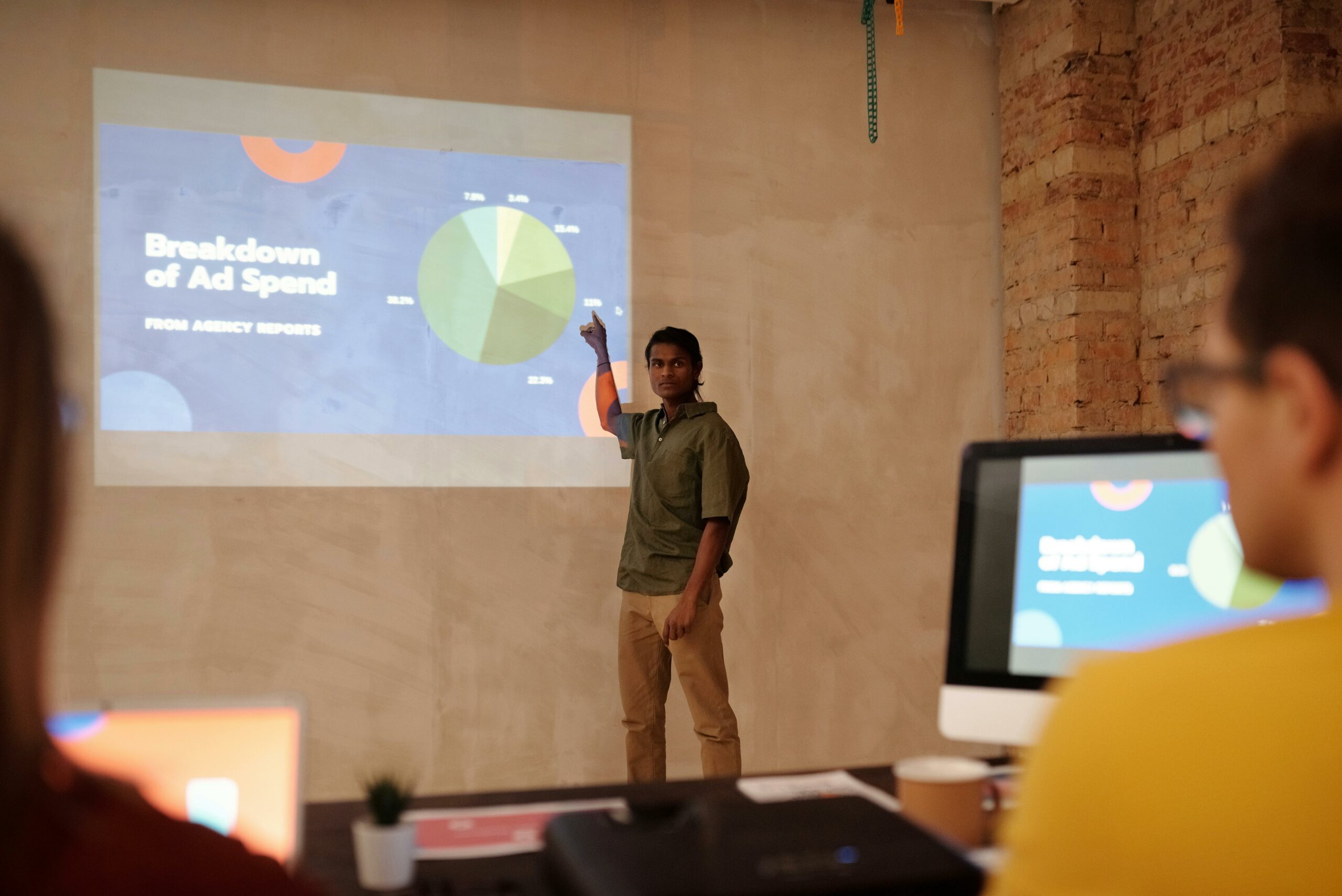
Before you hire creators or launch paid campaigns, define the metrics you will use to decide what to scale. Otherwise, you will argue about “good content” instead of improving outcomes. Here are the key terms, in plain language, plus how to use them in influencer marketing and growth experiments.
- Impressions: total times content is shown. Use it to estimate top-of-funnel volume.
- Reach: unique people who saw content. Use it to understand audience breadth and frequency.
- Engagement rate: engagements divided by impressions or reach (define which). Use it as a creative signal, not a revenue proxy.
- CPM (cost per thousand impressions): cost / (impressions / 1000). Use it to compare awareness efficiency across creators and ads.
- CPV (cost per view): cost / views. Use it for video-first platforms when views are the primary deliverable.
- CPA (cost per acquisition): cost / conversions. Use it when you can track signups, purchases, or qualified leads.
Decision rule: use CPM or CPV to judge distribution efficiency, and use CPA to judge business efficiency. Engagement rate helps you diagnose creative fit, but it should not be your north star unless your goal is community growth. If you need a quick primer on measurement frameworks and how teams benchmark performance, keep an eye on the research and explainers in the, which regularly breaks down what to track and why.
Example calculation: you pay $2,000 for a creator video that delivers 250,000 impressions and 1,200 tracked signups. CPM = 2000 / (250000/1000) = $8. CPA = 2000 / 1200 = $1.67 per signup. That is the kind of math that lets you scale with confidence, because you can compare creators to paid social and to other channels.
Build an influencer offer that converts: whitelisting, usage rights, exclusivity
Shopify benefited from an ecosystem where partners had a reason to talk about the product. You can recreate that by designing an influencer offer that is easy to say yes to and easy to measure. This is where many brands get stuck: they negotiate price first, then scramble to define deliverables. Flip it. Define the business objective, then design deliverables and terms that support it.
- Whitelisting: the creator grants permission for you to run ads through their handle. Takeaway: whitelisting turns one great post into a scalable paid asset, but it should be priced separately.
- Usage rights: permission to reuse content (site, email, ads). Takeaway: specify duration, channels, and whether edits are allowed.
- Exclusivity: creator agrees not to work with competitors for a period. Takeaway: exclusivity is valuable, so pay for it and keep the window tight.
Practical negotiation tip: separate “content production” from “media value.” A creator fee covers concepting, filming, and posting. Whitelisting and usage rights cover distribution value. Exclusivity covers opportunity cost. When you itemize these, negotiations become calmer because you are trading specific value, not haggling over one number.
If you need a reference point for disclosure expectations while negotiating terms, the FTC’s endorsement guidance is the safest baseline for US campaigns: FTC endorsements and influencer guidance. Build disclosure language into your brief so creators do not have to guess.
Benchmarks table: pricing, deliverables, and what to ask for
You cannot copy Shopify’s scale, but you can copy its discipline: standardize packages, test them, then expand what works. Use the table below as a starting point for influencer deliverables and pricing logic. Numbers vary by niche, quality, and creator demand, so treat these as planning ranges and adjust after your first 10 to 20 deals.
| Creator tier | Typical deliverable | Common pricing basis | What to negotiate | Best for |
|---|---|---|---|---|
| Nano (1k to 10k) | 1 short video + 3 story frames | Flat fee or product | Tracking link, pinned comment, raw footage add-on | Fast testing, niche credibility |
| Micro (10k to 100k) | 1 short video + 1 carousel | Flat fee + performance bonus | Usage rights for 30 to 90 days, whitelisting option | Efficient CPA, scalable creative |
| Mid (100k to 500k) | 1 hero video + 1 follow-up story | Flat fee + CPM expectations | Category exclusivity window, revision rounds, timing | Awareness plus conversions |
| Macro (500k+) | 1 hero video + cross-post | Flat fee, sometimes CPM buyout | Paid usage scope, whitelisting rate card, PR approvals | Brand lift, major launches |
Concrete takeaway: for your first wave, prioritize micro creators with clear audience fit and negotiate usage rights. That combination tends to produce both learnings and reusable assets. After you identify winning angles, you can bring in larger creators to amplify proven messaging.
A step-by-step framework to get similar results (without Shopify’s budget)
To replicate the underlying mechanics, run a structured 6-step cycle. The goal is not to “go viral.” Instead, you want predictable distribution, measurable conversion, and a content library you can reuse.
- Pick one conversion event – purchase, trial signup, booked call, or email opt-in. If you pick two, you will optimize neither.
- Instrument tracking – use unique links, UTM parameters, and a dedicated landing page per angle. If you sell on Shopify, connect platform analytics to your ad accounts and CRM where possible.
- Write a one-page creator brief – hook, proof, demo steps, offer, and disclosure line. Include 3 talking points and 2 “do not say” constraints.
- Run 10 small tests – choose creators across two audience segments and two creative angles. Keep deliverables consistent so results are comparable.
- Score and sort – rank each post by CPM, click-through rate, and CPA. Also tag qualitative notes: hook style, objections addressed, and production style.
- Scale winners with paid – whitelist the top 20 percent and run them as ads. Then iterate on the first three seconds and the offer.
Example: if your goal is trial signups, build two landing pages: one for “save time” and one for “make more money.” Give each creator one angle. After two weeks, you will know which promise converts and which creators deliver efficient traffic. That is how you turn influencer marketing into a repeatable growth channel.
For platform-specific ad specs and policies, rely on official documentation rather than blog summaries. Meta’s guidance is a solid reference when you are turning creator posts into ads: Meta Business Help Center. Use it to confirm what is allowed for branded content and what will get rejected in review.
Operations table: campaign checklist you can reuse
Shopify’s advantage was not only strategy – it was execution at scale. The checklist below helps you run creator campaigns like a system, not a scramble. Assign an owner to each phase so nothing falls through the cracks.
| Phase | Tasks | Owner | Deliverables | Quality gate |
|---|---|---|---|---|
| Planning | Define goal, audience, offer, budget, timeline | Marketing lead | One-page plan + KPI targets | KPIs measurable in analytics |
| Sourcing | Shortlist creators, vet audience fit, check past brand work | Influencer manager | Creator list with notes | No obvious fake follower spikes |
| Contracting | Deliverables, usage rights, whitelisting, exclusivity, payment terms | Ops or legal | Signed agreement | Rights and dates clearly stated |
| Production | Briefing, concept approval, draft review, disclosure check | Creator + brand editor | Final assets + captions | Hook and CTA match landing page |
| Launch | Publish schedule, community management, link validation | Social lead | Live posts + tracking sheet | UTMs firing, comments monitored |
| Scale | Whitelist winners, paid testing, creative iterations | Growth marketer | Ad sets + weekly report | CPA within target band |
Concrete takeaway: if you do nothing else, create a single tracking sheet that includes spend, impressions, clicks, conversions, CPM, CPV (if relevant), and CPA per creator. That sheet becomes your memory and prevents repeating expensive mistakes.
How to audit creators like an analyst (quick fraud and fit checks)
Shopify’s ecosystem worked because partners had real audiences and real incentives. You need the same confidence before you scale. A lightweight audit catches most issues without turning into a month-long research project.
- Audience fit: read 30 comments across recent posts. Look for buyer intent, not just compliments.
- Consistency: check whether views swing wildly without explanation. Some volatility is normal, but extreme spikes can signal bought distribution.
- Engagement quality: repeated generic comments can be a red flag. Also check if the creator replies thoughtfully.
- Brand adjacency: review the last 60 days of sponsorships. If they promote five similar products, your message will blend in.
- Content mechanics: identify what they do in the first three seconds, how they demonstrate proof, and how they handle objections.
Decision rule: if you cannot explain why their audience would buy from you in one sentence, do not run a paid amplification test yet. Instead, run a low-risk organic collaboration or a smaller deliverable to validate fit.
Common mistakes that kill compounding growth
Most teams do not fail because they lack ideas. They fail because they skip the unglamorous parts: measurement, terms, and iteration. Avoid these common mistakes and you will outperform brands with bigger budgets.
- Paying for followers instead of outcomes: negotiate toward tracked clicks, signups, or a clear CPM expectation.
- No usage rights: if you cannot reuse winning content, you reset to zero every month.
- Vague briefs: creators need constraints and proof points. “Be authentic” is not a brief.
- Inconsistent landing pages: if the post promises one thing and the page sells another, your CPA will spike.
- Scaling before learning: do not lock large budgets until you have at least 10 comparable tests.
Concrete takeaway: treat the first month as a research sprint. Your goal is to find one audience segment and one message that produces repeatable conversions, then scale distribution.
Best practices to make the playbook stick
Once you have early wins, the next challenge is consistency. This is where Shopify-like compounding happens: you keep what works, document it, and make it easier to repeat. The best practices below are simple, but they are also the difference between a one-off spike and durable growth.
- Standardize packages: offer creators two or three clear bundles with optional add-ons for whitelisting and usage rights.
- Build a creative library: tag winning hooks, demos, and objections. Reuse patterns across creators.
- Use performance bonuses: a small CPA-based bonus aligns incentives without overpaying upfront.
- Keep exclusivity narrow: pay for it only when needed, and limit it to the true competitor set.
- Review weekly: look at CPM, CPV, and CPA together, then decide what to pause, iterate, or scale.
Finally, write down your “definition of done” for each campaign: tracking verified, disclosure included, rights documented, and a post-mortem completed. That discipline makes growth repeatable. If you want more practical breakdowns on creator sourcing, measurement, and campaign operations, the InfluencerDB Blog is the best place to continue.