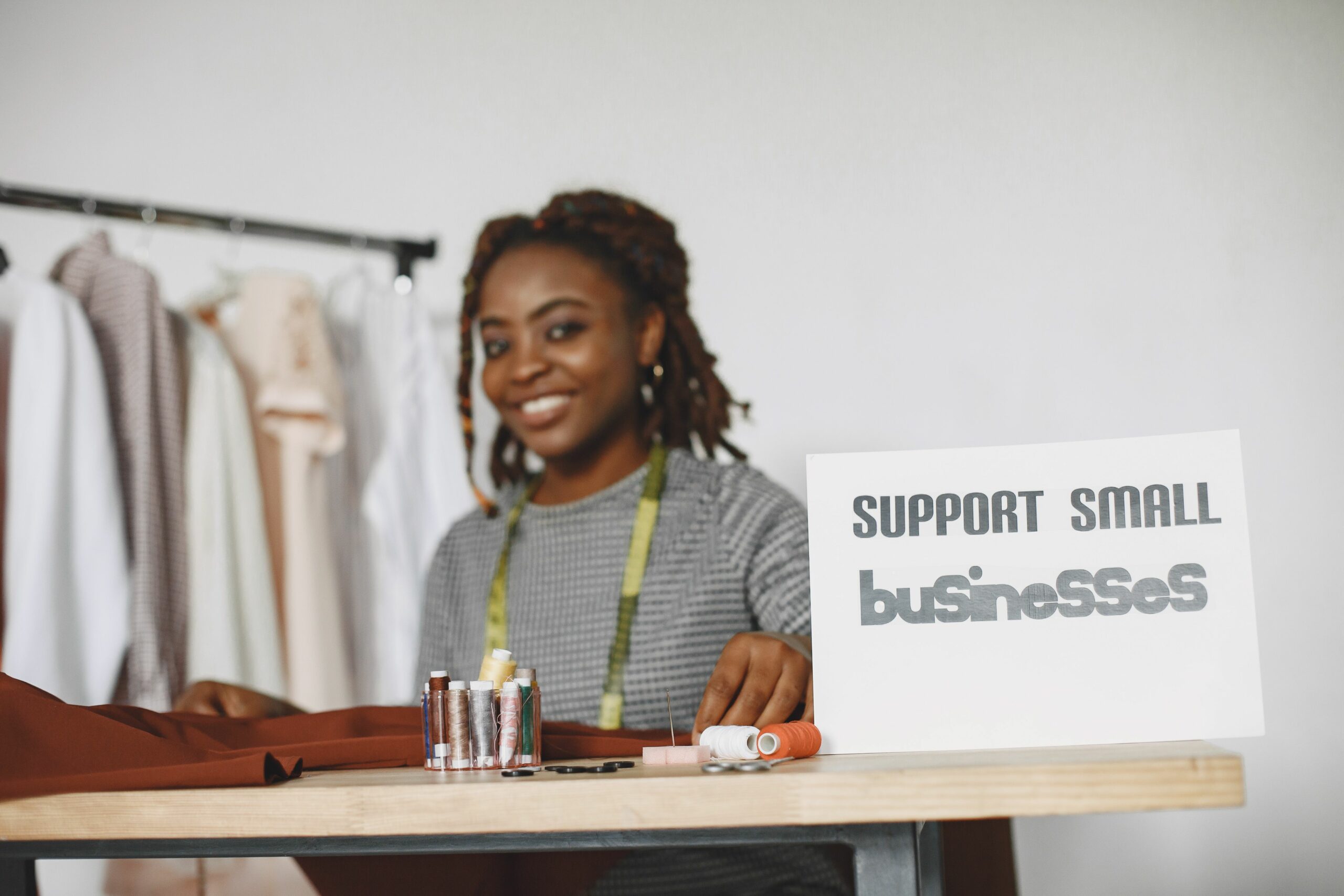

Small business ideas get easier to validate when you treat influencer marketing like a measurable sales channel, not a vibe-based brand play. Instead of guessing what people want, you can test demand with a few creators, track the numbers, and only then invest in inventory, packaging, or a bigger website build. This guide focuses on practical, low-risk concepts that pair well with creators, plus the metrics and deal terms you need to avoid overpaying. Along the way, you will learn the core terms brands use in briefs and contracts so you can negotiate confidently. Finally, you will leave with a repeatable framework you can run in a weekend, even if you are a team of one.
Small business ideas that pair well with influencer marketing
Not every business model benefits equally from creators, so start by choosing ideas that are visual, easy to demonstrate, and simple to buy. In practice, the best fits have a clear before and after, a tight niche audience, or a story that a creator can tell in 30 seconds. You also want a product or service that can be delivered reliably after a spike, because creator-driven demand is lumpy. As a rule, avoid ideas that require long onboarding calls or custom work for every customer unless you have capacity. If you are unsure, pick a concept where the first purchase is low friction and the second purchase is where you make real margin.
- Digital products: niche templates, meal plans, workout programs, Lightroom presets, Notion systems, mini courses.
- Subscription consumables: coffee, tea, pet treats, skincare refills, specialty snacks with a clear angle.
- Local services with a content hook: detailing, home organizing, mobile car wash, microgreens delivery, dog training.
- Creator-friendly physical goods: desk accessories, kitchen tools, travel organizers, kids activity kits, hobby gear.
- Community-led memberships: niche clubs with weekly prompts, accountability groups, or expert Q and A sessions.
Takeaway: choose an idea that a creator can demonstrate in one post and that a viewer can buy in two clicks.
Define the metrics and deal terms before you spend a dollar

Before you DM creators, get fluent in the terms that determine pricing and performance. CPM is cost per thousand impressions, which helps you compare creator posts to ads. CPV is cost per view, often used for video-first platforms. CPA is cost per acquisition, meaning what you pay per purchase or lead, and it is the closest thing to a profit test. Engagement rate is typically (likes + comments + shares + saves) divided by followers or reach, and it tells you whether the audience reacts, not whether they buy. Reach is unique accounts who saw the content, while impressions count total views including repeats.
Whitelisting means you can run ads through the creator’s handle, which often improves click-through rate because the ad looks native. Usage rights define where and how long you can reuse the content, such as on your site, in ads, or in email. Exclusivity prevents the creator from promoting competitors for a set period, and it should cost extra because it limits their income. When you put these in writing, you reduce misunderstandings and you can compare offers apples to apples. For a deeper primer on influencer terms, benchmarks, and planning, browse the InfluencerDB Blog guides on influencer marketing and save the posts that match your niche.
Takeaway: never agree to a flat fee without specifying deliverables, usage rights, and whether exclusivity is included.
A simple framework to validate demand in 7 steps
Validation is where most founders either waste money or build momentum, so use a tight process. First, write a one-sentence offer: who it is for, what it does, and the main outcome. Second, build a lightweight landing page with one product, three benefits, social proof placeholders, and a clear call to action. Third, set up tracking: a unique discount code per creator and UTM links so you can attribute sales. Fourth, recruit 5 to 10 micro creators in the same niche, because consistency beats one big swing.
Fifth, run a two-week test with one primary format, such as TikTok style demos or Instagram Reels, so you can compare results. Sixth, calculate unit economics after each post: revenue minus cost of goods minus shipping minus creator spend. Seventh, iterate the offer, not just the creative, because weak conversion often means the promise is unclear or the price is wrong. If you want a reality check on whether your numbers are normal, use a quick benchmark source like HubSpot’s marketing resources for context on channel measurement and experimentation: HubSpot Marketing.
- Decision rule: if you cannot break even on the first purchase, you need a clear repeat purchase path or a higher AOV bundle.
- Decision rule: if CTR is fine but conversion is low, fix the landing page and offer before buying more posts.
Pricing benchmarks and how to model ROI (with formulas)
Creator pricing varies by niche, format, and audience quality, but you can still model a reasonable range. Start with CPM as a sanity check, then translate into a CPA target based on your margin. Use these simple formulas: CPM = (Cost / Impressions) x 1000. CPV = Cost / Views. CPA = Cost / Purchases. Then compare CPA to your contribution margin per order, which is Price – COGS – shipping – payment fees. If CPA is higher than contribution margin, you are paying for growth you cannot afford.
| Deliverable | Typical pricing basis | What to ask for | When it works best |
|---|---|---|---|
| Short-form video (Reel/TikTok) | Flat fee or CPM proxy | 30 to 60 seconds, hook in first 2 seconds, CTA, link and code | Product demos, before and after, problem solving |
| Story set | Flat fee | 3 to 5 frames, link sticker, talking head proof | Limited drops, local services, fast conversions |
| YouTube integration | CPM and audience fit | 60 to 120 seconds, pinned comment, description link | Higher AOV, education-heavy products |
| UGC for ads (no posting) | Flat fee plus usage rights | Raw files, multiple hooks, variations, 30-day usage terms | Paid social testing and scaling |
Now run a quick example. Suppose you pay $300 for a Reel that gets 20,000 impressions and 12 sales. CPM is (300 / 20000) x 1000 = $15. CPA is 300 / 12 = $25. If your contribution margin per order is $32, you are profitable on first purchase. If your margin is $18, you either need a cheaper creator, a better converting page, or a higher AOV bundle. This is why you should ask creators for average reach on similar posts, not just follower count.
Takeaway: set a target CPA from your margin before you negotiate, then use CPM only as a cross-check.
How to audit creators quickly (and avoid paying for fake reach)
A fast audit protects your budget and improves results more than fancy creative direction. First, scan recent posts and look for consistent view counts rather than one viral spike followed by silence. Second, read comments for relevance: real audiences ask questions, tag friends, and mention the product category naturally. Third, check brand fit by looking at what they promote, because too many sponsorships can reduce trust. Fourth, ask for screenshots of platform analytics: reach, saves, shares, and audience geography. If they refuse, move on.
Also, watch for red flags like sudden follower jumps, repetitive generic comments, or engagement that does not match the niche. When in doubt, run a low-cost test with a trackable link and a small code, then decide based on CPA. For additional context on endorsements and why transparency matters for trust, review the FTC’s guidance on disclosures: FTC Endorsement Guides. Clear disclosure is not just compliance, it can also reduce negative comments and improve conversion because the creator sounds straightforward.
- Checklist: ask for average reach on the last 10 posts, audience location breakdown, and top age range.
- Checklist: confirm whether the creator will allow whitelisting and what it costs.
Negotiation playbook: deliverables, usage rights, and exclusivity
Negotiation is easier when you separate what you are buying into line items. Start with deliverables: number of videos, story frames, stills, and whether links and codes are included. Next, define usage rights: organic reposting is often included, but paid usage should be priced and time-bound. A common structure is 30 days paid usage included, then a renewal fee if you keep running the content. If you want raw files for editing, say so, because that changes the value.
Then address exclusivity with precision. Instead of a broad ban like “no skincare,” specify direct competitors or a narrow category, and keep the window short, such as 14 to 30 days. If a creator asks for a high fee, offer a performance component: smaller base plus commission, or a bonus if CPA beats a target. Finally, put everything in writing, including posting date, review process, and what happens if the content is delayed. Takeaway: the cleanest deals are modular – base fee for posting, add-on for paid usage, add-on for exclusivity.
Campaign planning table: who does what and what you ship
Even a small test needs a plan, otherwise you cannot learn from it. Assign owners, deadlines, and deliverables so you do not lose a week to back-and-forth. The table below works for a solo founder too, because “owner” can be you, your freelancer, or the creator. Use it as a pre-flight checklist before you send product or pay deposits.
| Phase | Tasks | Owner | Deliverables |
|---|---|---|---|
| Prep | Define offer, margin, target CPA, tracking links, discount codes | Brand | One-page brief, UTM template, code list |
| Recruit | Shortlist creators, request rates and analytics, negotiate terms | Brand | Creator roster, signed agreement |
| Production | Ship product, confirm talking points, confirm disclosure language | Brand and creator | Shipping proof, script bullets, draft review notes |
| Launch | Post schedule, community replies, landing page monitoring | Creator and brand | Live links, comment FAQ, stock check |
| Measure | Report reach, clicks, sales, CPA, refund rate, repeat rate | Brand | Scorecard, next-test plan |
Takeaway: if you cannot name the deliverable for each phase, you are not ready to pay for posts.
Common mistakes (and how to fix them fast)
One common mistake is choosing creators based on follower count instead of audience match and recent reach. Fix it by requiring screenshots of average reach and by testing multiple micro creators instead of one big name. Another mistake is sending a vague brief that forces the creator to guess the value proposition. Solve that with three non-negotiable talking points, one clear CTA, and one proof element like a demo, testimonial, or guarantee. People also forget fulfillment, which is painful when a post hits and you run out of stock. Build a buffer, or use pre-orders with a clear ship date.
Finally, many small brands ignore usage rights and later discover they cannot repurpose the best-performing video in ads. Ask for paid usage up front, even if you do not plan to run ads yet, because it is cheaper to bundle. Takeaway: treat creator content as an asset with rights, not just a one-time post.
Best practices for repeatable wins on a small budget
Consistency is your advantage, so build a system you can repeat monthly. Keep a rolling shortlist of creators, track their results in a spreadsheet, and rebook the ones who hit your CPA target. Next, standardize your landing pages: one product, one promise, one primary CTA, and a short FAQ that addresses shipping, returns, and sizing or ingredients. Also, ask creators for variation: two hooks, two CTAs, and one objection-handling line, because small changes can double conversion. When a post performs, follow up with a second post that answers the top comment question, since that often converts warm viewers.
As you scale, consider whitelisting the best creator posts and running small paid boosts to similar audiences. Even $10 to $30 per day can extend the life of a strong video and smooth out the spikes. If you want more tactical breakdowns on briefs, pricing, and measurement, keep an eye on the and build a swipe file of briefs that match your category. Takeaway: your goal is not one viral hit – it is a predictable pipeline of tests that improve your offer and lower CPA over time.