

Ecommerce About Page performance is rarely about pretty brand storytelling – it is about reducing risk, answering objections, and giving shoppers a reason to trust you now. If your product pages do the selling, your About page does the believing. In practice, it is one of the few places you can control context: who you are, why you exist, how you operate, and what happens if something goes wrong. Done well, it supports conversion, improves branded search confidence, and strengthens influencer and press outreach because partners can quickly understand your positioning.
This guide is built for ecommerce teams and creators who drive sales through social. You will get a clear structure, copy blocks you can adapt, and decision rules for what to include based on your business model. Along the way, you will also learn how to connect your About page to influencer campaigns without turning it into a sales pitch.
Ecommerce About Page fundamentals: what it must do in 10 seconds
Most visitors skim, so your first job is to make the page legible at a glance. Start with a tight headline that says what you sell and for whom, then add proof that you are real: dates, locations, numbers, and recognizable signals. After that, handle the top objections: quality, shipping, returns, customer support, and safety. Finally, give the visitor a next step that matches intent, such as “Shop bestsellers,” “See reviews,” or “Contact support.”
Use this 10 second checklist as your baseline:
- One sentence positioning – what you sell, for whom, and the outcome.
- Trust anchors – years in business, order count, warranty, certifications, press, or retail partners.
- Operational clarity – shipping regions, processing times, and return window.
- Human presence – founder photo, team photo, or a real signature with a name.
- Next step CTA – a button that matches the visitor’s stage.
Concrete takeaway: if your top section does not answer “What is this brand and can I trust it?” you are leaving money on the table, even if the rest of the page is beautifully written.
A conversion-first structure you can copy (with modules)
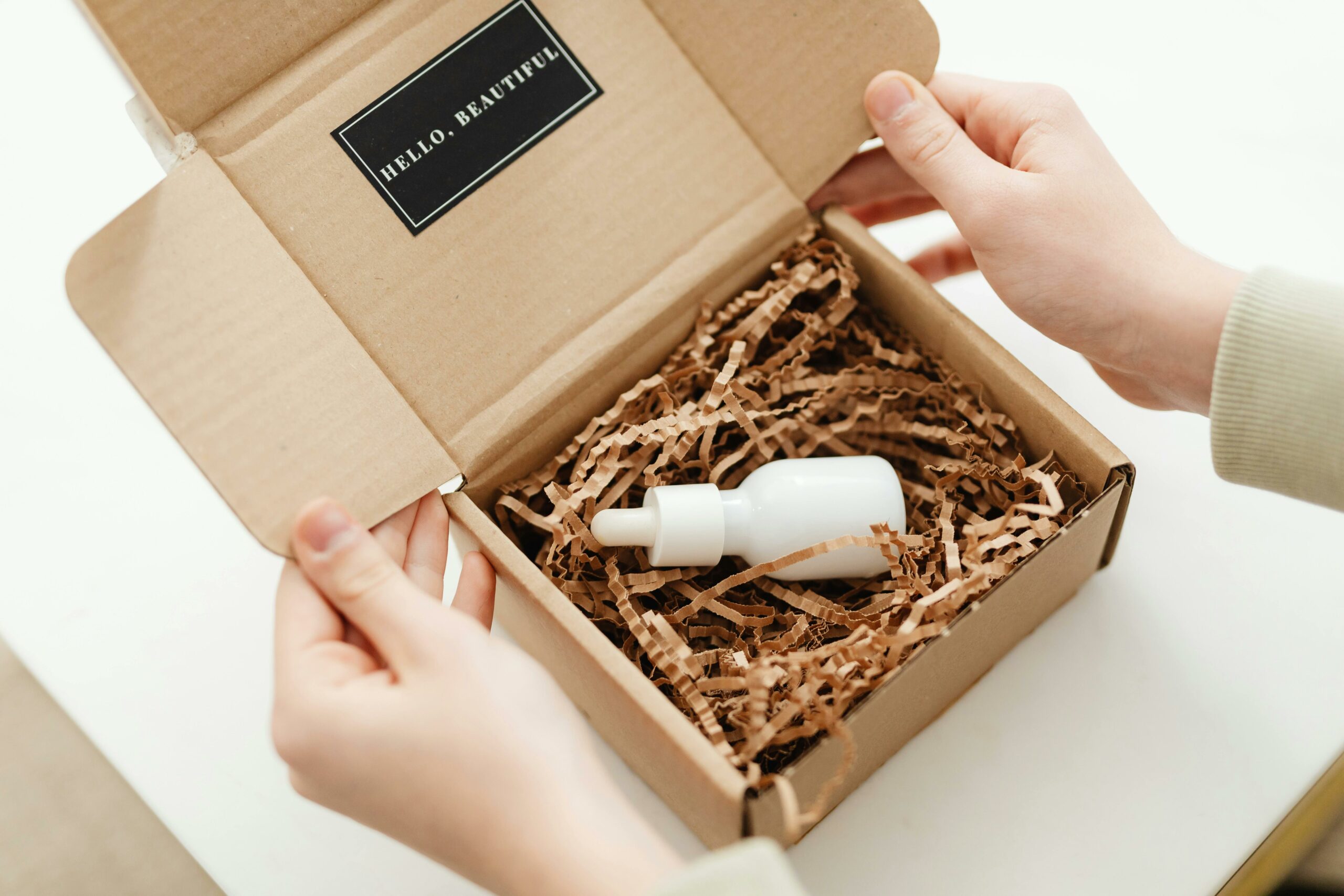
Instead of writing one long narrative, build your About page from modules. That way you can reorder sections based on what your customers care about most. For example, a supplement brand needs safety and testing proof early, while a fashion brand may need fit, materials, and returns clarity first.
Here is a practical module order that works for most ecommerce categories:
- Hero – positioning line, one supporting sentence, CTA.
- Why we exist – the problem, the insight, the promise.
- Proof – numbers, reviews, press, certifications, retail partners.
- How we make it – materials, sourcing, testing, craftsmanship.
- How we ship and support – shipping, returns, warranty, support hours.
- Community – UGC, creators, ambassadors, causes.
- FAQ – 6 to 10 questions, written like customers ask them.
Concrete takeaway: treat your About page like a landing page with a narrative, not a memoir. Each module should earn its spot by removing doubt or increasing desire.
| Module | Customer question it answers | What to include | Best for |
|---|---|---|---|
| Hero positioning | What is this and who is it for? | One sentence value prop, audience, outcome, CTA | All stores |
| Proof block | Can I trust you? | Review count, rating, press logos, certifications, guarantees | New brands, high AOV |
| Quality and sourcing | Is it good and safe? | Materials, testing, suppliers, standards, photos | Beauty, food, supplements, apparel |
| Shipping and returns | What happens if it does not work? | Return window, process, timelines, warranty, support | All stores |
| Founder story | Who is behind this? | Origin, mission, founder photo, values in action | Founder-led brands |
| Community and creators | Do people like me buy this? | UGC gallery, ambassador program, creator quotes | Social-first brands |
Copy that sells without sounding salesy: templates and examples
Strong About copy is specific. It uses numbers, constraints, and clear choices rather than vague claims. Replace “premium” with what makes it premium: a material grade, a test standard, a warranty length, or a manufacturing location. Replace “sustainable” with the exact practice: recycled content percentage, plastic reduction, or verified certifications.
Use these plug and play templates:
- Positioning line: “We make [product category] for [audience] who want [outcome] without [common tradeoff].”
- Proof line: “Trusted by [number] customers since [year], with an average rating of [rating] across [review count] reviews.”
- Quality line: “Every batch is [tested/inspected] for [standard], and we publish [COAs/spec sheets] on request.”
- Returns line: “Try it for [X] days. If it is not right, start a return in [steps] and we will [refund/replace] within [timeline].”
Concrete takeaway: write one sentence that includes a tradeoff you refuse to make. That single constraint often differentiates you more than a long mission statement.
If you need a reality check on what modern ecommerce copy looks like, study how leading brands structure trust and clarity. For broader conversion copy principles, HubSpot’s writing resources are a solid reference: HubSpot copywriting guidance.
Make it measurable: KPIs, tracking, and simple formulas
Your About page should be measured like any other conversion asset. At minimum, track page views, scroll depth, clicks to key destinations, and assisted conversions. In GA4, create an exploration that looks at users who viewed the About page and then purchased within the same session or within a set lookback window. Also track CTA click rate from the About page to product pages, collections, reviews, and support.
Use these simple formulas to evaluate impact:
- About page CTA click rate = About page CTA clicks / About page views
- Assisted conversion rate = Purchases with About page in path / About page sessions
- Support deflection rate = (Support tickets about shipping or returns) / (Total tickets) before vs after updates
Example calculation: if your About page gets 20,000 views per month and 2,400 people click “Shop bestsellers,” your CTA click rate is 2,400 / 20,000 = 12%. If 180 of those sessions later purchase, your assisted conversion rate is 180 / 20,000 = 0.9%. That number seems small, but it is meaningful if your AOV is high and the page is a trust checkpoint.
Concrete takeaway: pick one primary CTA and one secondary CTA, then A/B test the hero section. Even small lifts in CTA click rate can compound across paid and organic traffic.
Connect your About page to influencer marketing and UGC
Your About page is also a partner asset. Creators, affiliates, and journalists often look for a quick “what is this brand” summary before they agree to work with you. Add a short “As seen on” or “Creator tested” block, but keep it honest and verifiable. If you run influencer campaigns, consider embedding a rotating UGC gallery with permission and clear attribution.
To make this operational, align your About page with your influencer brief. When creators understand your origin, constraints, and customer promise, their content sounds more consistent and credible. For practical guidance on building creator programs and evaluating partners, keep a bookmark on the InfluencerDB Blog and use it as a reference when you refresh your brand story and proof points.
Define key influencer terms early so your team negotiates consistently:
- CPM – cost per 1,000 impressions. Formula: cost / (impressions / 1,000).
- CPV – cost per view, often for video. Formula: cost / views.
- CPA – cost per acquisition. Formula: cost / purchases (or leads).
- Engagement rate – engagements divided by reach or followers, depending on your standard.
- Reach – unique accounts that saw content.
- Impressions – total views, including repeats.
- Whitelisting – running ads through a creator’s handle with permission.
- Usage rights – permission to reuse content on your site, ads, email, and social.
- Exclusivity – a period where the creator cannot work with competitors.
Concrete takeaway: add a “Featured creators” module only if you can maintain it monthly. Stale creator blocks can backfire because they signal neglect.
| Influencer term | What it changes on your About page | Actionable implementation |
|---|---|---|
| Usage rights | Whether you can embed UGC and testimonials | Use a consent workflow, store proof of permission, add creator credit |
| Whitelisting | How “creator tested” claims appear in paid placements | Keep claims consistent across About, ads, and landing pages |
| Exclusivity | Which creators you can feature as brand faces | Feature creators with active exclusivity or long-term partnerships |
| CPA | How you justify creator spend internally | Track creator links and discount codes, then compare CPA to paid social |
Best practices: trust signals, design, and UX rules
Design matters, but clarity matters more. Use real photography whenever possible: founder, team, workspace, packaging, or production. If you must use stock, keep it minimal and never pretend it is your facility. Add trust signals where they help decision-making, not as decoration. For example, place your return window next to your guarantee, and link to the full policy.
Best practices you can implement this week:
- Put policies in plain English – then link to the legal version for details.
- Use scannable subheads – “Shipping,” “Returns,” “Warranty,” “Materials,” “Support.”
- Show proof with numbers – “Made in Portugal,” “2 year warranty,” “Ships in 24 hours.”
- Add a founder signature – a name and role increases perceived accountability.
- Include a press kit link – logo files, product shots, and a short boilerplate.
For accessibility and usability standards, follow established guidance from W3C: WAI accessibility fundamentals. That is not just compliance – it also improves readability and reduces friction on mobile.
Concrete takeaway: if your About page is a wall of text, break it into modules with subheads and one CTA per section. You will keep readers moving instead of bouncing.
Common mistakes that make About pages feel untrustworthy
Many About pages fail for predictable reasons. They either over-index on inspiration and under-deliver on specifics, or they hide the operational details that customers actually need. Another common issue is borrowed language that could describe any brand. When your copy is interchangeable, shoppers treat your product as interchangeable too.
- Vague claims – “high quality,” “premium,” “best in class” with no evidence.
- No clear owner – no names, no faces, no location, no accountability.
- Policy dodge – forcing users to hunt for shipping and returns.
- Overstuffed timelines – long founder stories before you explain what you sell.
- Outdated proof – old press logos, expired partnerships, stale numbers.
Concrete takeaway: run a “skeptical friend” review. Ask someone who does not know your brand to read the first 20 seconds and list what they still do not trust. Then rewrite only those gaps.
A step-by-step refresh process (90 minutes, no rebrand required)
You can improve an About page quickly if you work in the right order. Start by collecting facts and proof, then write the hero and proof blocks, and only then refine the story. This prevents you from polishing paragraphs that do not move the needle. It also makes it easier to keep the page current as your brand grows.
- Inventory your proof – reviews, ratings, order count, warranty, certifications, press, retail partners.
- List top 5 objections – quality, fit, safety, shipping speed, returns friction.
- Draft the hero – one sentence positioning plus one proof line.
- Add operational clarity – shipping regions, processing times, return window, support channels.
- Write the origin story in 120 to 180 words – keep it tight, then link to a longer story if needed.
- Place CTAs intentionally – hero CTA to shop, mid-page CTA to bestsellers, end CTA to contact.
- QA for truth and consistency – match claims to policies and product pages.
- Measure for 2 weeks – compare CTA click rate and assisted conversions before and after.
Concrete takeaway: do not wait for a redesign. A better hero, stronger proof, and clearer policies can lift trust immediately, especially for cold traffic from creators and ads.
About page mini examples: three angles that work
1) The “proof-first” About page: Lead with rating, review count, and guarantee, then explain the product philosophy. This works well for high-AOV products where risk is the main barrier. Include a short “What happens if you hate it?” section with a simple returns summary.
2) The “process and materials” About page: Lead with how it is made, where it is made, and what standards you follow. This is ideal for apparel, skincare, food, and home goods. Add a photo series of materials or production steps, plus a sourcing FAQ.
3) The “community-led” About page: Lead with customer stories and creator content, then explain the founding idea. This works for social-first brands with strong UGC. Make sure you have usage rights and keep the gallery fresh.
Concrete takeaway: pick one primary angle based on your biggest conversion barrier. You can include the other modules later, but your first screen should focus on the main doubt you need to remove.
Final checklist before you publish
- Hero includes what you sell, for whom, and a clear CTA.
- At least three concrete proof points are visible without scrolling too far.
- Shipping, returns, and warranty are summarized in plain English.
- Founder or team presence is real and named.
- Creator and UGC elements have documented usage rights.
- Tracking is set up for CTA clicks and assisted conversions.
- Copy avoids vague superlatives and uses specifics instead.
If you treat your About page as a living asset, it becomes a quiet closer for every channel – organic search, paid social, and influencer traffic alike.