

Facebook contest rules are the difference between a giveaway that drives real growth and one that gets removed, reported, or quietly ignored. In 2026, the platform is stricter about authenticity, user privacy, and misleading mechanics, so you need a plan that is both compliant and measurable. This guide breaks down what you can do, what you should avoid, and how to structure a contest that produces clean data you can actually use. Along the way, you will get templates, formulas, and checklists you can copy into your next campaign brief.
Facebook contest rules: what they mean in 2026
At a practical level, platform rules determine three things: how people enter, how you collect and use data, and how you announce winners. Facebook also expects you to run promotions in a way that does not encourage spammy behavior or mislead users about what is required to participate. Therefore, you should treat a contest as a mini campaign with clear terms, a tracking plan, and a moderation workflow. If you are working with creators or influencers, you also need to align brand requirements with creator posting habits so the entry mechanics do not feel unnatural. For ongoing guidance on campaign structure and measurement, it helps to browse the InfluencerDB.net blog resources and adapt the frameworks to your niche.
Start by separating “platform policy” from “local law.” Platform policy is what Meta allows on Facebook. Local law is what your country or state requires for sweepstakes, contests of skill, age restrictions, and prize disclosures. You must satisfy both. When in doubt, write terms that are stricter than the minimum, because enforcement tends to punish ambiguity.
Concrete takeaway: before you write a single caption, create a one page “promotion spec” with (1) objective, (2) entry method, (3) prize and value, (4) eligibility, (5) start and end times with time zone, and (6) winner selection method. That single page prevents most last minute rule changes that cause confusion and complaints.
Key terms you need before you build the giveaway
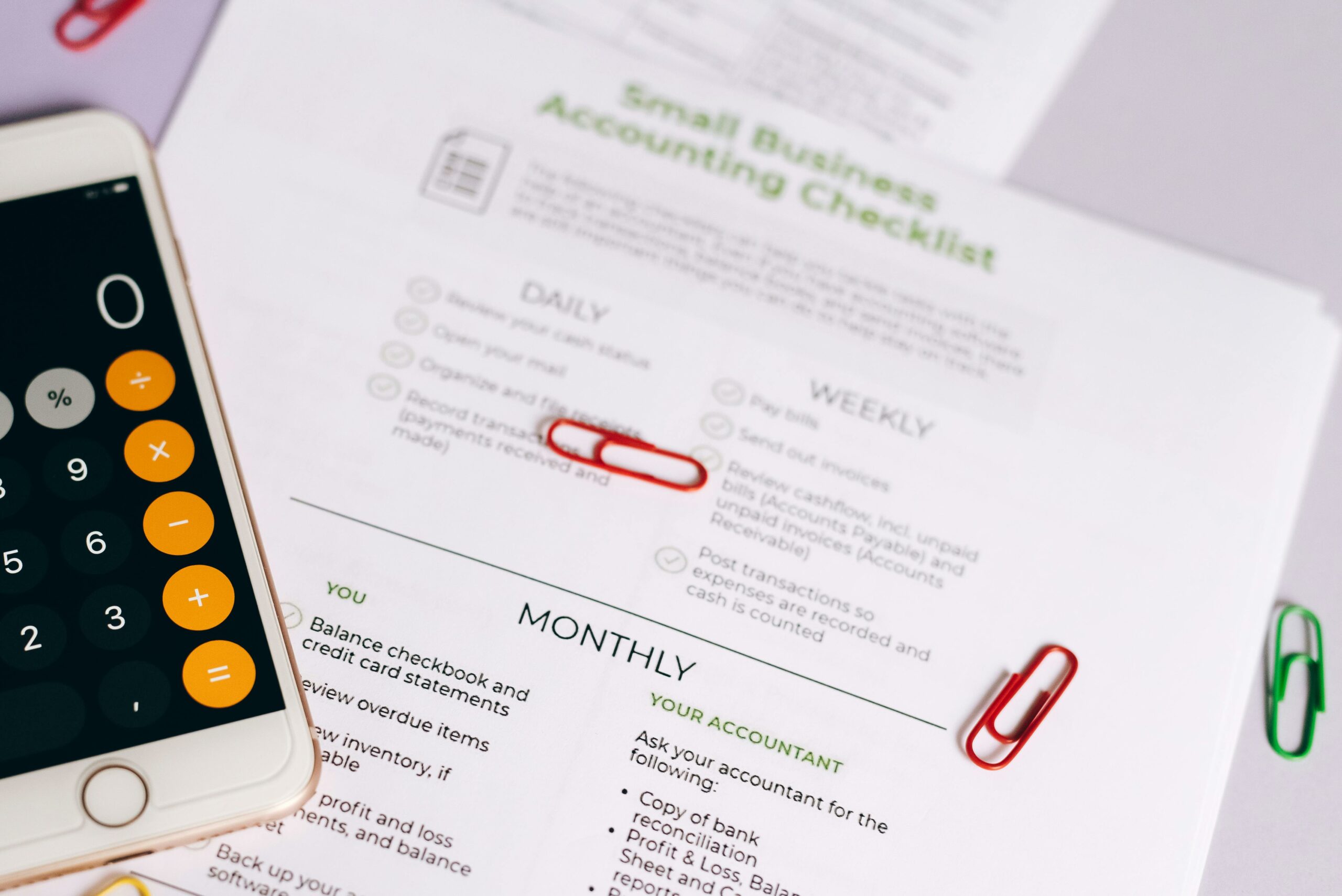
Contests often fail because teams use marketing metrics loosely. Define your terms upfront so your reporting is consistent across posts, creators, and paid support. Below are the core terms you should align on with your stakeholders and any partners.
- Reach – the number of unique people who saw your content at least once.
- Impressions – the total number of times your content was shown, including repeat views.
- Engagement rate – engagements divided by reach or impressions (choose one and stick to it). A common formula is: ER by reach = (reactions + comments + shares + saves) / reach.
- CPM – cost per 1,000 impressions. Formula: CPM = (spend / impressions) x 1000.
- CPV – cost per view (usually video views). Formula: CPV = spend / views.
- CPA – cost per acquisition (email signup, purchase, app install). Formula: CPA = spend / conversions.
- Whitelisting – running ads from a creator’s handle or page, typically with permission, to leverage their identity and social proof.
- Usage rights – permission to reuse a creator’s content in ads, on your site, or in email. Rights should specify duration, channels, and geography.
- Exclusivity – a clause preventing a creator from promoting competitors for a defined period and category.
Concrete takeaway: put these definitions into your contest brief so every report uses the same denominator. Otherwise, one team will report engagement rate by impressions while another uses reach, and your “winner” will be a math artifact.
Allowed entry mechanics vs risky mechanics (with examples)
Facebook promotions work best when entry is simple and the required actions match the objective. If you want comments, ask a question that invites a real answer. If you want email leads, use a landing page and make Facebook the distribution channel, not the data collection layer. Meanwhile, avoid mechanics that look like engagement bait or create low quality participation.
| Mechanic | Good for | Risk level | Example prompt |
|---|---|---|---|
| Comment to enter | Conversation, social proof | Low if prompt is genuine | “Tell us your top tip for organizing a small kitchen.” |
| Photo or video submission | UGC library, product use cases | Medium due to rights and moderation | “Post a photo of your weekend hike and tag our Page.” |
| Landing page form | Lead gen, measurable CPA | Low if privacy is clear | “Enter via the form to receive winner updates by email.” |
| Share to enter | Distribution | High due to spam signals | Avoid making sharing mandatory; treat it as optional. |
| Tag friends to enter | Discovery | High if it encourages mass tagging | If used, limit: “Tag one friend who would love this.” |
Concrete takeaway: choose one primary entry action and one optional action. For example, “comment to enter” plus “optional: join the email list for bonus entry.” That keeps the contest understandable and reduces complaints.
Compliance essentials: disclosures, eligibility, and data privacy
Even if your contest is small, you should publish clear terms and a short disclosure in the post. The disclosure should state that Facebook is not sponsoring or administering the promotion, and it should explain how winners are chosen and notified. In addition, you need eligibility rules: age minimum, location limits, and whether employees or family members are excluded. If you collect emails or other personal data, you must explain how you will use it and how long you will keep it.
If you work with creators, disclosure is not optional. In the US, the FTC expects “clear and conspicuous” disclosures when there is a material connection, including free product or payment. Read the primary source and align your creator instructions to it: FTC Disclosures 101. In the EU and UK, local advertising standards and consumer protection rules can apply as well, so coordinate with counsel when prizes are high value or the campaign is cross border.
Concrete takeaway: write two layers of terms. Layer one is a short post disclosure (2 to 4 lines). Layer two is a full terms page or document with eligibility, timing, prize details, winner selection, and privacy language. Link to the full terms in the post and pin a comment repeating the key points.
Step-by-step: how to run a Facebook contest that you can measure
Most brands can run a clean contest in a week if they follow a repeatable workflow. The key is to design measurement first, then write creative. That way, you do not end up with a viral post that cannot be attributed to sales, signups, or store visits.
- Pick one objective and one KPI. Examples: email signups (CPA), product page visits (CPC), or qualified comments (cost per qualified entry).
- Choose the contest type. Sweepstakes (random draw) is simpler than a skill contest, but it can attract freebie hunters. Skill contests can produce better UGC but require judging criteria.
- Define the entry and validation rule. If entry is “comment,” decide what counts as valid. For example, “must answer the question” is clearer than “comment anything.”
- Write terms and the short disclosure. Include start and end times with time zone, how winners are chosen, and how they will be contacted.
- Set up tracking. Use UTM parameters for any link clicks. If you have a landing page, add pixels and conversion events. Keep a spreadsheet of post URLs and creator handles.
- Plan moderation. Assign an owner to hide spam, respond to questions, and capture screenshots if disputes arise.
- Launch and pin a comment. Pin the key rules and the link to full terms so late viewers see it first.
- Select and verify winners. Document the selection process, verify eligibility, and get consent before public announcement if required by your policy.
- Report and archive. Save final metrics, export comments if needed, and store winner documentation securely.
Concrete takeaway: treat “validation” as a real step. If you cannot explain how you filtered invalid entries, you cannot defend the winner selection if someone complains.
Budgeting and ROI: simple formulas and a realistic example
A Facebook contest is not automatically “cheap.” You pay in prizes, creative time, moderation, and sometimes paid distribution. To keep it grounded, estimate your expected cost per qualified entry and your expected conversion rate from entry to your business outcome.
Use these simple formulas:
- Total contest cost = prize cost + shipping + creator fees + paid spend + labor estimate
- Cost per qualified entry = total contest cost / qualified entries
- Estimated CPA = total contest cost / conversions
Example: You spend $600 on a prize bundle, $150 shipping, $500 on boosting, and estimate $250 labor. Total cost = $1,500. You get 900 comments, but only 600 are qualified based on your rule. Cost per qualified entry = $1,500 / 600 = $2.50. If 60 entrants later buy (10% conversion), estimated CPA = $1,500 / 60 = $25. Now compare that to your usual paid social CPA. If your typical CPA is $18, the contest is not a win unless it also produces reusable UGC or improves retention.
Concrete takeaway: report two numbers, not one – cost per qualified entry and CPA. The first tells you whether the mechanic is attracting the right people, while the second tells you whether the contest actually drove business value.
| Cost component | What to include | Common miss | How to control it |
|---|---|---|---|
| Prize | Retail value, taxes, shipping | International shipping fees | Limit eligibility by region |
| Creator fees | Post fee, revisions, add-ons | Usage rights for ads | Negotiate rights upfront |
| Paid support | Boosting, retargeting, lookalikes | Frequency creep | Cap spend and monitor frequency |
| Labor | Moderation, winner verification | Customer support time | Prewrite FAQs and macros |
Working with creators: brief, rights, and whitelisting decisions
Creators can make contests feel native, but they also introduce operational risk if instructions are vague. Your brief should specify the entry mechanic, required disclosures, and what happens if a post is edited after publishing. You should also decide whether you want whitelisting. Whitelisting can improve CPM and conversion rates because the ad comes from a familiar voice, but it requires access permissions and a clear end date.
Include these clauses in your creator agreement or SOW: usage rights (where you can reuse the content), duration (for example, 90 days), paid amplification permission, and exclusivity if you are in a competitive category. Keep exclusivity narrow and time bound so it is fair and enforceable. Also, align on what data the creator will share after the campaign, such as reach, impressions, and link clicks.
Concrete takeaway: if you plan to run the creator post as an ad, ask for whitelisting permission before the post goes live. Retroactive approvals slow down the campaign and can kill momentum.
Common mistakes that get contests ignored or taken down
- Unclear entry rules. If people ask “How do I enter?” in the comments, your post is not doing its job. Put the steps in the first two lines.
- No time zone. “Ends Friday” creates disputes. Use a date, time, and time zone.
- Forgetting the platform disclaimer. You need to state that Facebook is not associated with the promotion.
- Over-optimizing for vanity engagement. Mandatory tagging and sharing can attract low intent users and spam, which hurts long term performance.
- Weak winner verification. If you do not verify age and location, you may end up awarding a prize to an ineligible entrant.
Concrete takeaway: before launch, run a “confusion test.” Show the post draft to someone outside marketing and ask them to explain how to enter in one sentence. If they hesitate, rewrite.
Best practices checklist for repeatable results
Once you have the basics, the difference between an average contest and a high performing one is operational discipline. You want clean entries, fast moderation, and a clear follow-up path after the winner is announced. That is what turns a one-off spike into compounding growth.
- Make the prize relevant. A niche prize attracts niche entrants. A generic gift card attracts everyone, including people who will never buy.
- Use a pinned comment for the essentials. Restate entry steps, end date, and the link to full terms.
- Build a post-contest funnel. If you collected emails, send a short sequence: confirmation, reminder before close, winner announcement, and a consolation offer.
- Document winner selection. Keep a record of the random draw method or judging rubric.
- Repurpose the best UGC. If you have usage rights, test top entries as ads and track CPM, CTR, and CPA.
For platform-specific posting and moderation guidance, cross-check Meta’s official documentation as you finalize your workflow: Meta Business Help Center. Concrete takeaway: schedule your winner announcement post at the same time you publish the original contest. That small step reduces delays and signals professionalism to your audience.
A practical template you can copy into your next contest post
Use this as a starting point and adjust for your region and prize. Keep the first lines short so they do not get truncated in the feed.
- Headline: “Win [prize] – ends [date, time, time zone]”
- How to enter: “1) Follow our Page 2) Comment with [specific answer]”
- Optional: “Bonus entry: join our email list (link in comments).”
- Eligibility: “Open to [locations], 18+.”
- Winner selection: “Winner chosen at random and contacted via DM within 48 hours.”
- Disclosure: “This promotion is not sponsored, endorsed, or administered by Facebook.”
- Terms: “Full terms: [link].”
Concrete takeaway: if you expect high participation, add a line that warns users about scams, such as “We will never ask for your password or payment details.” It reduces impersonation attempts and protects entrants.