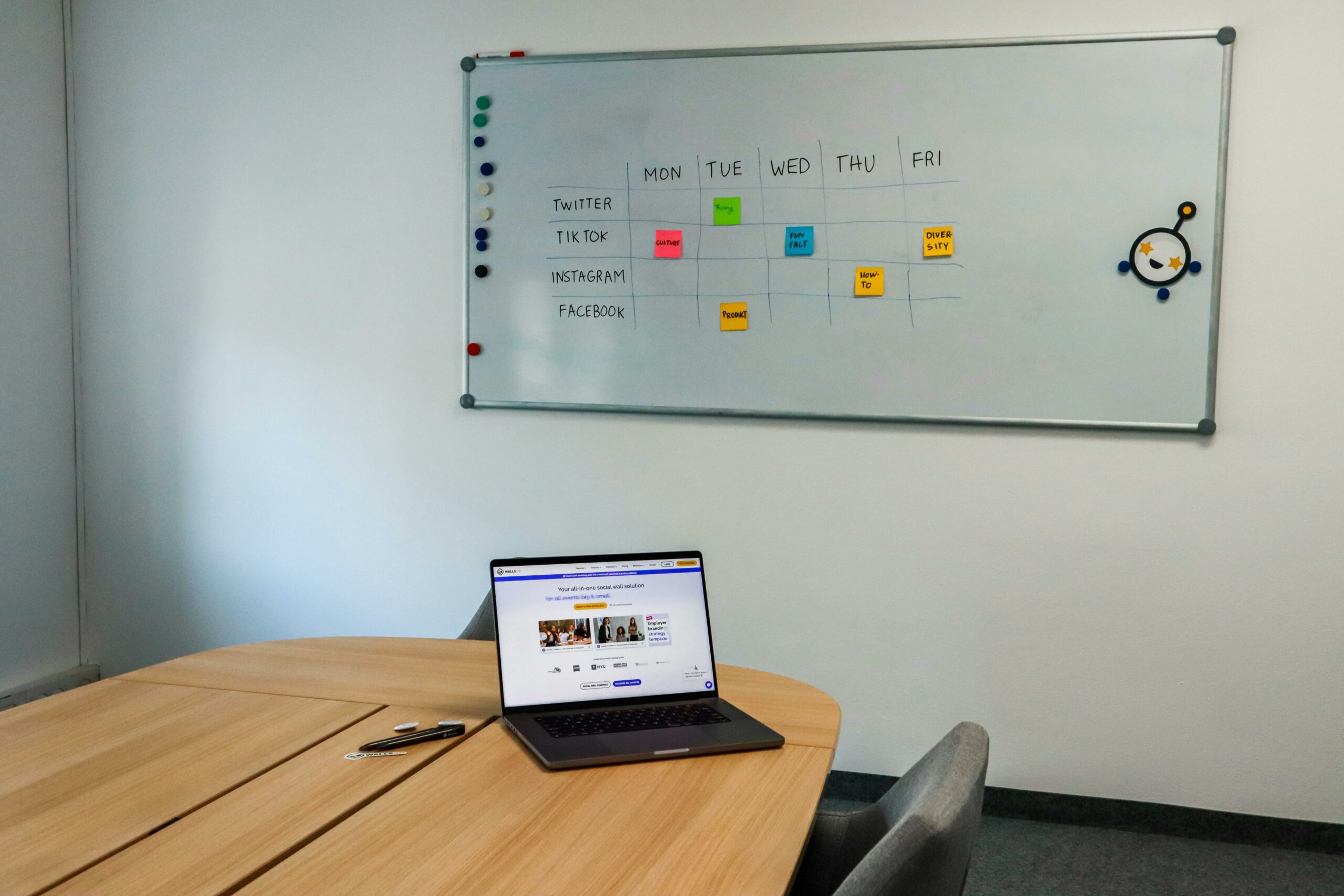

Social media manager questions can make or break a working relationship, because the wrong ask usually signals unclear scope, unrealistic expectations, or missing data. This guide translates the Italian idea of “cose da non chiedere mai” into practical English: what not to ask, why it backfires, and the better questions that get you faster answers, cleaner execution, and measurable results. Along the way, you will get definitions, pricing logic, KPI frameworks, and ready to copy checklists you can use with a freelancer, an agency, or an in house team.
Social media manager questions that instantly create scope creep
Some requests sound harmless but quietly expand the job into “everything digital.” The fastest way to lose trust is to ask for outcomes without agreeing on inputs – time, tools, access, and decision rights. Instead of “Can you just handle our socials?” define the channels, the cadence, and who approves. Instead of “Make it go viral,” agree on a measurable goal like qualified traffic, saves, or leads. A social media manager can drive growth, but they cannot replace product market fit, customer support, and a full creative studio at the same time.
Do not ask: “Can you do social, ads, email, PR, and influencer outreach for one monthly fee?” Ask instead: “Which parts are in scope for the retainer, and what is your hourly or project rate for add ons?” That single swap forces a scope document. Do not ask: “Can you post daily on every platform?” Ask instead: “Which two platforms will deliver the best ROI for our audience, and what posting frequency is realistic with our content pipeline?” Your takeaway: if you cannot list deliverables, you do not have a brief yet.
- Checklist: Confirm channels, posting frequency, community management hours, reporting cadence, and approval workflow before work starts.
- Decision rule: If a request changes time or risk, it needs a change order or a new line item.
Key terms you should define before you ask for results

Misunderstood metrics create bad “gotcha” questions later. Define the basics up front, then align on which ones matter for your campaign stage. Reach is the number of unique people who saw content. Impressions are total views, including repeats. Engagement rate is engagement divided by reach or impressions (you must specify which). CPM is cost per thousand impressions. CPV is cost per view (common for video). CPA is cost per acquisition (a purchase, lead, or signup). When someone asks “Why is engagement down?” without defining the denominator, the conversation becomes noise.
Influencer adjacent terms also matter because many social media managers coordinate creators. Whitelisting is when a brand runs ads through a creator’s handle (or grants access) to use their identity for paid distribution. Usage rights define how the brand can reuse content (where, how long, and in what formats). Exclusivity restricts a creator or manager from working with competitors for a period. These terms affect cost, timelines, and legal risk, so they should be in writing.
- Tip: Put metric definitions in the first page of your brief so reporting debates do not derail execution.
- Tip: Always specify engagement rate formula: ER by reach = engagements / reach; ER by impressions = engagements / impressions.
Pricing questions: what not to ask – and how to get a real quote
Asking “How much for social media?” is like asking “How much for a house?” Pricing depends on volume, complexity, and accountability. A better approach is to request a quote tied to deliverables and outcomes. Start by listing how many posts, how many short form videos, how many community replies, and how many reporting hours you need. Then ask for a rate structure: retainer, project, or hourly. Finally, clarify what is included: strategy, copywriting, design, editing, publishing, community management, and analytics.
Use simple unit economics to sanity check quotes. If you want 20 posts per month and each post requires 45 minutes of work across writing, design, and scheduling, that is 15 hours before meetings, revisions, and reporting. If you also want 8 short videos and each takes 2.5 hours to script, edit, caption, and QA, that is another 20 hours. Suddenly, a “cheap” retainer implies an impossible workload, which leads to rushed output or burnout.
| Deliverable | Typical inputs | Common pricing model | What to clarify |
|---|---|---|---|
| Monthly content calendar | Strategy, themes, hooks, timing | Retainer or project | Who supplies ideas and assets, revision rounds |
| Feed posts (static or carousel) | Copy, design, scheduling, QA | Per post or bundled | Brand guidelines, templates, turnaround time |
| Short form video | Scripting, edit, captions, thumbnails | Per video or bundle | Raw footage source, editing style, music licensing |
| Community management | Replies, moderation, escalation | Hourly block | Response SLA, what needs approval, crisis rules |
| Reporting and insights | Dashboards, analysis, next steps | Included or add on | KPIs, attribution method, meeting cadence |
Concrete takeaway: When you ask for a quote, attach a one page scope and ask for two options – “lean” and “growth” – so you can compare tradeoffs instead of haggling blindly.
How to set KPIs without asking for miracles
“Can you guarantee 10,000 followers this month?” is one of the most damaging social media manager questions, because it treats a complex system like a vending machine. A stronger KPI conversation separates leading indicators (what you can control) from lagging indicators (what you want). Leading indicators include posting consistency, creative volume, hook testing, and response time. Lagging indicators include reach, follower growth, site traffic, leads, and revenue. You can target both, but you should only “guarantee” process metrics, not outcomes that depend on algorithms, seasonality, and product.
Use a simple KPI ladder. For awareness: reach, impressions, video views, and share rate. For consideration: saves, profile visits, link clicks, and watch time. For conversion: leads, purchases, and CPA. Then align on attribution. If you rely on last click only, social will look weak. If you include assisted conversions, social often looks stronger but needs clean tracking. For a practical reference on ad measurement and attribution concepts, you can cross check definitions in Google’s documentation at Google Analytics help.
Example calculation: If a campaign costs $2,000 and generates 80,000 impressions, CPM = (2000 / 80000) x 1000 = $25. If those impressions drive 400 clicks, CPC = 2000 / 400 = $5. If 20 of those clicks convert to leads, CPL (a form of CPA) = 2000 / 20 = $100. Your takeaway: ask for a KPI tree and a baseline before you ask “Is this good?”
| Goal | Primary KPI | Secondary KPI | Minimum tracking setup |
|---|---|---|---|
| Awareness | Reach | Video views, share rate | Native platform analytics |
| Engagement | Engagement rate (define formula) | Saves, comments quality | Post level reporting + content tags |
| Traffic | Link clicks | CTR, landing page views | UTM links + analytics events |
| Leads or sales | CPA | Conversion rate, AOV | Pixel or server side events + CRM mapping |
Access, approvals, and brand safety: questions that protect both sides
Many conflicts come from missing access or slow approvals, then blaming the manager for delays. Do not ask “Why didn’t you post?” if you never shared logins, brand assets, or a decision maker. Ask for an access checklist: platform roles, ad account permissions, link in bio tool access, and shared drive folders. If you work with creators, add whitelisting permissions and usage rights language early, because those affect what can be boosted and for how long.
Also, treat compliance as part of operations, not a legal afterthought. If influencer content is involved, disclosure rules apply, and the brand is still responsible for truthful advertising. A solid starting point is the FTC’s guidance on endorsements at FTC Endorsement Guides resources. Your takeaway: ask “What are our disclosure and moderation rules?” before a crisis forces the answer.
- Checklist: Define who can approve posts, how many revision rounds are included, and the maximum approval time.
- Checklist: Document escalation paths for negative comments, refunds, and sensitive topics.
If you want better work, give better inputs. Here is a fast framework you can run in a single call, then capture in a one page brief. First, state the business goal in one sentence, then name the audience in plain language. Next, list the offer and the proof: what you sell and why anyone should believe you. After that, define brand voice with three “we are” and three “we are not” statements. Finally, agree on the weekly workflow so execution does not stall.
Step by step:
- Goal: Awareness, engagement, traffic, or conversion. Pick one primary.
- Audience: Who they are, what they want, what they fear, what they already follow.
- Offer: Price point, margin constraints, seasonality, and top objections.
- Content pillars: 3 to 5 themes, each with example post ideas.
- Constraints: Compliance, claims you cannot make, and topics to avoid.
- Workflow: Draft day, review day, publish day, and reporting day.
To keep your research grounded, build a swipe file of competitors, creators, and formats that already work in your niche. You can also browse analysis and briefs on the InfluencerDB Blog to see how teams structure campaigns, measure performance, and avoid common reporting traps.
Common mistakes that lead to bad outcomes
First, teams confuse activity with strategy. Posting more is not a plan if the creative is repetitive and the hooks are weak. Second, they skip creative testing. Without testing, every result looks like luck, so the manager cannot learn what to scale. Third, they ignore distribution. If you never repurpose content, never collaborate, and never support winners with paid, organic reach will plateau. Fourth, they underinvest in production while demanding premium output, which creates a quality gap that no scheduling tool can fix.
Finally, many brands treat reporting as a scoreboard instead of a diagnostic. If a post underperforms, the right question is “What hypothesis did we test, and what did we learn?” not “Who is at fault?” Your takeaway: when you catch yourself asking a blame question, rewrite it into a learning question with a next action.
- Mistake: No baseline metrics. Fix: Record the last 90 days of reach, ER, and clicks before you change anything.
- Mistake: Vague feedback like “make it pop.” Fix: Point to a specific element: hook, pacing, caption length, or CTA.
Best practices: the questions that get you better work fast
Replace vague demands with specific, answerable prompts. Ask for a monthly experiment plan: what will you test, what is the success metric, and what will you do if it wins. Ask for a content pipeline view: what is in draft, in review, scheduled, and live. Ask for a “top 5 insights” note each month that ties performance to actions, not just charts. Most importantly, ask for constraints early, because constraints shape quality.
When influencer content is part of the mix, add two practical questions: “What usage rights do we need for repurposing?” and “Do we need exclusivity, and what is the cost?” Those questions prevent awkward renegotiations after a post performs well. For platform specific policy and ad identity issues around branded content, it also helps to check official Meta guidance at Meta Business Help Center before you promise anything to a creator or a client.
- Best practice: Agree on a weekly 15 minute async update plus a monthly deep dive call.
- Best practice: Track every post with tags for pillar, format, hook type, and CTA so patterns appear quickly.
- Best practice: Use a two tier approval system: brand safety first, then style tweaks only if time allows.
Quick script: how to ask the “hard” questions professionally
If you need to challenge performance, do it with shared context and a clear ask. Try this script: “Our primary KPI is qualified traffic. Over the last four weeks, link clicks fell 18 percent while reach stayed flat. What are the top two causes you see, and what three experiments should we run next month?” This keeps the conversation on diagnosis and action. If budget is the issue, be direct: “We can afford X hours. Which deliverables would you cut to protect quality and results?”
Final takeaway: The best social media relationships run on clarity. When you replace loaded social media manager questions with scoped requests, defined metrics, and a test plan, you get better creative, cleaner reporting, and fewer surprises.