

Keep the #1 Spot on Google by treating your top ranking like a product you maintain, not a trophy you win once. Rankings decay when competitors publish fresher content, Google reinterprets intent, or your page quietly accumulates technical debt. The good news is that staying on top is mostly process: monitor the right signals, update with purpose, and protect trust signals like links and performance. In influencer marketing terms, it is like holding share of voice after a successful campaign – you need ongoing measurement, creative refreshes, and distribution. This guide gives you a repeatable defense plan you can run monthly and quarterly.
Keep the #1 Spot on Google by understanding what can knock you off
Before you change anything, you need a clear threat model. A page usually loses the top spot for one of four reasons: intent drift, content staleness, authority erosion, or technical and UX regression. Intent drift happens when Google decides searchers now want something different, such as a tool list instead of a definition, or video results instead of articles. Staleness is simpler: competitors add new data, examples, or screenshots and your page looks dated. Authority erosion can be external, like losing links, or relative, like competitors earning more relevant citations. Finally, technical and UX regression includes slower load times, broken internal links, intrusive interstitials, or a redesign that removes key content.
Takeaway: write down which of these four risks is most likely for your page, then prioritize your work accordingly. If your topic changes quickly, freshness is your biggest lever. If your topic is stable but competitive, authority and internal linking matter more.
Define the metrics that matter (with influencer terms you can actually use)
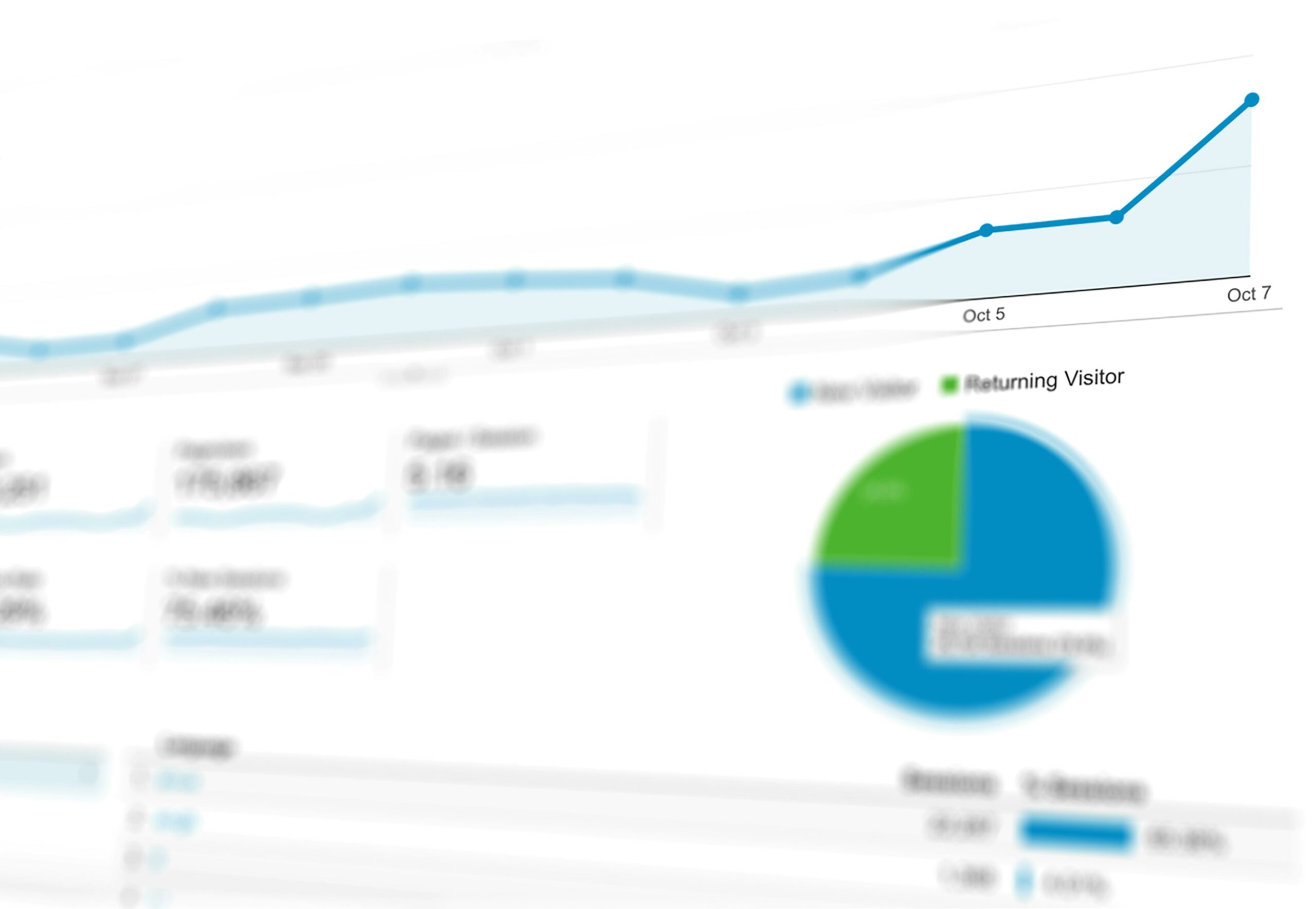
If you work in creator marketing, you already think in measurement frameworks. Apply the same discipline to SEO by defining terms and deciding what you will track. Here are the key terms you should align on early, especially if multiple stakeholders touch the page.
- Impressions: how often your page appeared in search results.
- Reach: in SEO, think of this as unique searchers exposed to your listing – you cannot measure it perfectly, but impressions by query and country are a practical proxy.
- Engagement rate: for a page, use a proxy like engaged sessions divided by sessions, or scroll depth if you track it. The point is to measure whether people actually consume the content.
- CPM (cost per mille): in marketing, cost per 1,000 impressions. In SEO, you can estimate the value of organic impressions by comparing to paid search CPM equivalents.
- CPV (cost per view): common in video campaigns. If your page includes video, you can compare organic video plays to a paid CPV benchmark.
- CPA (cost per acquisition): cost to generate a conversion. For SEO, treat content updates as the “cost” and measure incremental conversions.
- Whitelisting: in influencer marketing, this is when a brand runs ads through a creator handle. The SEO analogy is distribution through other properties – newsletters, partner blogs, and internal hub pages – that amplify and reinforce your page’s authority.
- Usage rights: permission to reuse creator content. For SEO, think of “usage rights” as your ability to reuse and repurpose your own assets (charts, templates, calculators) across multiple pages to build topical authority.
- Exclusivity: a creator agrees not to work with competitors. In SEO, you cannot buy exclusivity, but you can create unique assets (original data, tools, frameworks) that competitors cannot easily replicate.
Takeaway: pick one primary success metric (usually clicks or conversions) and two supporting metrics (impressions and average position by query cluster). If you try to track everything, you will react to noise.
Set up a monitoring system that catches ranking decay early
Most teams notice SEO problems too late, after traffic has already dropped for weeks. Instead, build a lightweight monitoring routine that flags issues within days. Start with Google Search Console for query and page performance, then add a rank tracker if you need daily granularity. Google’s own guidance on how Search works is worth reading once a year because it clarifies what signals they emphasize and what they avoid promising – see Google Search fundamentals. You do not need to memorize it, but it helps you avoid chasing myths.
Create a simple alerting checklist you can run weekly:
- Top 10 queries: any query with clicks down more than 20 percent week over week?
- Impressions up but clicks down: did your title or snippet lose appeal, or did SERP features push you down?
- Position volatility: did you drop across many queries (site issue) or only a few (page issue)?
- Indexing and coverage: any new “crawled – currently not indexed” or “duplicate” warnings for the page?
- Competitor movement: did a new page enter the top 3 with a different angle or format?
Takeaway: treat a 10 to 15 percent click drop as an early warning, not a disaster. Early interventions are smaller, cheaper, and more effective than full rewrites after you lose the top spot.
Refresh content without rewriting it into something worse
Content refresh is the most common lever, but it is also where teams accidentally break what already works. Your goal is not to “add more words.” Your goal is to better satisfy the dominant intent while preserving the parts of the page Google already trusts. First, identify the intent pattern on page one: are the top results guides, lists, templates, comparisons, or definitions? Next, map your page to that pattern and fill gaps that matter. If every top result includes a step-by-step checklist and you do not, that is a clear gap.
Use this update framework, in order:
- Snippet upgrade: improve the first 100 words to answer the query fast, then expand.
- Evidence upgrade: add new examples, data, screenshots, or mini case studies.
- Structure upgrade: add scannable subheads, tables, and decision rules.
- Internal link upgrade: add 3 to 5 contextual internal links to related pages and hubs.
- Prune and clarify: remove sections that no longer match intent or repeat points.
If you publish influencer marketing research or playbooks, consider building a “living” section that you update monthly with new benchmarks. That is hard for competitors to copy quickly. For ongoing ideas and examples of how to structure marketing analysis content, browse the InfluencerDB Blog and note which posts use clear definitions, tables, and frameworks.
Takeaway: log every refresh in a changelog at the top or bottom of your CMS notes (not necessarily on-page). When rankings move, you will know what changed and why.
When you hit number one, you become the target. Competitors will build links, publish supporting content, and strengthen their internal linking to create a topical cluster. You should do the same, but with discipline. First, audit your internal links: does your top page receive links from your highest authority pages, such as your homepage, category pages, and evergreen guides? Second, build supporting pages that answer adjacent questions and link back using descriptive anchors. This is the SEO equivalent of running always-on creator content that keeps your brand present between launches.
Here is a practical internal linking checklist:
- Add at least 2 contextual links from related high-traffic pages to your number one page.
- Link out from the number one page to 2 to 4 supporting pages to build a clear cluster.
- Use anchors that describe the destination, not generic text.
- Keep the link near the relevant paragraph, not buried at the end.
For external links, focus on earning citations that are hard to fake: original research, tools, templates, and expert quotes. If your niche overlaps with advertising, disclosure, or measurement, cite primary sources when relevant. For example, if you reference disclosure rules for creators, link to FTC guidance on endorsements in a paragraph where disclosure is discussed, then move on. That kind of citation improves trust and helps readers.
Takeaway: do not chase raw link volume. Chase relevance and editorial context. One strong link from a respected publication in your niche can outperform dozens of weak directory links.
Technical and UX defenses that keep rankings stable
Even the best content can slip if the page becomes slow, unstable, or hard to use. Start with the basics: ensure the page is indexable, canonicalized correctly, and not blocked by robots rules. Then check performance and UX. Google’s page experience signals are not a magic switch, but slow pages lose users, and that can show up as weaker engagement. Use a performance tool to spot regressions after design changes, and make sure your page still renders the main content quickly on mobile.
Run this monthly technical mini audit:
- Confirm the canonical URL is correct and consistent in internal links.
- Check for broken images, 404 internal links, and redirect chains.
- Validate structured data if you use it (FAQ, HowTo, Article) and remove markup that no longer matches the page.
- Review mobile layout for intrusive popups and content hidden behind tabs.
- Look for content shifts caused by A/B tests that remove key sections.
Takeaway: treat redesigns like migrations. Any template change can alter headings, internal links, and content prominence. Create a pre and post checklist so you do not accidentally strip the signals that helped you rank.
Operationalize it: a monthly and quarterly SEO defense plan
Staying number one is mostly operations. You need a cadence, owners, and a definition of “done.” Below are two tables you can copy into your workflow. The first table is a monitoring and maintenance plan. The second table helps you decide what to do when you see a drop, based on the pattern of the data.
| Cadence | Task | Owner | Output | Pass criteria |
|---|---|---|---|---|
| Weekly | Search Console check for top queries and clicks | SEO lead | Notes on anomalies | No unexplained click drop over 15% |
| Weekly | Competitor scan of top 5 results | Content editor | Gap list | At least 1 actionable improvement identified or confirmed stable |
| Monthly | Content refresh: examples, stats, screenshots | Subject expert | Updated sections | Freshness improvements without removing core sections |
| Monthly | Internal linking audit for the page | SEO lead | New internal links | 2+ new contextual internal links added if needed |
| Quarterly | Technical audit: speed, indexing, structured data | Web team | Fix list and releases | No critical errors, no new regressions |
| Quarterly | Authority plan: PR pitches, partnerships, original assets | Marketing | Linkable asset roadmap | At least 1 asset shipped or actively promoted |
| Symptom | Likely cause | What to check first | Fast fix | Long fix |
|---|---|---|---|---|
| Impressions stable, clicks down | Snippet less compelling or SERP features changed | Title, meta description, rich results | Rewrite title for clarity, add concise intro answer | Improve brand trust and add unique assets |
| Impressions down, position down | Competitor leap or intent shift | Top results format and angle | Add missing sections, update examples | Create supporting cluster content and earn links |
| Only one query dropped | Query-specific mismatch | Section that addresses that query | Add a targeted subsection and internal link | Build a dedicated page for that subtopic |
| Multiple pages dropped at once | Sitewide technical or quality issue | Indexing, templates, crawl, performance | Rollback recent releases if needed | Full technical audit and content quality review |
| Traffic down but rankings stable | Demand drop or seasonality | Impressions trend and Google Trends | Expand to adjacent queries | Publish new pages to capture new demand |
Takeaway: decide in advance who owns each task. SEO fails when it is “everyone’s job,” because then it becomes no one’s job.
Simple formulas to prove ROI on maintenance work
Teams often underinvest in maintenance because the benefits feel invisible. Make it visible with simple math. First, estimate the value of holding position one versus dropping to position two or three. You can do this with click-through rate assumptions or your own historical data. Then compare the incremental value to the cost of updates.
Use these formulas:
- Incremental clicks saved = (Expected CTR at #1 – Expected CTR at #2) x monthly impressions
- Incremental conversions saved = incremental clicks saved x conversion rate
- Incremental revenue saved = incremental conversions saved x average order value (or lead value)
- Maintenance ROI = (incremental revenue saved – maintenance cost) / maintenance cost
Example: your page gets 200,000 impressions per month. If CTR at #1 is 28% and CTR at #2 is 18%, the difference is 10%. Incremental clicks saved = 0.10 x 200,000 = 20,000 clicks. If your conversion rate is 1.5%, that is 300 conversions. If each conversion is worth $40, incremental revenue saved is $12,000 per month. If your monthly maintenance cost is $2,000, then ROI = (12,000 – 2,000) / 2,000 = 5.0, or 500%.
Takeaway: you do not need perfect CTR curves. Use conservative assumptions, document them, and update them as you collect more data.
Common mistakes that quietly lose the top spot
- Over-refreshing the intro: changing the opening too often can dilute relevance. Keep the first answer crisp and stable.
- Deleting sections that earn links: some paragraphs attract citations even if they are not flashy. Check backlink anchors before removing content.
- Chasing every SERP feature: adding FAQ markup or extra sections without intent alignment can bloat the page and reduce clarity.
- Ignoring internal links: competitors often win by building clusters, not by writing one “better” page.
- Letting performance regress: a new hero image, script, or embed can slow the page and hurt user experience.
Takeaway: when you make changes, change one major thing at a time and annotate the date. Otherwise, you will not know what helped or hurt.
Best practices to keep number one for the long haul
- Build unique assets: original benchmarks, templates, and calculators are defensible. Competitors can copy words, but they cannot copy your data easily.
- Write for scanning: strong subheads, short lists, and tables help readers and often help rankings because the page answers more sub-questions.
- Update with intent: every refresh should map to a query gap, not a vague “make it better” goal.
- Strengthen topical authority: publish supporting pages and link them together logically.
- Keep a maintenance calendar: treat SEO like editorial operations, not a one-time project.
Takeaway: if you can only do one thing this month, do a competitor intent scan and a focused refresh of the sections that are now weaker than the top three results.
Quick start checklist: what to do this week
If you want a fast, practical start, run this sequence in order. First, pull the last 28 days of Search Console data for the page and list the top 10 queries by clicks. Next, open the top five results for your primary query and note format differences: do they include tools, templates, or updated examples you do not have? Then update your intro to answer the query in two to three sentences, add one new table or decision rule, and strengthen internal links from two relevant pages. Finally, check mobile performance and fix any obvious regressions like oversized images or broken elements.
Takeaway: the goal is momentum. A small, high-quality refresh plus better internal linking often stabilizes rankings faster than a full rewrite.