

Read Copyblogger with a marketer’s eye and you will start seeing influencer content less as “posts” and more as conversion assets you can design, test, and improve. The trick is translating classic copy principles into modern creator workflows: stronger hooks, clearer offers, cleaner measurement, and fewer awkward brand scripts. In practice, that means you build briefs that protect the creator’s voice while still controlling outcomes like reach, clicks, and sales. This guide shows how to do it with definitions, decision rules, tables, and example calculations you can reuse on your next campaign.
Read Copyblogger and translate copy into influencer deliverables
Copyblogger’s core idea is simple: writing is a tool for action. Influencer marketing works the same way, but the “writing” is often spoken, captioned, edited, and packaged into short-form video. To operationalize that, you need a shared vocabulary between brand, creator, and analyst. Start by defining the metrics and deal terms that affect performance and cost, then map them to deliverables you can actually buy and evaluate.
Key terms (plain-English definitions you can use in briefs):
- Reach – unique people who saw the content at least once.
- Impressions – total views, including repeats by the same person.
- Engagement rate – engagements divided by reach or impressions (you must specify which). A common version is (likes + comments + saves + shares) / impressions.
- CPM – cost per 1,000 impressions. Formula: (Cost / Impressions) x 1000.
- CPV – cost per view (usually video views). Formula: Cost / Views.
- CPA – cost per acquisition (purchase, signup, install). Formula: Cost / Conversions.
- Whitelisting – creator grants access so the brand can run ads from the creator’s handle (often via platform permissions).
- Usage rights – permission to reuse the content (organic, paid, website, email) for a defined period and region.
- Exclusivity – creator agrees not to work with competing brands for a set time (category must be defined).
Concrete takeaway: Put these definitions in every brief so “success” is not a debate after posting. If you do only one thing, specify whether engagement rate is calculated on reach or impressions, because that changes benchmarks and pricing.
Build a Copyblogger-style influencer brief: hook, promise, proof, action
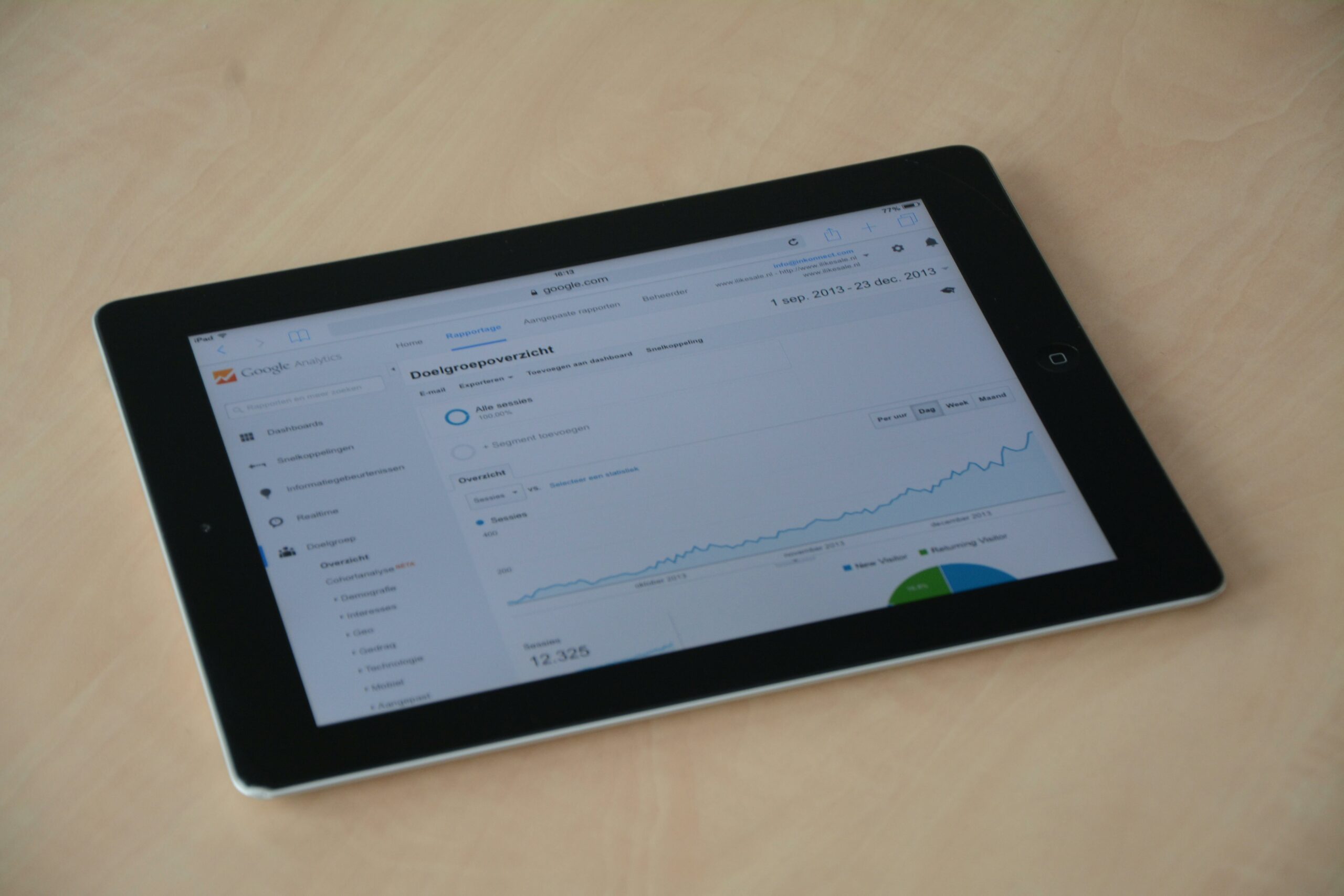
Creators hate briefs that read like legal documents, and brands hate content that feels off-message. A Copyblogger-style brief solves both by focusing on reader intent and clarity. Use a four-part structure that fits on one page and gives creators room to perform.
Framework you can paste into your next brief:
- Hook – the first 1 to 2 seconds (or first line of a caption). Provide 3 hook angles, not a script.
- Promise – what the viewer gets: a result, a shortcut, a comparison, or a story payoff.
- Proof – why to believe it: demo, personal experience, data point, third-party validation, or before/after.
- Action – one clear next step: click, use code, sign up, save, comment, or watch part two.
Next, add constraints that protect the brand without strangling the creator: required claims (and prohibited claims), product shots, pronunciation, and disclosure language. For disclosure, align with the FTC’s guidance so creators do not bury “ad” in a hashtag pile. The FTC’s overview is a solid reference for teams building repeatable compliance checks: FTC Endorsement Guides and influencer guidance.
Concrete takeaway: Give creators “angles” and “proof points,” not word-for-word lines. You will get more natural content and fewer revisions, while still controlling the claim boundaries.
Pricing and measurement: CPM, CPV, CPA with simple formulas
Copy principles help you earn attention, but measurement tells you whether attention turned into business value. To keep negotiations grounded, pick a primary metric per deliverable type, then compute implied CPM or CPA from the quote. That makes it easier to compare creators across platforms and formats.
Example calculation (implied CPM): You pay $2,000 for a TikTok video. It gets 120,000 impressions. Implied CPM = (2000 / 120000) x 1000 = $16.67. If your typical paid social CPM is $10 to $14, you now know the influencer is slightly premium, so you should look for stronger click-through, better conversion rate, or valuable usage rights.
Example calculation (CPA): You pay $3,000 for a bundle (1 Reel + 3 Stories). You track 60 purchases via code and post-purchase survey. CPA = 3000 / 60 = $50. If your target CPA is $40, you can negotiate either a lower fee, better offer, or additional deliverables like a pinned comment and a follow-up Story.
| Metric | Best for | Formula | What to watch |
|---|---|---|---|
| CPM | Awareness, reach, top-of-funnel | (Cost / Impressions) x 1000 | Impressions inflation, weak retention |
| CPV | Video-first campaigns | Cost / Views | View definition varies by platform |
| CPA | Direct response, sales | Cost / Conversions | Attribution gaps, discount-driven buyers |
| Engagement rate | Creative resonance, community fit | Engagements / Impressions (or Reach) | Specify denominator, watch comment quality |
Concrete takeaway: In negotiations, ask for the creator’s last 10 posts’ median impressions, not the best post. Then compute implied CPM on the median to avoid paying for outliers.
Benchmarks you can use without fooling yourself
Benchmarks are useful, but only if you compare like with like. A beauty creator’s saves and shares behave differently than a gaming creator’s comments, and a Story link sticker behaves differently than a YouTube description link. Use benchmarks as guardrails, then validate with the creator’s own history.
| Platform | Primary KPI | Healthy starting benchmark | How to sanity-check |
|---|---|---|---|
| Instagram Reels | Impressions and saves | Engagement rate 1% to 4% on impressions | Check 10-post median impressions and save rate |
| TikTok | Views and retention | 3-second hold rate trending up week to week | Ask for audience retention screenshot if available |
| YouTube | Watch time and clicks | CTR 2% to 6% on thumbnails (varies widely) | Compare sponsor segments vs non-sponsor videos |
| Stories | Link clicks | Link CTR 0.2% to 1% of reach | Look at tap-forward rate and drop-off by frame |
When you need a neutral reference point for ad-style metrics, it helps to know how platforms define delivery and reporting. For example, Meta’s business help center documentation can clarify what certain metrics mean in practice: Meta Business Help Center. Use it to align definitions when you compare whitelisted influencer ads to standard paid social campaigns.
Concrete takeaway: Treat benchmarks as “investigate” signals, not pass or fail rules. If a creator is below a benchmark but has unusually high saves or high-quality comments, they may still be a strong fit for consideration-stage content.
Audit creators like an editor: voice, proof, and audience fit
Copyblogger teaches you to respect the reader. In influencer marketing, the “reader” is the creator’s audience, and they can smell a forced ad. Your audit should answer three questions: does this creator have a consistent voice, do they provide believable proof, and does their audience match your buyer?
Step-by-step audit method (30 minutes per creator):
- Voice scan – watch 5 recent videos with sound on. Note pacing, humor, and how they handle objections.
- Proof scan – look for demos, receipts, comparisons, or “I tried this for 30 days” formats. Mark what feels credible.
- Audience scan – review comments for location cues, price sensitivity, and recurring questions. If possible, request audience screenshots.
- Brand safety scan – check for risky claims, controversial topics, or inconsistent disclosure.
- Performance scan – record median views, median comments, and the ratio of meaningful comments to emoji-only replies.
To keep your process consistent across campaigns, build a simple scorecard and store it next to your outreach notes. If you want a steady stream of practical influencer marketing analysis and frameworks, use the InfluencerDB Blog resource hub as your internal reference library for templates and measurement ideas.
Concrete takeaway: If you cannot describe the creator’s “signature proof style” in one sentence, you are likely buying reach without persuasion. That is fine for awareness, but it is a weak bet for conversion.
Negotiation levers: usage rights, whitelisting, exclusivity, and revisions
Rates rarely move much if you only ask for a discount. Instead, negotiate on deal structure. Copyblogger-style thinking helps here because you focus on outcomes and constraints, not ego. Decide what you truly need, then trade for it.
High-impact levers (and how to use them):
- Usage rights – if you want to repurpose content for ads, specify channels (paid social, website, email), duration (30, 90, 180 days), and region. Longer rights should cost more.
- Whitelisting – ask for 30 days to start, with an option to extend. Tie extensions to performance so the creator shares upside.
- Exclusivity – define the category narrowly. “No skincare” is too broad; “no vitamin C serum brands” is clearer.
- Deliverable swaps – if budget is fixed, trade one high-effort deliverable for two lower-effort ones, like adding a Story sequence after the Reel.
- Revision policy – limit to 1 structural revision and 1 compliance revision. Anything else becomes a paid change order.
Concrete takeaway: Put exclusivity and usage rights in writing with duration and geography. Ambiguity is the fastest way to damage creator relationships and create legal risk.
Common mistakes (and how to fix them fast)
Most influencer campaigns underperform for predictable reasons. The good news is that the fixes are usually procedural, not magical. If you treat each campaign like a publishing workflow, you can prevent the same mistakes from repeating.
- Mistake: scripting the creator – Fix: provide three hook angles, two proof points, and one required CTA, then let them write the rest.
- Mistake: unclear attribution – Fix: use a unique URL with UTM parameters plus a creator-specific code, then reconcile with post-purchase survey data.
- Mistake: paying for follower count – Fix: price on median impressions and audience fit, then compute implied CPM.
- Mistake: ignoring usage rights – Fix: decide before outreach whether you need paid usage, and budget for it upfront.
- Mistake: optimizing for likes – Fix: choose a KPI that matches intent: saves for education, clicks for offers, watch time for storytelling.
Concrete takeaway: If your brief has more “must say” lines than “must prove” points, rewrite it. Proof converts better than slogans.
Best practices: a repeatable workflow for better creator content
To consistently get strong creator ads, you need a workflow that respects creative while enforcing measurement. Think like an editor: you commission, you review for clarity and truth, and you publish with distribution in mind. Then you learn and iterate.
Best-practice workflow (use as a campaign checklist):
| Phase | Tasks | Owner | Deliverable |
|---|---|---|---|
| Plan | Define KPI, audience, offer, and proof points | Brand + analyst | One-page brief |
| Select | Audit voice, proof style, median impressions | Analyst | Creator scorecard |
| Produce | Approve outline, confirm disclosure, set revision limits | Brand + creator | Content draft |
| Publish | Track links, codes, and posting time windows | Creator + brand | Live post + tracking sheet |
| Learn | Compute CPM, CPA, retention notes, creative learnings | Analyst | Postmortem memo |
Finally, treat your best-performing creator content as a starting point for iteration. If you have whitelisting rights, test two paid variations: one that keeps the original hook and changes only the CTA, and one that keeps the CTA but changes the opening. That isolates what actually drove performance.
Concrete takeaway: Write a postmortem after every campaign with three bullets: what hook worked, what proof worked, and what objection you failed to answer. Those notes become your next brief’s advantage.