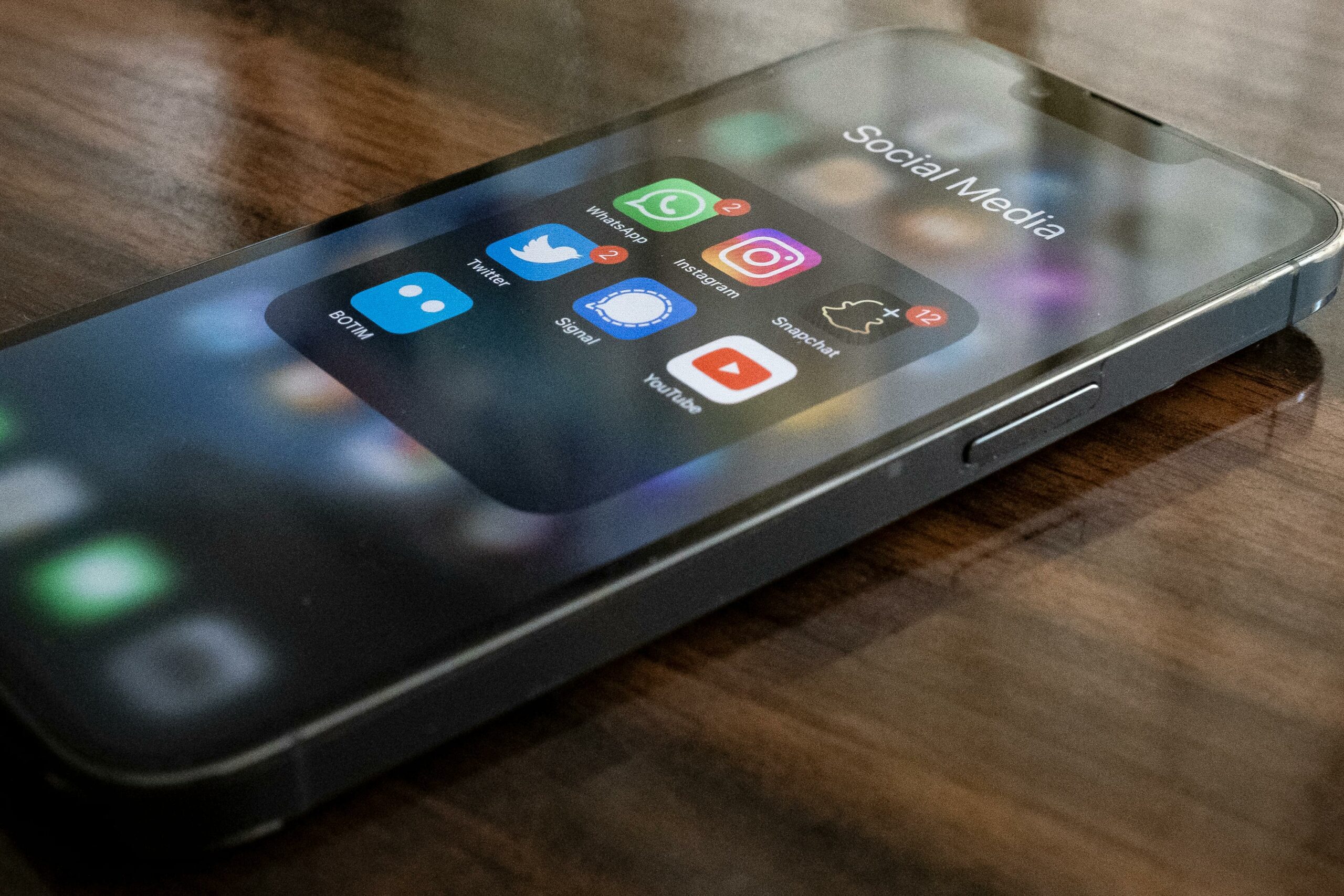

Social media buzz is not luck – it is a repeatable system that turns attention into measurable demand. The difference between a loud week and a lasting lift usually comes down to planning: a clear hook, the right creators, and tracking you trust. In this guide, you will build a buzz plan that works for launches, seasonal pushes, and always on growth. You will also learn the core terms and the math behind them, so you can defend decisions with data. Finally, you will leave with templates, tables, and rules of thumb you can use today.
What “buzz” means and the metrics that prove it
Buzz is the combination of reach, conversation, and momentum around a topic, product, or creator. It shows up as rising search interest, more brand mentions, higher share rates, and a spike in qualified traffic. To manage it, you need a shared vocabulary early, otherwise teams argue about outcomes instead of improving execution. Start by defining what success looks like for this campaign: awareness, consideration, or conversion. Then map that goal to the metrics below, with one primary KPI and two supporting KPIs.
Key terms (plain English):
- Reach – the number of unique people who saw your content.
- Impressions – total views, including repeat views by the same person.
- Engagement rate – engagements divided by impressions or reach (choose one and stick to it).
- CPM (cost per mille) – cost per 1,000 impressions.
- CPV (cost per view) – cost per video view (define view length by platform).
- CPA (cost per acquisition) – cost per purchase, lead, signup, or other conversion.
- Whitelisting – running paid ads through a creator’s handle (also called creator licensing).
- Usage rights – permission to reuse creator content in your channels and ads, for a defined time and scope.
- Exclusivity – creator agrees not to work with competitors for a set period and category.
Simple formulas you can use in a brief:
- Engagement rate (impressions-based) = (likes + comments + shares + saves) / impressions
- CPM = (total cost / impressions) x 1000
- CPV = total cost / views
- CPA = total cost / conversions
Example: You pay $2,000 for a creator package that delivers 120,000 impressions and 1,800 total engagements. CPM = (2000 / 120000) x 1000 = $16.67. Engagement rate = 1800 / 120000 = 1.5%. If you also get 40 purchases, CPA = 2000 / 40 = $50. Those three numbers tell a more honest story than “it went viral.”
Build a buzz hook: message, angle, and proof in one line

Before you pick platforms or creators, lock the hook. A hook is the shortest statement that makes someone stop scrolling, understand the value, and feel a reason to share. In practice, the best hooks combine one angle (what makes this different) with one proof point (why believe it). That proof can be a demo, a result, a guarantee, or a credible third party mention. If you cannot write the hook in one sentence, your content will drift and your creators will improvise in different directions.
Use this hook formula: “If you want desired outcome without common pain, try product or method because proof.”
- Outcome: what the audience wants now.
- Pain: what they dislike about current options.
- Method: your product, feature, or approach.
- Proof: demo, data, or credible claim you can show.
Concrete takeaway: Write three hook options, then test them with 5 people who match your audience. Ask one question only: “What do you think this is, and why should you care?” If they cannot answer in 10 seconds, rewrite. For guidance on planning content angles and distribution, browse the practical playbooks on the InfluencerDB Blog and adapt the examples to your category.
Social media buzz framework: plan, seed, spike, sustain
Most campaigns fail because they treat buzz as a single post instead of a sequence. A simple framework keeps your team aligned and makes measurement easier. Think in four phases: plan (set the system), seed (start conversation), spike (concentrate attention), and sustain (convert attention into repeatable growth). Each phase has a different job, so you should expect different metrics to move.
| Phase | Goal | What to publish | Primary KPI | Concrete checklist |
|---|---|---|---|---|
| Plan | Clarity and tracking | Brief, creative guardrails, landing page | Readiness score | UTMs built, offer defined, creators confirmed, reporting sheet ready |
| Seed | Start conversation | Teasers, behind the scenes, problem framing | Mentions and saves | Comment prompts written, community replies staffed, social listening on |
| Spike | Concentrate attention fast | Launch posts, demos, collaborations, live | Reach and share rate | Posting calendar locked, creator posts staggered, paid boost plan ready |
| Sustain | Turn attention into results | FAQs, comparisons, testimonials, retargeting | CTR and CPA | Top comments answered, best clips repurposed, retargeting audiences built |
Decision rule: If you need awareness, optimize seed and spike for reach and shares. If you need sales, build sustain assets before launch day, so you can capture intent while it is highest.
Choose platforms and creators with a simple scoring model
Platform choice should follow behavior, not hype. TikTok and Reels can create fast discovery, YouTube can hold attention longer, and X or Reddit can amplify debate when the topic is naturally discussable. Still, creators are the real distribution layer, so selection matters more than the platform logo. To avoid “big follower” bias, score creators on fit, content quality, and audience trust. Then use a small test batch before you scale.
Creator selection checklist (use it in outreach):
- Audience match: location, age, language, and intent (do they buy or just watch?).
- Content consistency: similar topics and formats in the last 30 days.
- Engagement quality: real comments, not generic praise or emoji strings.
- Brand safety: recent controversies, risky claims, or misleading health advice.
- Creative strength: can they demonstrate the product clearly in 10 to 20 seconds?
| Score area | How to score (1 to 5) | What “5” looks like | Red flag |
|---|---|---|---|
| Audience fit | Compare audience to target | Majority matches your buyer profile | Audience is global when you sell locally |
| Creative clarity | Watch 5 recent posts | Strong hook, clear demo, clean audio | Confusing storytelling, weak CTA |
| Trust signals | Read comments and replies | Specific questions, creator answers | Engagement pods, repetitive comments |
| Performance history | Ask for screenshots or reports | Stable views, occasional spikes | Sudden follower jumps with low views |
| Operational reliability | Response time and professionalism | Fast replies, meets deadlines | Missed calls, vague deliverables |
Concrete takeaway: Start with 8 to 12 creators, then keep the top 30% based on CPM, watch time, and comment quality. This protects budget and gives you real creative learnings you can reuse.
Budget, pricing, and negotiation: CPM, CPV, CPA in real life
Buzz campaigns often mix paid creator fees with paid amplification. That is why you should price outcomes in comparable units, even if you pay per deliverable. CPM and CPV help you compare creators for awareness, while CPA is the truth test for conversion. However, do not demand CPA pricing from every creator, because many cannot control conversion friction like landing page speed or offer fit. Instead, negotiate a fair base fee with performance incentives when possible.
Negotiation levers you can use without burning trust:
- Deliverables: swap one low impact deliverable for a higher impact format (for example, one Reel plus three Stories).
- Usage rights: pay extra only if you will reuse content in ads or on your site.
- Exclusivity: limit the category narrowly and keep the time period short.
- Whitelisting: separate fee for creator licensing plus ad spend you control.
- Timeline: faster turnarounds cost more, so plan early to save.
Example pricing math: A creator quotes $3,000 for one short video. You expect 150,000 views based on recent averages. CPV = 3000 / 150000 = $0.02. If your average order value is $60 and your site converts at 2%, then 150,000 views might drive 1,500 clicks at a 1% CTR, and 30 purchases at 2% conversion. Estimated CPA = 3000 / 30 = $100. If your target CPA is $60, you can negotiate by adding a second video for the same fee, or by adding whitelisting so you can retarget and improve conversion efficiency.
For platform specific ad and measurement definitions, use official references like the Google Analytics UTM parameter guide so your tracking stays consistent across teams.
Creative brief that creators actually use (and content that spreads)
A buzz brief should guide, not suffocate. Creators need room to speak in their own voice, yet you still need consistency in claims, visuals, and calls to action. The easiest way to get both is to define non negotiables and then provide optional angles. Also include examples of what not to do, because that prevents off brand content without endless revisions.
Brief essentials (copy and paste):
- Objective: awareness, waitlist, sales, or app installs.
- Audience: who this is for and who it is not for.
- Hook options: 2 to 3 approved opening lines.
- Must say: key benefit, offer, and required disclosures.
- Must show: product in use, before and after, unboxing, or screen recording.
- Do not say: prohibited claims and sensitive topics.
- CTA: link in bio, code, landing page, or comment keyword.
- Tracking: UTM link, code format, and posting date window.
Concrete takeaway: Ask for one “native” version and one “direct response” version of the same concept. The native version drives shares and saves, while the direct response cut drives clicks. Later, you can combine both into a stronger paid ad.
Measurement setup: tracking, attribution, and a simple reporting sheet
Buzz feels intangible until you build a measurement spine. Start with clean links, consistent naming, and a single source of truth for reporting. UTMs are the minimum, and coupon codes can help when links break on mobile. If you run whitelisting or paid boosts, separate creator performance from media performance so you do not blame the wrong lever. Most importantly, decide your attribution window before launch day.
Tracking steps (in order):
- Create a campaign naming convention: Brand – Product – Month – Creator.
- Build UTMs for every creator and every platform placement (Stories vs bio link).
- Use a dedicated landing page that matches the hook and repeats the proof.
- Set up conversion events and verify them with test purchases or test leads.
- Collect creator post URLs and screenshots within 24 hours of posting.
Reporting template fields: creator, platform, deliverables, cost, impressions, reach, views, engagements, engagement rate, clicks, CTR, conversions, CPA, notes on creative. If you need a quick sanity check on disclosure and ad labeling, the FTC Disclosures 101 page is a reliable reference for US campaigns.
Concrete takeaway: Use a two layer scorecard: (1) attention metrics for buzz (reach, shares, saves), and (2) business metrics for impact (CTR, CPA, revenue). A post can win on buzz and still lose on sales, and that is fine if you planned for it.
Common mistakes that kill buzz (and how to fix them fast)
Buzz campaigns often fail for predictable reasons. The good news is that most fixes are operational, not creative genius. First, teams post everything on the same day, which causes overlap and wasted reach. Stagger creator posts across 3 to 7 days so each piece has room to breathe. Second, brands chase one viral moment and ignore follow up content, so interest fades before it converts. Build sustain assets in advance: FAQs, comparisons, and short testimonials.
- Mistake: Vague CTAs like “check it out.” Fix: one clear action tied to the hook, such as “comment ‘guide’ for the link.”
- Mistake: No proof on screen. Fix: show the result, demo, or process in the first 3 seconds.
- Mistake: Over controlling creator scripts. Fix: set guardrails, then let creators write their own words.
- Mistake: Measuring only likes. Fix: track shares, saves, and click quality.
Concrete takeaway: If performance is weak after the first 20% of posts, change one variable at a time: hook, opening visual, or CTA. Do not change all three, or you will not learn what worked.
Best practices to sustain momentum after the spike
Once you earn attention, your job is to keep it. Repurpose the best performing creator clips into new formats, because the message is already validated. Turn comments into content by answering the top five questions in short videos and Stories. If you have whitelisting rights, run paid ads from the creator handle to warm audiences and then retarget site visitors with a direct offer. Finally, keep a running “creative library” so the next campaign starts from proven assets, not a blank page.
Best practice checklist:
- Pin the best creator post and update the caption with the clearest CTA.
- Reply to high intent comments within 2 hours during the spike window.
- Cut 3 to 5 variations of the top video: new hook, new caption, new first frame.
- Publish a recap post that bundles social proof: quotes, results, and FAQs.
- Run a post campaign review within 7 days and document what you will repeat.
Concrete takeaway: Treat buzz as an asset you can compound. If one creator angle wins, commission two more creators to execute the same angle with different stories, then compare CPM and CPA to decide where to scale.
Quick launch checklist (copy into your project doc)
Use this checklist to keep your campaign tight and avoid last minute chaos. It is short on purpose, so it can live in a single task card. Assign an owner to each line, and do not move to the next phase until the previous one is done. That discipline is what turns a “fun idea” into a repeatable growth channel.
- Hook approved (one sentence) and proof asset ready (demo, data, or testimonial).
- Creators scored and selected, deliverables and deadlines confirmed in writing.
- Usage rights, exclusivity, and whitelisting terms agreed and priced.
- UTMs and codes created, landing page matches the hook, events tested.
- Posting calendar staggered, community management staffed for launch week.
- Reporting sheet ready, with a 24 hour and 7 day review scheduled.
If you want more campaign planning and measurement templates, keep an eye on new guides in the, then adapt the frameworks to your niche and budget.