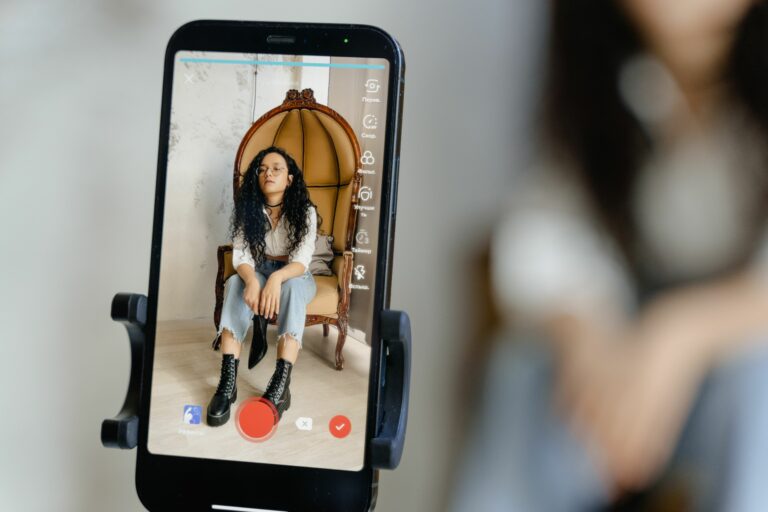

Promote Boring Products without sounding boring by treating the product like a problem-solver, not a headline. Most so called dull categories – insurance, accounting software, cleaning supplies, industrial tools, office chairs – fail on social because the content starts with features instead of a human moment. The fix is straightforward: lead with a relatable situation, show the transformation, then earn the right to explain details. In practice, that means tighter hooks, clearer proof, and a creator brief that prioritizes demonstrations over adjectives. This guide gives you a repeatable framework, the key metrics to watch, and examples you can copy.
Promote Boring Products by reframing the job to be done
Before you plan a single post, decide what the product actually does for a person. A boring product is usually just a product with hidden value – it saves time, reduces risk, prevents mistakes, or makes a routine easier. Start with the “job to be done” and build content around the moment someone feels the pain. For example, a label printer is not exciting, but shipping 40 orders at midnight is. Likewise, a payroll tool is not thrilling, but a missed tax deadline is terrifying. When you anchor the story in a real situation, viewers understand the stakes within seconds.
Use this quick reframing checklist to generate angles:
- Trigger moment: What happens right before someone needs this product?
- Cost of doing nothing: Money lost, time wasted, stress, risk, embarrassment.
- Visible proof: What can you show on camera in 5 to 10 seconds?
- After state: What does “better” look like in daily life?
- Objection: Why do people delay buying, and what evidence removes doubt?
Concrete takeaway: write 10 hooks that start with the trigger moment, not the product name. If you cannot write 10, you do not understand the audience problem yet.
Define the metrics and terms you will use (so results are comparable)
Teams often argue about performance because they never align on definitions. Lock these terms early, then put them into your brief and reporting template.
- Reach: Unique accounts that saw the content at least once.
- Impressions: Total views, including repeat views by the same account.
- Engagement rate: Engagements divided by reach or impressions (pick one and stay consistent). Engagements usually include likes, comments, shares, saves, and sometimes clicks.
- CPM: Cost per 1,000 impressions. Formula: CPM = (Spend / Impressions) x 1000.
- CPV: Cost per view (often 3-second view or platform-defined view). Formula: CPV = Spend / Views.
- CPA: Cost per acquisition (purchase, signup, lead). Formula: CPA = Spend / Conversions.
- Whitelisting: Brand runs ads through the creator’s handle (also called creator licensing). This usually improves performance because the ad looks native.
- Usage rights: Permission to reuse creator content on brand channels, ads, email, or site. Scope and duration matter.
- Exclusivity: Creator agrees not to work with competitors for a period. This should be paid separately.
Concrete takeaway: choose one primary success metric per campaign phase. For awareness, use CPM and reach. For consideration, use clicks and saves. For conversion, use CPA and revenue.
A practical content framework for “boring” categories (hooks, proof, payoff)
Social content for unglamorous products wins when it follows a simple sequence: hook with a problem, show proof fast, then deliver payoff. The audience does not need hype, it needs clarity. Start with a visual that signals the situation: a messy desk, a stack of invoices, a squeaky door, a cluttered garage, a spreadsheet error. Then show the product in action within the first 3 seconds. Finally, end with a result that feels measurable: time saved, fewer steps, fewer errors, cleaner output.
Use this “HPP” script template:
- Hook (0 to 2s): “If you do X every week, you are wasting Y minutes.”
- Proof (2 to 12s): Show the workflow before and after, with on-screen timers, counters, or side-by-side comparison.
- Payoff (12 to 25s): “Now it takes me 90 seconds. Here is the exact setup.”
- CTA (last 3s): One action only: “Get the checklist” or “Try the calculator.”
For more ideas on building creator-led narratives and testing formats, pull examples from the InfluencerDB Blog influencer marketing guides and adapt the structure to your category. Concrete takeaway: require every creator concept to include a visible proof element, not just a testimonial.
Creator selection rules for boring products (and why micro creators often win)
When the product is not inherently entertaining, the creator’s credibility does the heavy lifting. Instead of chasing the biggest audience, prioritize creators who already make “how it works” content. In many categories, micro creators (roughly 10k to 100k followers) outperform on trust and comment quality because their audiences still ask questions and follow advice. That matters for products that need explanation, setup, or a mental shift.
Use these decision rules to shortlist creators:
- Content fit: At least 30 percent of recent posts show processes, reviews, or tutorials.
- Audience intent signals: Comments include “link?”, “how much?”, “does it work for…?”, “where did you buy?”
- Proof style: Creator naturally shows receipts, demos, or step-by-step screens.
- Brand safety: No recurring controversial topics that could distract from a utilitarian product.
- Distribution: Cross-posting to Reels, Shorts, and TikTok is a plus for efficient testing.
One more filter: pick creators who can make the product look normal in their life. A tax app in a lifestyle vlog can work, but it lands better when the creator already talks about freelancing, budgeting, or small business operations.
External reference: if you plan to run creator content as ads, review platform ad policies early so you do not waste production time. Meta’s guidance is a good starting point: Meta Business Help Center.
Concrete takeaway: build a shortlist of 20 creators, then run a paid test with 5 before scaling. Boring products rarely win on the first creative, so you need iteration capacity.
Brief, deliverables, and negotiation: what to specify (with a useful table)
A vague brief produces vague content, which is fatal for low-excitement products. Your brief should be tight on outcomes and proof, but flexible on voice. Specify the problem scenario, the must-show demo steps, and the exact claim boundaries. Also clarify usage rights, whitelisting, and exclusivity in writing. Those terms change pricing more than follower count does.
Include these brief essentials:
- Single-minded message: One sentence that explains the transformation.
- Mandatory shots: Unboxing, setup, before and after, screen recording, close-up of result.
- Claims: What can be said, what cannot be said, and what needs a disclaimer.
- Offer: Code, bundle, free trial, or lead magnet.
- Tracking: UTM link, code format, landing page, and attribution window.
| Contract item | What to define | Why it matters | Typical pricing impact |
|---|---|---|---|
| Deliverables | Number of videos, length range, story frames, raw footage | Sets production scope and revision time | Base fee driver |
| Usage rights | Where you can reuse content and for how long | Turns a post into an asset for ads and site | +20% to +100% depending on scope |
| Whitelisting | Access method, duration, ad spend cap, approvals | Often improves CTR and CPM vs brand handle ads | Flat fee or +10% to +30% |
| Exclusivity | Competitor list, category definition, time window | Limits creator income opportunity | +15% to +200% depending on category |
| Revisions | Number of edit rounds and what counts as a revision | Prevents endless changes and delays | Usually included up to 1 to 2 rounds |
Concrete takeaway: if you want performance, pay for usage rights and whitelisting instead of overpaying for follower count. Those levers let you iterate and scale what works.
Measurement that proves boring products work: formulas, examples, and a second table
Because boring products often have longer consideration cycles, you need a measurement plan that captures both short-term signals and downstream conversions. Start with clean tracking: UTMs on every link, unique codes per creator, and a landing page that matches the creator’s promise. Then evaluate in two layers: creative performance (does the content hold attention and drive clicks?) and business performance (does it drive qualified actions?).
Here are simple calculations you can use in a spreadsheet:
- Engagement rate (by reach): (Likes + Comments + Shares + Saves) / Reach
- CTR: Clicks / Impressions
- Conversion rate: Conversions / Clicks
- Revenue per 1,000 impressions (RPM): Revenue / Impressions x 1000
Example: you pay $1,200 for a creator Reel. It generates 80,000 impressions and 1,600 link clicks. Your landing page converts 4 percent, and your average order value is $45.
- CPM = (1200 / 80000) x 1000 = $15
- CTR = 1600 / 80000 = 2%
- Conversions = 1600 x 4% = 64
- Revenue = 64 x 45 = $2,880
- CPA = 1200 / 64 = $18.75
- ROAS = 2880 / 1200 = 2.4
This is why “boring” can be profitable: the content may not go viral, but it can convert efficiently when the audience intent is right.
| Goal | Primary metrics | Good early signal | What to do next |
|---|---|---|---|
| Awareness | Reach, CPM, 3-second views | CPM stable and view rate improving across iterations | Test 3 new hooks with same demo |
| Consideration | Saves, shares, comments, CTR | High saves per 1,000 reach | Turn the post into a checklist or carousel |
| Conversion | CPA, conversion rate, ROAS | CPA below target after 7-day attribution window | Whitelist top creative and scale spend |
| Retention | Repeat purchase, churn, support tickets | Lower returns or fewer “how do I” tickets | Make onboarding content with the same creator |
External reference: if you use endorsements, align your disclosure and claims with the FTC’s guidance: FTC Endorsements and Testimonials.
Concrete takeaway: decide your target CPA or target CPM before outreach. Without targets, you cannot negotiate or optimize rationally.
Once the fundamentals are set, execution becomes a craft. The best campaigns avoid overproduction and lean into clarity. First, keep the first shot literal: show the mess, the backlog, the error, or the annoying task. Next, use on-screen text to summarize the benefit in plain language, because many viewers watch without sound. Then, ask creators to include one specific detail that signals expertise, such as a setting, a shortcut, or a comparison to an alternative. Finally, make the CTA match the friction level: a free calculator or checklist often outperforms “buy now” for high-consideration products.
- Show the setup: A 10-second setup clip builds trust for tools and software.
- Use real constraints: “I had 15 minutes before pickup” beats generic urgency.
- Answer one objection: Price, learning curve, compatibility, or durability.
- Repurpose smartly: Turn top comments into follow-up videos.
- Build a series: Part 1 problem, Part 2 setup, Part 3 results after a week.
Concrete takeaway: require a “proof moment” timestamp in every script, such as “timer starts at 0:04” or “before and after at 0:12”. It keeps creators honest and content tight.
Common mistakes (and how to fix them fast)
Most failures are predictable, which is good news because the fixes are cheap. One common mistake is forcing creators to read brand copy, which kills authenticity and pacing. Another is skipping the demo because the product seems self-explanatory, even though the audience has never used it. Brands also misjudge incentives: a small discount may not move a high-friction product, while a free trial or bundle can. Finally, teams often evaluate too early, turning off spend before the algorithm finds the right viewers or before enough clicks accumulate to judge conversion rate.
- Mistake: Feature list in the first 5 seconds. Fix: Start with the problem and show the workflow.
- Mistake: One creator, one post, done. Fix: Test 5 creators and 3 hooks each.
- Mistake: No usage rights. Fix: Negotiate usage rights up front so you can scale winners.
- Mistake: Weak landing page match. Fix: Mirror the creator’s promise and include the same proof.
Concrete takeaway: if a post underperforms, do not rewrite the entire concept. Change one variable at a time – hook, proof shot, or CTA – so you learn what actually moved the metric.
A simple 14-day launch plan you can run with any boring product
To make this actionable, here is a compact plan that fits most teams. Days 1 to 2: define the job to be done, the top three objections, and your target CPA or CPM. Days 3 to 5: shortlist 20 creators, then outreach to 10 with a brief that includes mandatory proof shots and clear usage rights. Days 6 to 9: creators deliver drafts, you approve for accuracy and disclosure, and you prepare landing pages with UTMs and code tracking. Days 10 to 14: publish, monitor early signals (hook retention, saves, CTR), then whitelist the top one or two creatives and run paid amplification.
Concrete takeaway: treat creator content as a testing engine. Even if the product is not exciting, the process can be, because you are systematically turning audience pain into measurable demand.