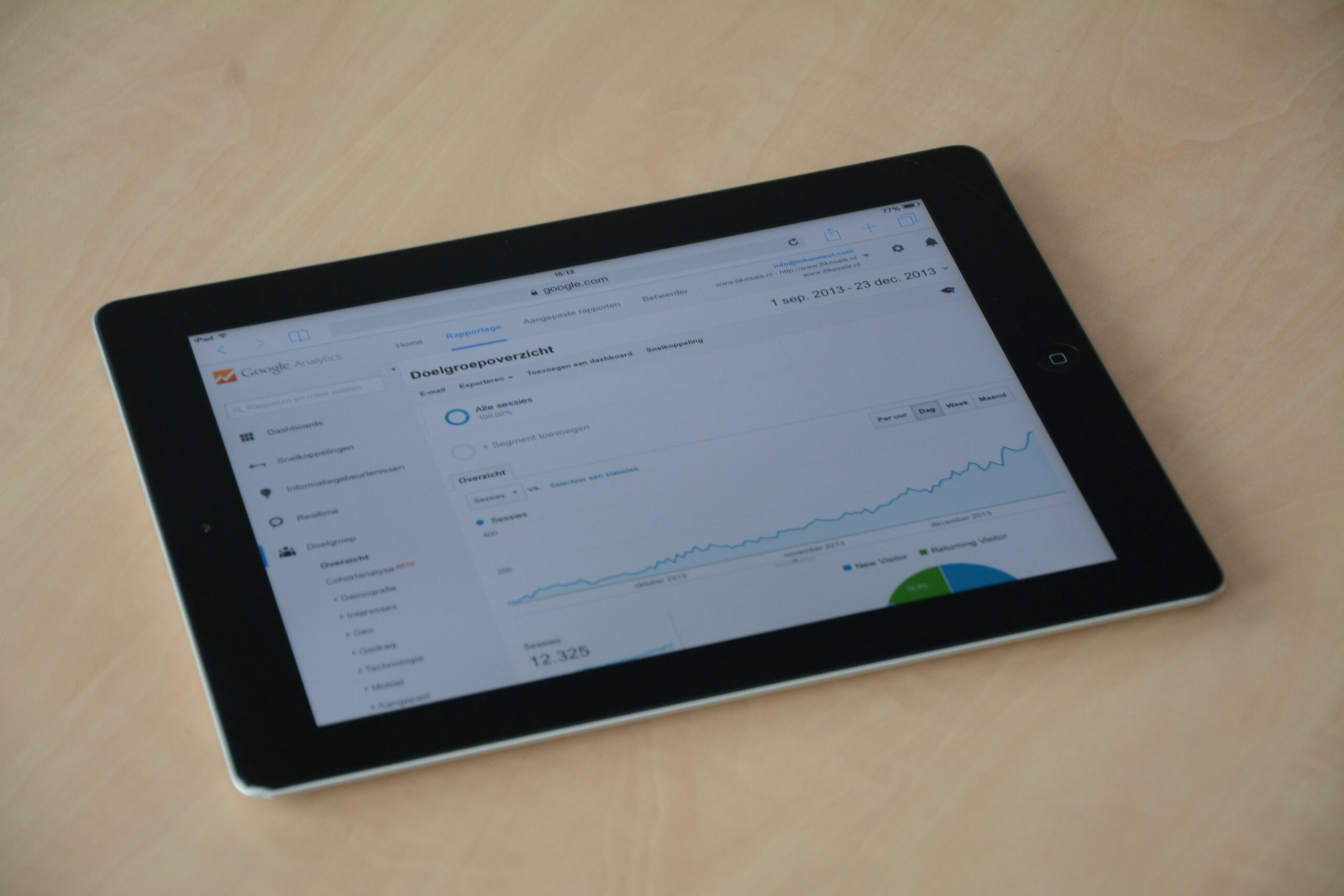

SEO guide for websites is not about chasing hacks – it is about building a site that search engines can crawl, understand, and trust while real people find it useful. In practice, that means nailing technical basics, publishing content that matches intent, earning credible links, and measuring what actually moves rankings and revenue. If you are a creator, brand, or marketer, SEO also supports influencer work by making sure campaign traffic lands on pages that load fast, answer questions, and convert. This playbook gives you clear definitions, decision rules, and repeatable steps you can run every quarter.
SEO guide for websites: Start with the fundamentals
Before tools and tactics, align on what SEO is optimizing for: visibility on search results pages for queries your audience already types. Search engines reward pages that demonstrate relevance (content matches intent), quality (helpful, original, accurate), and usability (fast, mobile-friendly, easy to navigate). As a result, SEO is a system – technical health enables indexing, content earns rankings, and links plus brand signals build authority. Keep one principle in mind: every optimization should either help a crawler understand your site or help a human complete a task.
Define your core terms early so teams stop talking past each other. In influencer and performance contexts, you will also see metrics that overlap with SEO landing pages and attribution. Use these definitions as your shared glossary:
- CPM (cost per mille) – cost per 1,000 impressions. Formula: CPM = (Cost / Impressions) x 1,000.
- CPV (cost per view) – cost per video view. Formula: CPV = Cost / Views.
- CPA (cost per acquisition) – cost per conversion (sale, lead, signup). Formula: CPA = Cost / Conversions.
- Engagement rate – interactions divided by audience size, typically (Likes + Comments + Shares) / Followers, or interactions / Reach depending on platform.
- Reach – unique people who saw content.
- Impressions – total times content was shown, including repeats.
- Whitelisting – a creator authorizes a brand to run ads from the creator handle (paid amplification).
- Usage rights – permission scope for using creator content (channels, duration, paid vs organic).
- Exclusivity – restrictions preventing a creator from working with competitors for a period.
Concrete takeaway: write these terms into your marketing brief template and analytics dashboard labels so SEO, social, and influencer reporting stays consistent.
Technical SEO checklist: Make your site easy to crawl and fast to use

Technical SEO is where many websites quietly lose rankings because search engines cannot reliably access or interpret pages. Start with crawlability and indexing, then move to performance and structured data. If you only have one hour, prioritize issues that block indexing or create duplicate versions of the same page.
- Indexing basics: confirm you are not blocking important pages in robots.txt, and verify key templates are not set to noindex.
- XML sitemap: generate and submit a clean sitemap that includes canonical URLs only.
- Canonicalization: choose one preferred URL version (https, www or non-www, trailing slash rules) and enforce it with redirects and canonicals.
- Site architecture: keep important pages within 3 clicks from the homepage, and use descriptive internal links.
- Core Web Vitals: reduce layout shifts, compress images, and avoid heavy scripts that delay interactivity.
- Mobile-first: ensure content and internal links are identical on mobile and desktop.
- Structured data: add schema where it fits (Organization, Article, Product, FAQ) without spam.
To ground this in an authoritative reference, use Google’s documentation on how crawling and indexing works and what can prevent it. It is a practical way to sanity-check your setup against the source: Google Search documentation on how Search works.
Concrete takeaway: run a monthly “index coverage” spot check – pick 20 important URLs, confirm they return 200 status, self-canonicalize, and appear in Search Console as indexed.
Keyword research that matches intent: Build pages people actually want
Keyword research is not a spreadsheet exercise – it is a map of audience intent. Start by listing the problems your audience needs solved, then translate those into query themes. For a creator economy site, that might include “influencer pricing,” “brand deal contract,” or “engagement rate benchmark.” For each theme, decide whether the right asset is a guide, a tool page, a category hub, or a case study.
Use this simple intent framework to avoid creating the wrong page type:
- Informational: “how to calculate CPM” – best as a guide with examples and a calculator.
- Commercial investigation: “best influencer analytics tools” – best as a comparison with decision rules.
- Transactional: “influencer campaign brief template download” – best as a landing page with clear CTA.
- Navigational: “InfluencerDB blog” – make sure your brand pages are clean and easy to find.
Then, choose one primary keyword per page and a small set of close variants. Avoid the common trap of forcing one page to rank for everything. Instead, build a topic cluster: a hub page that links to supporting articles, each targeting a narrower query. If you need examples of how to structure marketing content into hubs, browse the InfluencerDB Blog and note how guides can interlink to build authority.
Concrete takeaway: for every new page, write a one-line “search intent promise” such as “This page helps marketers calculate CPM and compare it to CPA for influencer campaigns.” If you cannot write that sentence, the page topic is still fuzzy.
On-page SEO that converts: Titles, headings, and content structure
On-page SEO is where you turn research into a page that ranks and persuades. Your goal is clarity: a search engine should understand the topic in seconds, and a reader should find the answer without scrolling through fluff. Start with the title tag and H1, then build a logical heading outline with H2 sections that match sub-questions.
Use these practical rules when writing or editing:
- Title tag: lead with the primary query, then add a benefit. Keep it readable, not stuffed.
- Intro: confirm the problem and preview the solution in 2 to 4 sentences.
- Headings: each H2 should answer a distinct question. If two headings overlap, merge them.
- Paragraphs: aim for 2 to 4 sentences for readability, then use bullets for steps.
- Images: compress, add descriptive alt text, and avoid decorative images that slow pages.
- Internal links: link to the next best page a reader should visit, not just random posts.
Here is a quick on-page checklist you can hand to a writer or editor:
| Element | What good looks like | Quick test |
|---|---|---|
| Title tag | Primary query + specific benefit | Would you click it over the top 3 results? |
| H2 outline | Matches sub-intents and FAQs | Can you skim headings and understand the full story? |
| Examples | Real numbers, templates, or steps | Is there at least one worked example? |
| Internal links | Contextual, descriptive anchors | Do links help the reader complete the next task? |
| CTA | Aligned with intent | Does the CTA make sense for this query? |
Concrete takeaway: after publishing, read the page on mobile and try to answer the query in under 60 seconds. If you cannot, tighten the intro, add a summary box, or move the key steps higher.
Links still matter because they act like citations. However, the safest approach is to earn links by publishing assets that are genuinely reference-worthy: original data, clear benchmarks, or tools. For influencer marketing teams, this can be a quarterly benchmark report, a pricing calculator, or a glossary that journalists can quote.
Use this outreach workflow to keep it ethical and efficient:
- Build one linkable asset: a study, a template, or a comparison table with unique insight.
- Find relevant publishers: industry newsletters, university resources, trade associations, and high-quality blogs.
- Pitch a specific angle: one email, one story, one reason it matters now.
- Offer supporting material: a chart, a quote, or a short summary they can paste.
- Track outcomes: links earned, referral traffic, and ranking movement for the target page.
When you evaluate link quality, focus on relevance and editorial context. A link from a niche marketing resource that discusses your exact topic can beat a random high-authority directory. For broader guidance on building helpful content that earns links naturally, this overview is a solid reference: Moz Beginner’s Guide to SEO.
Concrete takeaway: set a rule that you only pursue links you would still want if Google did not exist. That filter eliminates most risky tactics.
Measurement: Track rankings, traffic quality, and revenue impact
SEO measurement fails when teams obsess over vanity metrics like “more keywords” without checking whether the traffic converts. Instead, build a simple measurement stack: Search Console for queries and indexing, analytics for engagement and conversions, and a rank tracker for priority terms. Then, tie SEO pages to business outcomes such as leads, signups, or demo requests.
Use these formulas and examples to connect SEO to performance marketing and influencer landing pages:
- Conversion rate = Conversions / Sessions. Example: 40 signups / 2,000 sessions = 2%.
- SEO CPA (blended) = SEO costs / Conversions from organic. Example: $4,000 monthly SEO cost / 80 signups = $50 CPA.
- Incremental lift check: compare organic conversions before vs after major updates, controlling for seasonality.
Now connect this to influencer campaigns. If a creator drives 10,000 sessions to an SEO-optimized landing page and you see a 3% conversion rate, that is 300 conversions. If the creator fee was $6,000, then CPA = $6,000 / 300 = $20. That number becomes your negotiation anchor when deciding whether to pay more for usage rights, whitelisting, or exclusivity.
Here is a practical reporting table you can copy into your dashboard:
| Metric | Where to find it | Decision rule | Action if weak |
|---|---|---|---|
| Impressions (organic) | Search Console | Growing impressions means broader visibility | Expand topic coverage and improve internal linking |
| CTR | Search Console | Low CTR with high impressions suggests title mismatch | Rewrite title and meta description to match intent |
| Avg position | Search Console | Positions 8 to 20 are “striking distance” | Add missing sections, examples, and better links |
| Engaged sessions | Analytics | Low engagement signals poor content fit | Improve intro, add table, tighten structure |
| Conversions | Analytics / CRM | Traffic without conversions is a targeting problem | Align CTA, add proof, reduce form friction |
Concrete takeaway: maintain a “top 20 pages” sheet with one owner per page, one primary query, and one next action. SEO improves fastest when accountability is visible.
Common mistakes that keep websites from ranking
Most SEO failures are boring. They come from unclear intent, thin content, or technical issues that never get prioritized. Fixing them is often faster than publishing more pages, so treat this list like a quarterly audit.
- Publishing duplicates: multiple pages targeting the same query split authority. Merge or differentiate.
- Ignoring internal links: orphan pages rarely rank. Add contextual links from relevant hubs.
- Over-optimizing anchors: repetitive exact-match anchors look unnatural. Use descriptive variations.
- Slow templates: one heavy script can drag down dozens of pages. Audit by template, not URL.
- Measuring the wrong thing: ranking gains that do not improve conversions are not a win.
Concrete takeaway: if a page is stuck on page two, do not immediately build links. First, compare it to the top three results and list what they include that you do not – definitions, examples, visuals, or deeper steps.
Best practices: A repeatable 30-day SEO operating system
Consistency beats intensity. A simple operating system keeps SEO moving without turning it into a fire drill. Use this 30-day cycle to balance technical health, content production, and optimization.
- Week 1 – Technical sweep: check indexing, broken links, redirects, and page speed on top templates.
- Week 2 – Content build: publish one high-intent page and one supporting article that links to it.
- Week 3 – Optimization: refresh two existing pages in striking distance with better sections, tables, and internal links.
- Week 4 – Promotion: pitch your best asset to 10 relevant publishers and repurpose it into social posts.
Finally, document your standards. A one-page SEO style guide should specify title patterns, heading rules, how you cite sources, and how you add internal links. That is how you scale quality across writers, creators, and campaign teams without rewriting everything later.
Concrete takeaway: pick five priority pages tied to revenue, assign owners, and run this cycle for 90 days. You will usually see clearer indexing, better rankings, and higher conversion rates even without a massive content push.