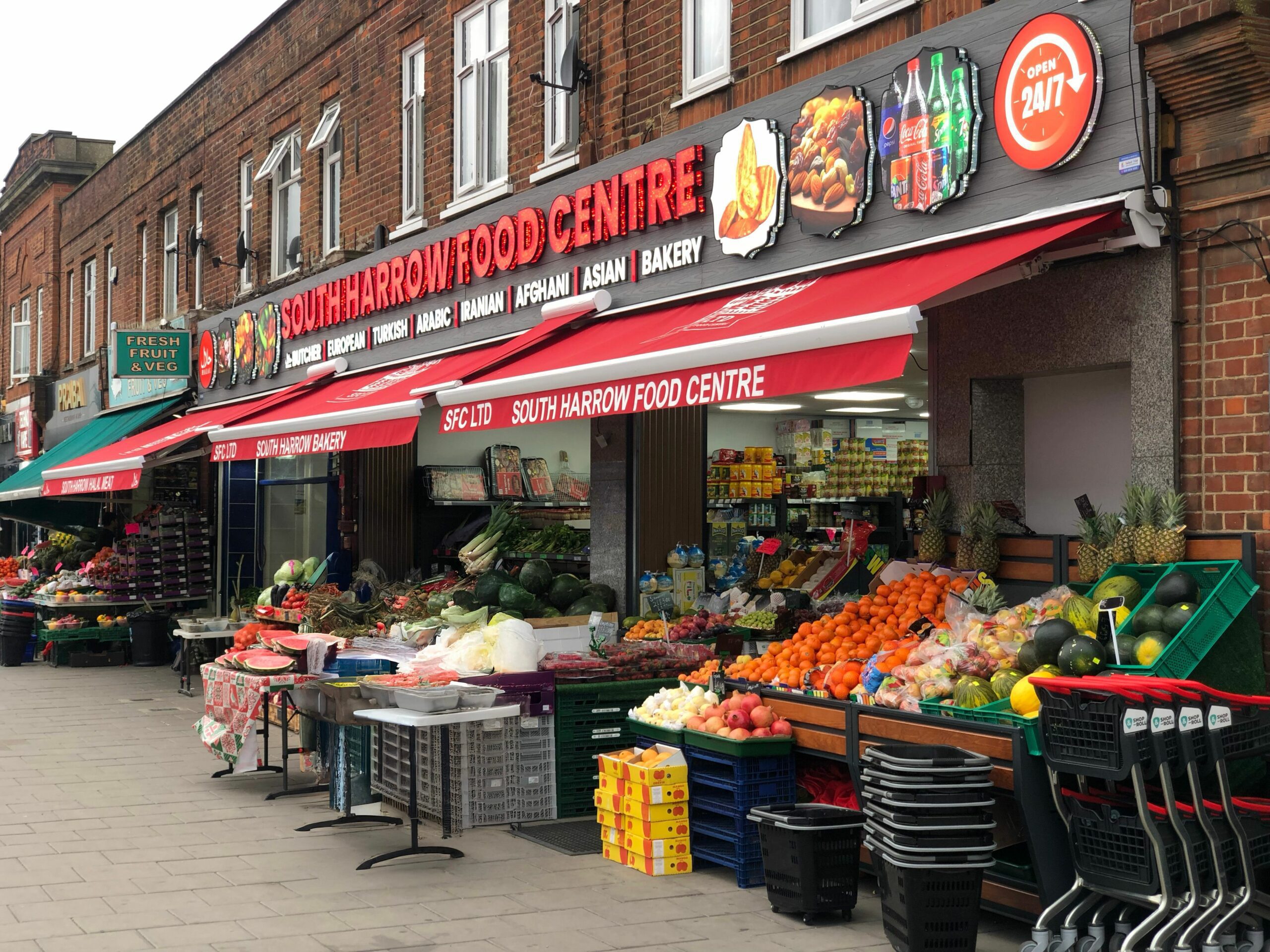

Social media for retail UK is no longer about posting pretty product shots – it is a measurable sales channel that can drive footfall, online conversion, and repeat purchases when you run it like a retail system. The difference between accounts that grow and accounts that drift is simple: the winners connect content to a clear offer, a clear audience, and a clear measurement plan. In the UK, that also means leaning into local intent, seasonality, and store operations like stock levels and staffing. This guide gives you a practical framework, definitions, benchmarks, and templates you can apply this week.
Social media for retail UK: what success looks like in 2026
Retail social is often judged by likes, but your business is judged by revenue and margin. So, start by choosing a primary outcome for each campaign window: footfall, online sales, lead capture, or retention. Next, pick one supporting metric that explains performance, such as reach for awareness or click-through rate for traffic. Finally, set a time box, because retail is seasonal – a two-week push for a new drop needs different creative and frequency than a three-month brand rebuild. A useful rule is to tie every content series to a measurable customer action: save, DM, click, add to basket, or visit store. If you cannot name the action, the post is probably entertainment, not retail.
- Decision rule: If your goal is footfall, prioritise reach + saves + DMs over likes.
- Decision rule: If your goal is online sales, prioritise product page views + add to cart + conversion rate.
- Quick win: Build one weekly “store reality” post that answers a common question: sizing, fit, restocks, delivery cutoffs, returns.
Key terms retail teams must agree on (with simple formulas)

Before you brief creators or spend on ads, align on the language. Otherwise, you will compare the wrong numbers and make bad decisions. Keep these definitions in your campaign doc and use them in every report. Where possible, calculate with platform data plus your analytics tool so you can cross-check. For measurement standards and definitions, Google’s Analytics documentation is a solid reference point: Google Analytics measurement basics.
- Reach: unique people who saw your content.
- Impressions: total views, including repeats. Frequency = impressions ÷ reach.
- Engagement rate (ER): (likes + comments + saves + shares) ÷ impressions (or reach). Pick one method and stick to it.
- CPM: cost per 1,000 impressions. Formula: spend ÷ impressions × 1,000.
- CPV: cost per view (usually video views). Formula: spend ÷ views.
- CPA: cost per acquisition (purchase, lead, or signup). Formula: spend ÷ conversions.
- Whitelisting: running paid ads through a creator’s handle (with permission) to use their identity and social proof.
- Usage rights: permission to reuse creator content on your channels, ads, email, site, and for how long.
- Exclusivity: creator agrees not to work with competitors for a defined period and category.
Example calculation: You spend £600 boosting a Reel that gets 120,000 impressions and 240 purchases. CPM = 600 ÷ 120,000 × 1,000 = £5. CPA = 600 ÷ 240 = £2.50. That is the kind of clarity that lets you scale confidently.
Channel strategy for UK retail: pick roles, not favourites
Most retail teams spread themselves thin across every platform. Instead, assign each channel a job and measure it against that job. Instagram is still strong for product discovery, social proof, and DMs that convert, especially when you use Reels plus Stories with clear CTAs. TikTok can create demand fast, but it needs volume and a willingness to test hooks and formats weekly. Pinterest is underrated for evergreen intent, particularly for home, fashion, weddings, and gifting, where search behaviour is strong. YouTube Shorts can extend your best vertical video and build trust for higher-consideration categories like beauty tools or fitness equipment.
- Takeaway: Choose one “demand creation” channel (TikTok or Reels) and one “demand capture” channel (Instagram profile, Pinterest, or YouTube) so discovery has somewhere to convert.
- Takeaway: If your store relies on local trade, treat Google Business Profile and Instagram as a pair: local search captures intent, social builds preference.
When you need platform-specific creative specs or ad format rules, use official documentation so you do not build assets that get cropped or rejected. For Meta placements and ad formats, refer to: Meta Business Help Center.
A retail content system that ties posts to stock, margin, and seasonality
Retail content works best when it mirrors how people shop: they discover, compare, decide, then come back for reassurance. Build your calendar around four repeating content pillars, then rotate products through them based on margin and inventory. Start with “hero” products that can carry spend and fulfil demand, then support with “basket builders” that lift average order value. Importantly, do not let social sell items you cannot reliably ship or staff in-store, because that creates refund friction and negative comments. A simple weekly cadence beats sporadic bursts, because the algorithm rewards consistency and customers learn what to expect.
- Pillar 1 – Proof: UGC try-ons, customer reviews, before and after, staff picks.
- Pillar 2 – Product: demos, unboxings, ingredient breakdowns, sizing guides, “what’s in the box”.
- Pillar 3 – Place: store tours, local moments, events, opening hours, delivery cutoffs.
- Pillar 4 – Promotion: bundles, limited drops, loyalty perks, seasonal gifting.
Practical step: Every Monday, pick 3 SKUs: one hero, one seasonal, one clearance. Then assign each SKU one post that answers a real objection: “Will it fit?”, “Is it worth it?”, “How fast can I get it?”. That is how you turn content into conversion.
| Retail goal | Best content formats | Primary KPI | Secondary KPI | CTA to use |
|---|---|---|---|---|
| Footfall | Reels, Stories, local creator posts | Reach in local radius | DMs, saves | “DM for stock” / “Show this in store” |
| Online sales | UGC demos, carousels, live shopping clips | Purchases | Add to cart rate | “Tap to shop” / “Use code” |
| Email or SMS growth | Giveaways, quizzes, waitlists | Signups | Cost per lead | “Join the list for early access” |
| Retention | How-to, care guides, community posts | Repeat purchase rate | Customer service DMs | “Save this” / “Reply with your question” |
Influencer and creator partnerships: a UK retail workflow that protects ROI
Creators are often the fastest way to get credible product proof, but only if you treat partnerships like merchandising, not like PR. Begin with a shortlist based on audience location, content style, and past brand fit. Then, audit recent posts for consistency: do they post regularly, do comments look real, and do they respond like a human? After that, define deliverables that match your channel roles, such as one TikTok for discovery and three Story frames for conversion. If you want to go deeper on the mechanics of evaluating creators and building repeatable processes, keep a tab open on the InfluencerDB.net blog resources and use it as your internal training library.
- Step 1: Set your target CPA or target CPM before outreach, so you know what “too expensive” means.
- Step 2: Ask for audience breakdown (UK share, top cities, age) and recent performance screenshots.
- Step 3: Negotiate usage rights and whitelisting up front, because that is where retail ROI often comes from.
| Deliverable | Best for | What to specify in the brief | Common add-ons worth paying for |
|---|---|---|---|
| 1 TikTok or Reel (15 to 45s) | Discovery and product proof | Hook, key claims, do and do not say, link or code | Raw footage, 30-day usage rights, whitelisting access |
| 3 to 5 Story frames | Conversion and FAQs | Talking points, sticker to use, timing, offer details | Link sticker tracking, Q and A box, pinned highlight |
| Carousel (5 to 8 slides) | Consideration and saves | Slide outline, comparison points, sizing or specs | Product page copy reuse, in-feed boost permission |
| In-store visit content | Footfall and local trust | Store location tags, staff intro, event details | Event hosting, meet and greet, exclusivity window |
Measurement that retail teams can actually run (tracking, attribution, and tests)
Attribution is messy, especially when customers see a creator post, then buy later via Google or in-store. Still, you can get reliable directional truth with a few simple controls. Use unique discount codes for creators when possible, but do not rely on codes alone because many buyers will not use them. Add UTM parameters to every trackable link so you can separate traffic sources in analytics. For in-store impact, run a “show this post” mechanic for one week and compare footfall and conversion to the previous week, adjusting for promotions and weather if needed.
- Baseline: Record last 4 weeks of sales, sessions, conversion rate, and average order value before a push.
- Test: Change one variable at a time – creator, offer, or landing page – not all three.
- Read: If reach rises but sales do not, your offer or landing page is the likely bottleneck.
Simple incrementality check: Pick two similar weeks. In week A, run creator content only. In week B, run creator content plus whitelisted ads behind the best post. If week B improves CPA by 20 percent or more, you have evidence that paid amplification is worth scaling.
Common mistakes UK retailers make (and how to fix them fast)
Most retail social problems are operational, not creative. One common mistake is posting without a product page that answers basic questions, which forces customers to DM and then drop off. Another is pushing promotions without clarifying exclusions, delivery cutoffs, or returns, which creates comment chaos and customer service load. Many teams also overproduce content and under-test, so they spend hours on one video instead of learning from five quick variations. Finally, retailers often ignore usage rights until after a post performs, then discover they cannot legally run it as an ad or reuse it on site.
- Fix: Add a “retail readiness” checklist to every campaign: stock, shipping, returns, landing page, staff briefing.
- Fix: Write one pinned comment that answers the top three questions and update it as needed.
- Fix: Negotiate usage rights and whitelisting in the first contract message, not after launch.
A good plan is specific enough to execute and flexible enough to learn. Over 30 days, your job is to publish consistently, test offers, and build a small library of proof assets you can reuse. Week 1 is setup and baseline: audit your profile, fix highlights, and standardise tracking links. Week 2 is testing: run three hooks for the same product and keep the winner. Week 3 is amplification: put paid spend behind the best-performing creator style or in-house UGC. Week 4 is refinement: update your brief template and lock in a repeatable creator roster.
- Week 1 checklist: Update bio value prop, add store locator link, create “Shipping and Returns” highlight, set up UTMs.
- Week 2 checklist: Publish 3 short videos, 2 carousels, daily Stories for 5 days, and log results in one sheet.
- Week 3 checklist: Whitelist the top post, test two audiences, cap frequency, and watch CPA daily.
- Week 4 checklist: Repurpose winners into email, product pages, and pinned posts, then brief next month.
As you scale, keep compliance tight. If you work with creators, ensure ads are properly disclosed and contracts cover what happens if content is edited or boosted. For UK advertising rules and disclosure expectations, the ASA’s guidance is the safest reference: ASA guidance on recognising ads.
Retail brief template you can copy (and a negotiation rule of thumb)
A strong brief makes performance more predictable because it removes ambiguity while leaving room for creator style. Keep it to one page and include the non-negotiables: key claims, banned claims, offer terms, and filming constraints. Add context that helps creators sell, such as why the product exists, who it is for, and what problem it solves. Then, specify what success looks like so they can optimise their own posting choices. When negotiating, pay for what you will actually use: if you plan to run ads, usage rights and whitelisting matter more than an extra Story frame.
- Brief must-haves: product name, hero benefit, proof points, price, offer window, delivery cutoffs, CTA, tracking link or code.
- Creative guardrails: 2 to 3 mandatory talking points, 2 banned phrases, and 1 competitor exclusion.
- Negotiation rule: If you want 30-day paid usage, ask for it up front and trade it against fewer deliverables rather than adding cost blindly.
If you want to keep improving your process, build a swipe file of briefs, hooks, and reporting templates. You can also browse more tactical guides and measurement ideas in the and adapt them to your category.