

Influencer marketing challenges show up in every campaign – from pricing confusion to messy measurement – but they also reveal where the commercial opportunities are if you work with data and clear rules.
The French idea behind “Defis et opportunites commerciales” fits influencer work perfectly: the same friction that slows a deal can also signal leverage, differentiation, or a smarter go to market. In this guide, you will learn the terms that matter, how to price and evaluate creators, and how to turn common obstacles into repeatable revenue outcomes.
Influencer marketing challenges: the terms you must define first
Before you negotiate or forecast ROI, align on definitions. Otherwise, teams argue about results while looking at different numbers. Start every brief with a one page glossary so brand, agency, and creator use the same language.
CPM (cost per mille) is cost per 1,000 impressions. Formula: CPM = (Cost / Impressions) x 1,000. Use CPM when your goal is efficient awareness and you can trust impression reporting.
CPV (cost per view) is cost per video view. Formula: CPV = Cost / Views. Use CPV when video is the main deliverable and the platform has a stable view definition.
CPA (cost per acquisition) is cost per purchase, lead, or signup. Formula: CPA = Cost / Conversions. Use CPA when you have tracking in place and a clear conversion event.
Engagement rate is engagements divided by reach or followers, depending on your standard. A practical rule is to use engagement rate by reach when possible: ER = (Likes + Comments + Shares + Saves) / Reach. It is harder to game than follower based ER.
Reach is unique accounts exposed to content. Impressions are total exposures, including repeats. When a creator has high impressions but low reach, frequency is high – that can be good for recall, but it can also mean the audience is small.
Whitelisting is when the brand runs ads through the creator’s handle. It often improves performance because social proof travels with the ad. It also adds risk and should be priced as a separate right.
Usage rights define how the brand can reuse the content (paid ads, website, email, OOH) and for how long. Exclusivity restricts the creator from working with competitors for a period. Both should be explicit line items, not vague promises.
Where commercial opportunities hide inside influencer marketing challenges
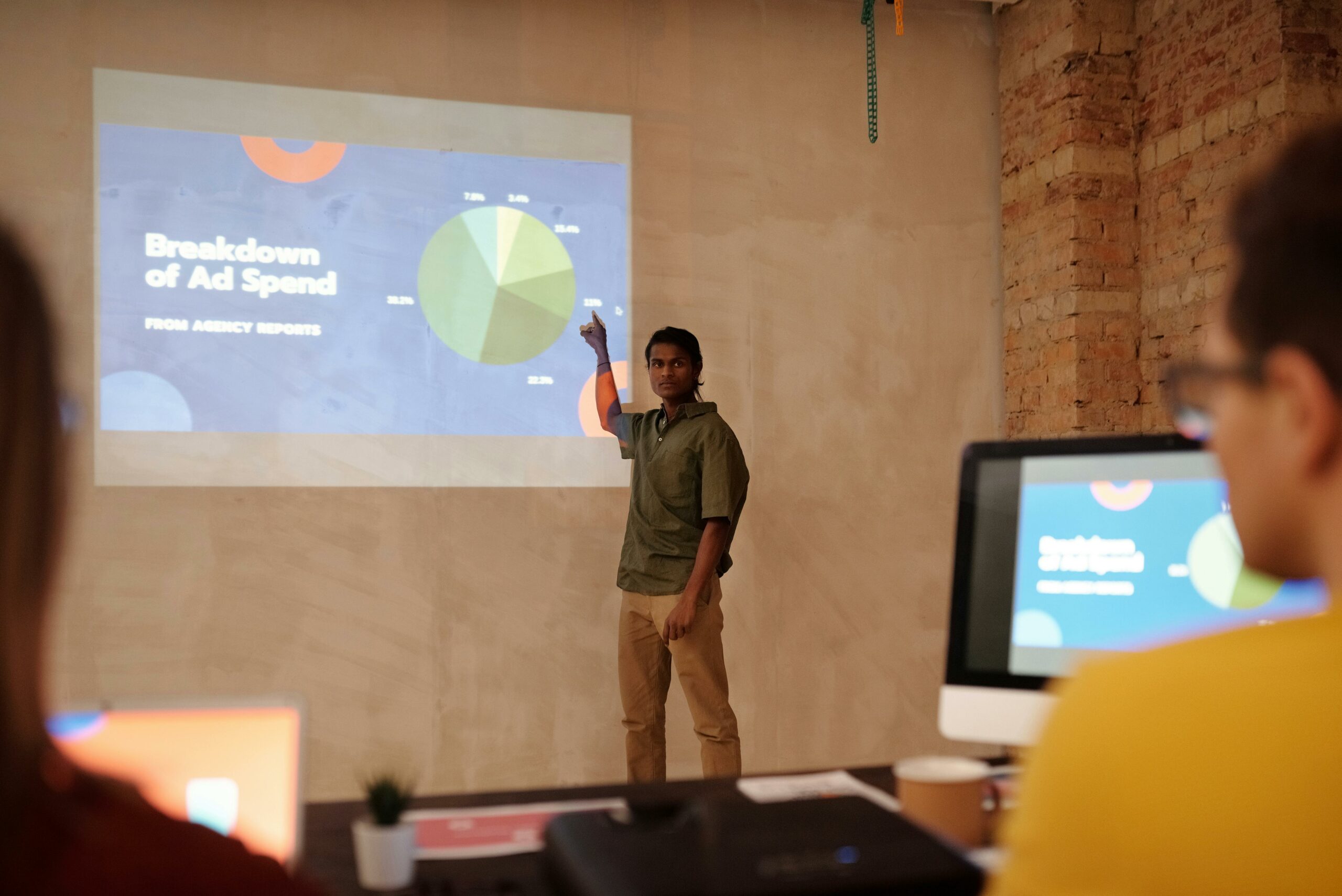
Many teams treat influencer as a creative channel only. That is a missed opportunity because creator partnerships can also reduce paid media costs, accelerate product feedback, and build a defensible community. The trick is to map each challenge to a commercial lever you can pull.
- Challenge: inconsistent performance. Opportunity – build a testing pipeline with small pilots, then scale winners with whitelisting and paid support.
- Challenge: pricing feels arbitrary. Opportunity – standardize rate cards by platform and tier, then negotiate based on deliverables and rights.
- Challenge: attribution is messy. Opportunity – use a blended measurement model: platform metrics for awareness, trackable links for intent, and incrementality tests for true lift.
- Challenge: brand safety and compliance. Opportunity – tighten contracts and disclosures, which reduces risk and speeds approvals.
- Challenge: creator fatigue. Opportunity – invest in longer partnerships that improve authenticity and lower production cost per asset.
To keep your team aligned, write down the primary business outcome for each campaign: awareness efficiency, qualified traffic, conversions, or content production. If you try to optimize all four at once, you will usually optimize none.
A practical framework to evaluate creators and forecast ROI
Use a simple four step framework: Fit, Forecast, Friction, and Proof. It is fast enough for weekly planning, but structured enough to defend decisions to finance.
1) Fit: audience and creative match
Start with audience overlap and content style. Ask for recent audience insights (age, country, top cities) and compare them to your customer profile. Then review the last 15 posts and score creative fit: does the creator already talk about the problem your product solves, or will the integration feel forced?
Takeaway checklist:
- At least 60 percent of audience in your target markets.
- Content format matches your funnel stage (short video for discovery, long video for education).
- Brand adjacency is natural (similar products, routines, or values).
2) Forecast: estimate outcomes with conservative assumptions
Next, forecast reach, clicks, and conversions with a range. Use the creator’s median performance, not their best post. If you do not have creator history, start with platform benchmarks and adjust after the first test.
Example forecast: You pay $2,000 for one TikTok video. You expect 40,000 views and 25,000 reach. If you estimate a 0.8 percent click through rate on the link in bio during the campaign window, that is 200 clicks. If your site converts at 3 percent, that is 6 orders. If your gross profit per order is $40, gross profit is $240. On that math alone, it looks negative, so you either need higher conversion, lower cost, or you treat the post as a content asset for paid amplification.
Now add a second scenario with whitelisting: you spend $1,500 boosting the post and get 120,000 additional impressions at a $12.50 CPM. If that paid layer drives 600 more clicks and 18 more orders, gross profit adds $720. You are still not at break even, so you would negotiate usage rights, improve the offer, or shift to creators with stronger intent signals.
3) Friction: identify what could break the deal
List friction points early: turnaround time, approval steps, exclusivity requests, and usage rights. Friction is not always bad. For example, a creator who insists on final edit control may produce better content, but you need to plan for it.
Takeaway: If a campaign has more than two high friction items, cut scope or extend timeline. Otherwise, your “cheap” partnership becomes expensive in internal time.
4) Proof: validate with data and fraud checks
Finally, verify that performance is real. Look for sudden follower spikes, engagement pods, or comment quality that does not match the audience language. Ask for screenshots of native analytics for the last 30 days and compare averages to the post you are buying.
If you want more practical measurement and creator evaluation ideas, browse the InfluencerDB blog guides on influencer strategy and adapt the templates to your workflow.
Pricing and negotiation: benchmarks, deliverables, and rights
Pricing is where influencer marketing challenges become commercial opportunities. A brand that can explain its pricing logic earns better terms and better creators. Instead of asking “What is your rate?”, ask for a menu: deliverables, timelines, and rights.
| Line item | What it covers | How to price it | Negotiation tip |
|---|---|---|---|
| Base deliverable fee | Creating and posting content | Based on platform, average views, and effort | Offer a 2 post bundle for a lower per post rate |
| Usage rights | Reposting on brand channels, website, email | Flat fee or 20 to 50 percent of base for 3 to 6 months | Limit channels and duration to reduce cost |
| Whitelisting | Running ads through creator handle | Monthly fee plus ad management scope | Start with 30 days and renew only if CPA is strong |
| Exclusivity | No competitor work for a period | Premium based on category and duration | Define competitors narrowly to avoid overpaying |
| Rush fee | Fast turnaround | 10 to 30 percent premium | Trade timeline for a better rate instead |
Benchmarks vary by niche, geography, and creator quality. Still, you can use a starting grid to avoid negotiating in the dark, then adjust after you see results.
| Platform | Follower tier | Typical deliverable | Common pricing range | Best for |
|---|---|---|---|---|
| 10k to 50k | 1 Reel + 3 Stories | $500 to $2,000 | Consideration and social proof | |
| 50k to 250k | 1 Reel + 3 Stories | $2,000 to $8,000 | Scaled awareness with strong creative | |
| TikTok | 10k to 100k | 1 video | $300 to $2,500 | Discovery and trend driven reach |
| YouTube | 25k to 250k | Dedicated video or integration | $1,500 to $15,000 | Education and high intent traffic |
| Newsletter or blog | 5k to 50k subs | Sponsored feature | $300 to $3,000 | Direct response and niche authority |
Decision rule: If the creator cannot clearly explain what rights are included, assume nothing is included. Put it in writing, then price accordingly.
Measurement that executives trust: a simple scorecard
Influencer reporting fails when it is either too shallow (likes only) or too complex (a dashboard nobody reads). Build a scorecard with three layers: delivery, efficiency, and business impact. Then keep it consistent across campaigns so you can compare.
Delivery metrics answer “Did it run?” Track: posts delivered, on time rate, link placement, and content approval time. These metrics sound basic, but they predict whether you can scale.
Efficiency metrics answer “Was it cost effective?” Track CPM, CPV, and cost per engaged user. If you use whitelisting, compare creator handle ads to brand handle ads.
Business impact metrics answer “Did it move the business?” Track clicks, add to carts, purchases, and CPA. Also track assisted conversions if you have multi touch attribution, but do not let it replace a clear primary KPI.
For disclosure and consumer transparency, follow the FTC’s guidance on endorsements and testimonials: FTC influencer marketing guidance. Clear labeling reduces legal risk and protects performance because audiences dislike feeling tricked.
Example calculation: A creator charges $4,000. The post gets 200,000 impressions. CPM = (4,000 / 200,000) x 1,000 = $20. If your paid social CPM is $12, you might think it is overpriced. However, if the creator content also generates 1,500 saves and 300 link clicks, and you can reuse it for ads, the blended value can beat paid.
To standardize platform reporting definitions, reference official documentation when teams disagree. For example, YouTube explains how views and engagement are counted in its help center: YouTube Analytics documentation.
Common mistakes that kill deals and results
Most underperforming campaigns fail for predictable reasons. Fixing them does not require a bigger budget, just better process.
- Buying followers instead of fit. A smaller creator with high trust can outperform a larger creator with weak relevance.
- Ignoring rights and then asking later. Late requests for whitelisting or usage rights create conflict and delays.
- Over scripting the creator. Heavy brand control often lowers performance because the content stops sounding like the creator.
- Measuring only last click. Influencer often drives discovery. Use last click for CPA campaigns, but keep a separate awareness scorecard.
- No offer strategy. If the product page is weak or the promo is unclear, even great content will not convert.
Takeaway: Run a pre flight check 48 hours before posting: link works, codes are tested, disclosure language is approved, and tracking parameters are in place.
Best practices: turn partnerships into a repeatable growth channel
Once you have the basics, the next step is building a system that improves with every campaign. That is where the commercial upside compounds.
- Start with a test matrix. Test 6 to 10 creators across two angles (problem solution vs. lifestyle) and two offers (discount vs. bundle). Keep budgets small, then scale the top 20 percent.
- Pay for performance without punishing creators. Use a hybrid: base fee plus bonus for hitting agreed targets. It protects both sides and keeps quality high.
- Build a content library. Tag assets by hook, format, and claim. When you brief new creators, show the top performing examples and explain why they worked.
- Use whitelisting selectively. Only whitelist content that already performs organically. Then set a clear stop loss: pause if CPA rises above your threshold for 3 consecutive days.
- Document learnings like a newsroom. After each flight, write a short recap: what happened, what it means, what you will do next time.
Takeaway: If you can explain in two sentences why a creator is a fit and how you will measure success, you are ready to scale. If not, run a smaller test and learn before you spend more.
A campaign brief template you can copy
A strong brief reduces revisions and protects performance. Keep it short, but specific enough that the creator can execute without guessing.
- Objective: awareness, traffic, conversions, or content production
- Primary KPI: CPM, CPV, CPA, or qualified clicks
- Key message: one sentence claim, plus two supporting points
- Mandatory elements: product shown, link or code, disclosure language
- Creative guardrails: what not to say, brand safety notes
- Deliverables: formats, lengths, posting dates, number of revisions
- Rights: usage rights, whitelisting, exclusivity, duration
- Tracking: UTM structure, landing page, coupon code rules
When influencer marketing challenges are treated as a planning input, not a surprise, you unlock faster approvals, cleaner measurement, and better economics. The commercial opportunity is not just one viral post – it is a repeatable system that turns creator trust into predictable growth.