
Social media event marketing works best when you treat it like a three-phase system – before, during, and after – with clear KPIs, owners, and timelines. This guide gives you a practical playbook you can run for a product launch, conference, pop-up, livestream, or creator-led activation. You will set measurable goals, build a content and influencer plan, and then capture results you can actually report. Along the way, you will define key metrics and terms so your team speaks the same language. Finally, you will get templates, tables, and simple formulas to forecast and evaluate performance.
Social media event marketing goals and key terms (define these first)
Before you write a single caption, align on what success means and how you will measure it. Otherwise, you will end up with a lot of posts and not much clarity. Start with one primary goal and two secondary goals, then map each to a metric and a tracking method. If your event has both brand and performance objectives, separate them by phase: awareness before, engagement during, conversion after. That structure keeps reporting clean and helps you avoid arguing about what mattered most.
Use these definitions in your brief so creators, agencies, and internal stakeholders stay consistent:
- Reach – unique accounts that saw your content at least once.
- Impressions – total views, including repeat views by the same person.
- Engagement rate – engagements divided by reach or impressions (pick one and stick to it). Common formula: ER by reach = (likes + comments + saves + shares) / reach.
- CPM – cost per 1,000 impressions. Formula: CPM = (spend / impressions) x 1000.
- CPV – cost per view (usually video views). Formula: CPV = spend / views.
- CPA – cost per acquisition (purchase, signup, lead). Formula: CPA = spend / conversions.
- Whitelisting – running paid ads through a creator’s handle (also called creator authorization). It often improves performance because the ad looks native.
- Usage rights – permission to reuse creator content on your channels, ads, email, or site, for a defined time and region.
- Exclusivity – creator agrees not to promote competitors for a set window (category and duration must be explicit).
Takeaway: Put these definitions and formulas in your campaign doc, then require every report to state whether ER is calculated on reach or impressions.
Before the event: build the plan, the content system, and the tracking
The “before” phase is where most event campaigns win or lose. You are not just creating hype; you are building a predictable funnel that moves people from awareness to intent. Start by choosing your audience segments and the one action you want them to take before the event: register, RSVP, save the date, join a waitlist, or follow an account. Next, decide which platforms matter based on the format. For example, TikTok and Reels are strong for discovery, while Instagram Stories and email are better for reminders and last-mile attendance.
Then, create a messaging ladder. Your top message is the event promise, your middle messages are proof points (speakers, creators, agenda, product benefits), and your bottom messages are logistics (date, time, location, access). This ladder prevents repetitive posts and makes it easier to brief creators. If you need inspiration for structuring social content and distribution, browse the InfluencerDB blog guides on campaign planning and creator strategy and adapt the frameworks to your event.
Tracking is non-negotiable. Set up UTM links for every channel, and create a naming convention that includes phase, platform, and partner. For ticketed events, connect your checkout or registration platform to analytics so you can attribute conversions. For in-person events, plan a QR strategy that is easy to scan and unique per placement (signage, stage slides, creator posts). For measurement standards and definitions, align your team with the IAB’s guidance on digital measurement at IAB.
Before-phase checklist:
- Pick 1 primary KPI (for example, registrations) and 2 secondary KPIs (reach, saves, CTR).
- Build a content calendar that includes teaser, reveal, reminder, and last-call posts.
- Set UTM conventions and a shared link sheet for creators and staff.
- Define your influencer deliverables, usage rights, and exclusivity in writing.
- Prepare a live coverage plan: shot list, talking points, and backup assets.
| Phase | Main objective | Core content | Primary KPI | Tracking method |
|---|---|---|---|---|
| Before | Drive intent | Teasers, speaker reveals, countdowns, FAQs | Registrations or RSVPs | UTMs to landing page, pixel events |
| During | Maximize attention | Live clips, Stories, behind-the-scenes, creator takeovers | Reach and video views | Platform analytics, live QR scans |
| After | Convert and retain | Recaps, testimonials, product demos, highlights | Sales, leads, or signups | UTMs, CRM attribution, post-event survey |
Takeaway: If you cannot explain in one sentence how a post connects to a KPI and a tracking method, it is not ready to publish.
Influencer and creator activation: selection, deliverables, and negotiation
Creators can do more than “promote the event.” They can seed the narrative, create social proof, and generate reusable content for paid and owned channels. Start selection with audience fit, not follower count. Review audience geography, age, and interests, then check recent content for tone and production style. After that, look at consistency: do they get stable views, or are they spiking once every 20 posts? Finally, scan comments for authenticity and relevance to the event topic.
When you negotiate, separate the fee into components: creation, posting, and rights. This makes trade-offs easier. For example, you might pay for one in-feed post plus three Stories, then add a usage rights fee for 90 days of paid amplification. If you plan to whitelist, ask for it upfront and include the authorization steps and time window. Also, be precise about exclusivity. “No competitors” is vague; specify the category and the duration, such as “no skincare device brands for 30 days after the event.”
Use a simple forecasting model to sanity-check pricing. Example: you pay $2,000 for a creator Reel expected to generate 50,000 impressions. Your projected CPM is (2000 / 50000) x 1000 = $40. Compare that to your paid social CPMs and to the value of the content you can reuse. If the creator also delivers strong click-through and conversions, CPM alone is not the right yardstick, so include CPA projections as well.
| Deliverable | Best use in event campaigns | What to specify in the contract | Common add-on |
|---|---|---|---|
| Short-form video (Reels, TikTok) | Discovery and hype before, highlights during | Length, hook, CTA, posting date, music rights | Usage rights for ads |
| Stories sequence | Reminders, links, live moments | Number of frames, link sticker, talking points | Story highlights for 7 to 30 days |
| Livestream segment | Real-time engagement and Q and A | Run of show, moderation, backup plan | Clip rights for recaps |
| UGC style asset pack | Paid social creative after the event | Raw files, captions, aspect ratios | Whitelisting |
Takeaway: Negotiate in modules (post fee, production, rights, whitelisting, exclusivity) so you can optimize for ROI instead of arguing over one all-in number.
During the event: real-time content operations and community management
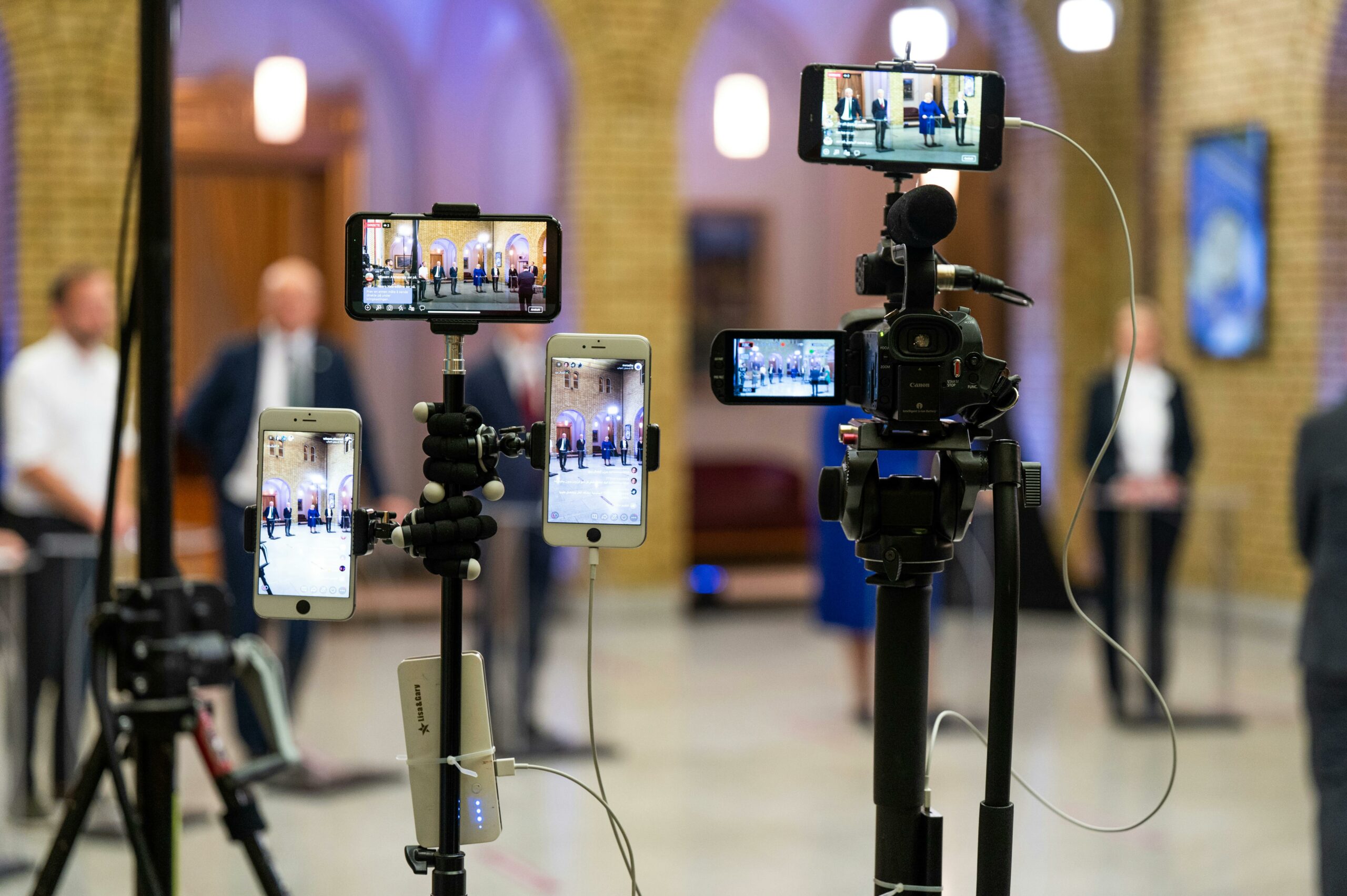
During the event, speed matters, but so does discipline. Set up a small “content desk” that can approve, caption, and publish quickly. Assign roles: one person captures, one edits, one publishes, and one monitors comments and DMs. If you rely on creators, give them a tight shot list and a short list of must-say points, then let them speak naturally. Over-scripting kills authenticity and slows output.
Plan your real-time mix across formats. Use Stories for quick updates and reminders, short-form video for moments that travel beyond your followers, and carousels for information that people save. If the event is in-person, create a consistent visual cue such as a step-and-repeat, a branded mic flag, or a signature backdrop that makes clips instantly recognizable. Also, capture “proof” assets: crowd shots, lines, reactions, and testimonials. Those clips become your best after-phase ads.
Community management is part of the show. Pin a comment with key logistics, answer questions fast, and route customer support issues to the right channel. If you run a livestream, assign a moderator to collect questions and remove spam. For platform-specific best practices on video and live formats, reference YouTube’s official creator resources at YouTube Help.
During-phase checklist:
- Publish a “start now” post and a “last chance” reminder with a clear CTA.
- Clip 5 to 10 short moments that can be posted within 2 hours.
- Use a QR code for on-site conversion and a separate UTM link for social.
- Monitor comments every 15 minutes and update pinned info as needed.
- Log what is working in real time so you can repeat it the same day.
After the event: measurement, repurposing, and ROI reporting
The after phase is where you turn attention into business outcomes. Start by exporting platform analytics within 48 hours so you do not lose story data. Then, consolidate results into a single sheet with consistent definitions for reach, impressions, and engagement rate. Separate organic performance from paid amplification, especially if you used whitelisting. That distinction matters when you evaluate creators and decide who to rebook.
Next, calculate a simple ROI view. If your event goal was ticket sales, use CPA and revenue. Example: you spent $12,000 total and sold 300 tickets at $60 each. Revenue is $18,000. Your CPA is 12000 / 300 = $40 per ticket. Gross ROI is (18000 – 12000) / 12000 = 0.5, or 50 percent. If your goal was leads, use a lead value estimate from your sales team and report both cost per lead and projected pipeline.
Repurposing is the hidden multiplier. Create three asset buckets: highlights for social, testimonials for ads, and educational clips for evergreen. If you negotiated usage rights, build a paid testing plan that rotates hooks and CTAs. If you did not, you can still repurpose your owned footage and public posts with proper permissions. For disclosure and endorsement rules when creators promote your event or product, follow the FTC’s guidance at FTC Endorsement Guides.
Takeaway: Your first report should answer three questions: what drove registrations, what drove the best on-site moments, and what content will keep converting for the next 30 days.
Common mistakes (and how to fix them fast)
Most event campaigns fail in predictable ways. The first is treating social as a poster board instead of a system. Fix it by assigning owners and deadlines for each phase, then holding a 15-minute daily check-in during the final week. Another common issue is weak CTAs. If your post does not tell people exactly what to do, they will scroll. Use one CTA per post and repeat it across formats.
Creators also get underused. Brands often book one post and hope for magic. Instead, ask for a sequence: teaser, day-of coverage, and a recap with a clear offer. Finally, measurement breaks when links are messy. If you see “link in bio” without a tracked path, you will not be able to prove impact. Create a link sheet, enforce UTMs, and audit links the day before publishing.
- Mistake: No defined engagement rate formula – Fix: choose ER by reach or ER by impressions and document it.
- Mistake: Posting too late – Fix: pre-schedule 60 percent of content and leave 40 percent for real time.
- Mistake: Overproduced content that feels like an ad – Fix: mix in raw, human clips and audience reactions.
- Mistake: No rights for reuse – Fix: negotiate usage rights and whitelisting upfront.
Best practices: a repeatable framework you can run every time
To make this repeatable, use a simple framework: Brief – Build – Broadcast – Benchmark. Brief means one page that states goals, audience, key terms, deliverables, and approval rules. Build means a content system with templates, a shot list, and a link plan. Broadcast means publishing with a real-time operating rhythm, plus community management. Benchmark means a post-mortem that compares results to your last event and to your paid social baselines.
Also, plan for creative testing. Even in organic, you can test hooks, thumbnails, and CTAs across similar posts. In paid, test whitelisted creator ads against brand-handle ads using the same offer. Keep your tests small and clean so you learn quickly. Over time, you will build your own benchmarks for CPM, CPV, and CPA by platform and creator tier, which makes future planning much easier.
Final action list:
- Write a three-phase calendar with owners and deadlines.
- Standardize measurement terms and formulas in the brief.
- Negotiate creator packages with rights and whitelisting options.
- Run a real-time content desk during the event.
- Publish a 30-day repurposing plan within 72 hours after the event.