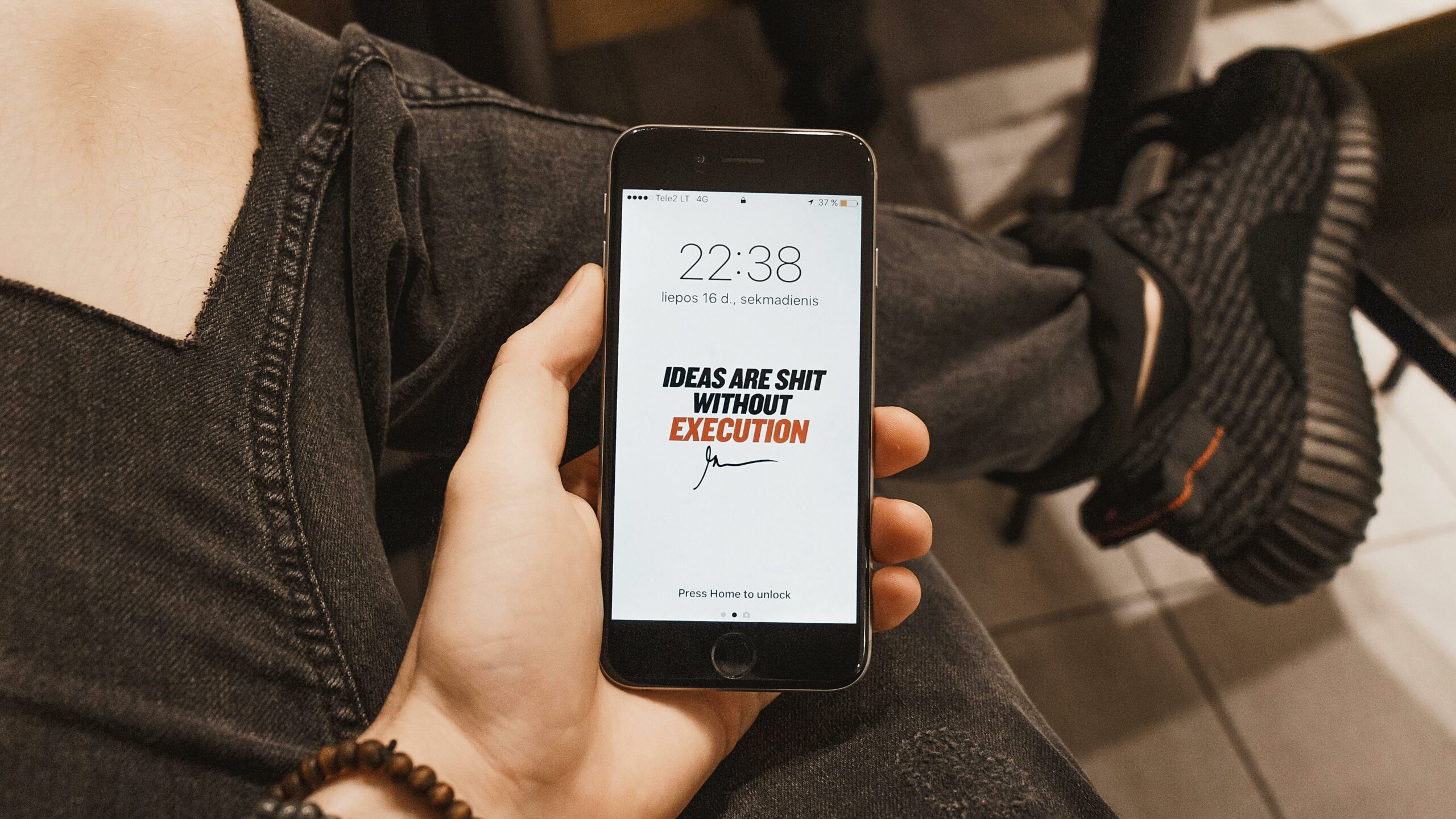

CEO social media guide is the simplest way to turn executive visibility into measurable trust, pipeline, and recruiting wins without becoming a full time content creator. In 2026, audiences expect leaders to show up with a point of view, not just product news, and they also expect consistency. The good news is that you do not need daily posting or viral stunts. You need a clear operating system: what you will say, where you will say it, how you will measure it, and how you will stay out of trouble. This playbook is built for CEOs who want leverage – and for the marketing teams who support them.
Start by deciding what the account is for, because strategy changes the content. Executive social can drive four outcomes: credibility in the market, demand generation, recruiting, and partner relationships. If you try to do all four at once, your feed becomes a random mix of announcements and inspiration posts that no one remembers. Instead, pick one primary goal and one secondary goal for the next 90 days. Then align your platform choice, content mix, and metrics to those goals so you can judge progress quickly.
Use this decision rule: if your company sells to other businesses, LinkedIn is your default home base; if you sell to consumers, Instagram and TikTok can matter, but only if you can show product context and culture without forcing it. YouTube works when you can commit to a repeatable format like monthly founder updates or customer stories. X can still be valuable for fast commentary, but it is harder to keep brand safe at scale. Finally, treat your CEO account as a media channel with an editorial calendar, not as a personal diary.
- Takeaway: Write a one sentence objective: “In 90 days, my CEO account will achieve X by publishing Y for Z audience.”
- Takeaway: Pick one primary KPI and two supporting KPIs, then ignore vanity metrics that do not map to the objective.
Key terms CEOs must understand (with plain definitions)

Even if you never touch a spreadsheet, you need shared language with your marketing and influencer teams. Otherwise, you will approve posts based on vibes, not outcomes. These are the terms that show up in briefs, reports, and contracts, plus how to apply them in practice.
- Reach: unique people who saw content. Use it to estimate top of funnel awareness.
- Impressions: total views, including repeats. Use it to judge frequency and message repetition.
- Engagement rate: engagements divided by impressions or reach. Choose one method and keep it consistent.
- CPM: cost per thousand impressions. Used to compare paid media, sponsored posts, and whitelisting.
- CPV: cost per view. Common for video, especially YouTube and TikTok.
- CPA: cost per acquisition or action. Used when you can track signups, demos, or purchases.
- Whitelisting: running ads through a creator or executive handle. It can lift performance because the ad looks native.
- Usage rights: permission to reuse content in ads, email, site, or sales decks. Always define duration and channels.
- Exclusivity: restriction that prevents posting for competitors for a period. It costs money because it limits future earnings.
Takeaway: Put these definitions into your CEO content brief so every stakeholder uses the same measurement logic.
Build a CEO content system: voice, pillars, and cadence
Consistency is not about posting every day. It is about publishing on a schedule your audience can trust. A CEO account works best when it has three to five content pillars that repeat, because repetition builds authority. Your pillars should connect to your company narrative without reading like a press release. For example, a cybersecurity CEO can rotate between threat analysis, leadership lessons, customer outcomes, and hiring culture. A consumer brand CEO can rotate between product craft, behind the scenes operations, customer stories, and values.
Next, define voice rules. Decide what you will never do: dunk on competitors, comment on breaking news without context, or share unverified stats. Then decide what you will always do: cite sources, name the lesson, and end with a clear point. If your team ghostwrites, the CEO still needs to sound like a human. Capture ten phrases the CEO naturally uses and keep them in a shared doc. That small detail prevents the “marketing wrote this” feel.
Cadence should match capacity. A practical baseline is two posts per week on LinkedIn plus one short video or carousel every two weeks. Add one community block of 20 minutes twice a week to reply to comments and engage with partners. If you want to scale, repurpose one long form idea into multiple formats: a post, a short video, and a newsletter style recap. For more tactical social planning ideas, keep a running list of formats and experiments from the InfluencerDB Blog resources and adapt them to an executive voice.
- Takeaway: Choose 3 to 5 pillars and write one sentence for each: “I post about X to help Y do Z.”
- Takeaway: Lock a minimum cadence you can sustain for 90 days, then review.
Measurement that CEOs will actually use: simple formulas and examples
Executive social measurement fails when reports are too complex or too fluffy. You need a small dashboard that ties content to business outcomes, even if attribution is imperfect. Start with three layers: attention, trust, and action. Attention is reach and impressions. Trust is engagement quality, saves, shares, and inbound messages from relevant people. Action is site visits, demo requests, event signups, or recruiting leads that mention the CEO content.
Use simple formulas so the team can move fast:
- Engagement rate (impressions based): (likes + comments + shares + saves) / impressions
- CPM equivalent: (content production cost / impressions) x 1000
- Lead conversion rate: leads from CEO content / landing page visits from CEO content
Example calculation: you publish a CEO post series that costs $1,200 in writing, design, and editing time. Over a month it generates 180,000 impressions. Your CPM equivalent is ($1,200 / 180,000) x 1000 = $6.67. If that series also drives 220 tracked site visits and 8 demo requests, your visit to demo conversion rate is 8 / 220 = 3.6%. Even if tracking misses some influence, this gives you a baseline to compare against paid social and events.
When you need an external reference for measurement standards, align your definitions to the IAB measurement guidance so your team does not reinvent terms across channels. You can review the IAB overview at IAB.
| Goal | Primary KPI | Supporting KPIs | What “good” looks like |
|---|---|---|---|
| Credibility | Relevant reach | Shares, saves, qualified comments | More engagement from industry peers than from employees |
| Demand | Demo requests influenced | Link clicks, landing page conversion rate | Steady lift in branded search and direct traffic |
| Recruiting | Inbound candidate messages | Job page visits, employee shares | Applicants mention CEO posts in interviews |
| Partnerships | Partner intros | DM replies, event invitations | More warm inbound than cold outbound |
- Takeaway: Report monthly, but review weekly with a 15 minute “what worked and why” note.
Working with creators and influencers as a CEO: smart collaboration rules
In 2026, CEOs increasingly collaborate with creators for credibility and distribution. Done well, it looks like a conversation, not a sponsorship. Start by choosing creator partners who overlap with your buyer or talent audience. Then design a collaboration that gives the creator a real angle: a behind the scenes tour, a debate on an industry issue, or a teardown of a common misconception. Avoid scripts that force brand claims into the creator voice, because audiences detect it instantly.
When money is involved, negotiate based on deliverables and rights, not follower counts. Ask for a rate that separates content creation from usage rights. If you plan to run the content as ads, you are buying more value. Similarly, exclusivity should be narrow: define the exact competitor set and the exact time window. If you want whitelisting, specify who controls spend, which landing pages are allowed, and how comments will be moderated.
| Term | What to specify | Why it matters | CEO friendly rule |
|---|---|---|---|
| Deliverables | Format, length, posting date, number of revisions | Prevents scope creep | One round of revisions is usually enough |
| Usage rights | Channels, duration, paid vs organic | Changes pricing materially | If paid usage is needed, price it separately |
| Whitelisting | Access method, spend cap, creative approval | Affects brand safety and performance | Require a spend cap and weekly reporting |
| Exclusivity | Competitor list, geography, time window | Limits creator income | Keep it short and specific, pay for it |
| Disclosure | Hashtags, verbal disclosure, placement | Legal and trust risk | Disclose clearly, do not hide it |
For disclosure expectations, use the FTC guidance as your baseline and keep it simple: if there is a material connection, disclose clearly and early. The FTC overview is here: FTC endorsement guidelines.
- Takeaway: Separate “content fee” from “usage rights” in every creator deal to avoid confusion later.
- Takeaway: If you cannot explain the collaboration in one sentence without sounding evasive, rework it.
Risk management for executive accounts: guardrails that do not kill authenticity
Executive social carries real risk: legal exposure, regulatory issues, employee relations, and brand safety. The fix is not to route every post through five approvals. Instead, create guardrails and a fast review path. Build a “red lines” list: confidential financials, unannounced product details, customer names without permission, and any claim that needs substantiation. Then create a “yellow lines” list: political commentary, competitor mentions, and crisis topics. Yellow line posts can happen, but they require a second set of eyes.
Set up an escalation plan for mistakes. If a post is wrong, correct it quickly and transparently. If a comment thread turns hostile, do not argue in public. Move to a short clarification, then disengage. Also, protect the CEO time by using a weekly batch review: the team drafts, the CEO approves in one sitting, and publishing is scheduled. That approach keeps the voice consistent without turning the CEO into a copy editor.
- Takeaway: Create a one page “CEO social policy” with red lines, yellow lines, and who approves what.
- Takeaway: Keep receipts for claims: links, studies, or internal data notes.
Common mistakes (and how to fix them fast)
Most CEO accounts fail for predictable reasons. The first is posting only announcements, which trains the audience to ignore you. Fix it by following a 4 to 1 ratio: four value posts for every one company update. Another common mistake is outsourcing voice completely, which makes the CEO sound generic. Solve that by recording ten minutes of voice notes each week and letting the team turn them into drafts.
CEOs also overreact to a single low performing post and stop publishing. Instead, judge performance in sets of ten posts, because distribution varies. Finally, many leaders chase trends that do not fit their audience. If a format does not match your message, skip it. Consistency and clarity beat novelty in executive communication.
- Takeaway: Audit your last 20 posts and label each as value, story, opinion, or announcement. If announcements dominate, rebalance next month.
Best practices for 2026: a practical 30 day rollout plan
A CEO social reboot works best as a short sprint with clear deliverables. In week one, define goals, pillars, and guardrails, then update the profile to match the narrative. In week two, build a content bank: ten post ideas, three short video prompts, and two founder story angles. In week three, publish consistently and engage in comments twice a week. In week four, review results, double down on the top two formats, and cut the rest.
Use this checklist to keep execution tight:
| Week | Tasks | Owner | Deliverable |
|---|---|---|---|
| 1 | Set 90 day objective, pick pillars, define red lines | CEO + Comms lead | One page strategy and policy |
| 2 | Create content bank, draft first 6 posts, design templates | Marketing team | Two weeks of scheduled content |
| 3 | Publish, respond to comments, test one new format | CEO + Community manager | Engagement log and learnings |
| 4 | Review KPIs, refine cadence, plan creator collaboration | Marketing analytics | Monthly report and next sprint plan |
- Takeaway: Treat the first month as a pilot, not a referendum on whether executive social “works.”
- Takeaway: Keep a swipe file of posts that earn qualified comments, then reuse the structure with new examples.
Quick CEO post templates you can reuse
Templates reduce friction and keep quality high. Use them as scaffolding, then add real details so the post feels lived in. Template 1: “What I believed, what changed, what I do now” for leadership lessons. Template 2: “A customer problem, the hidden constraint, the fix” for product and market insight. Template 3: “Three things I would do if I started today” for recruiting and career advice. Template 4: “My take on a headline, plus one practical implication” for timely commentary. Rotate these and your feed will feel coherent without being repetitive.
- Takeaway: End most posts with a question that invites expertise, not applause, such as “What tradeoff are you seeing in your org?”
If you want to go deeper on creator collaboration, measurement, and campaign planning, keep exploring the and adapt those frameworks to an executive context. The CEOs who win in 2026 will not be the loudest. They will be the clearest, most consistent, and easiest to trust.