

Social media trends are changing faster than most teams can update a content calendar, so the winners are the ones who measure, test, and decide quickly. In 2026, the biggest shifts are not just new formats – they are new distribution mechanics, new creator deal terms, and tighter measurement expectations. This guide translates what is happening across major platforms into practical actions you can take this quarter, whether you run a brand account, manage creators, or plan influencer campaigns.
Social media trends that actually move results (not just buzz)
Not every “trend” deserves your time. A useful trend has three traits: it changes how content gets distributed, it changes what audiences do, or it changes how money flows (pricing, ad tools, and creator deals). For example, a meme format can be fun, but it rarely changes your unit economics. By contrast, a platform pushing search-based discovery or longer watch time will change your creative, your posting cadence, and your reporting.
Use this quick decision rule before you chase anything new: if you cannot describe the expected impact on reach, engagement rate, or conversion within one sentence, you are not ready to invest. Also, separate “audience trend” from “platform policy trend.” Audience trends tell you what to make; policy trends tell you what you are allowed to do and what will be throttled. Finally, treat trends as hypotheses to test, not truths to adopt.
- Takeaway checklist: Write the trend, the metric it should move, the content change required, and the time window to evaluate (7, 14, or 30 days).
- Decision rule: If you cannot measure it with your current tracking, run a small pilot first and add tracking before scaling.
Define the metrics and deal terms you will see everywhere
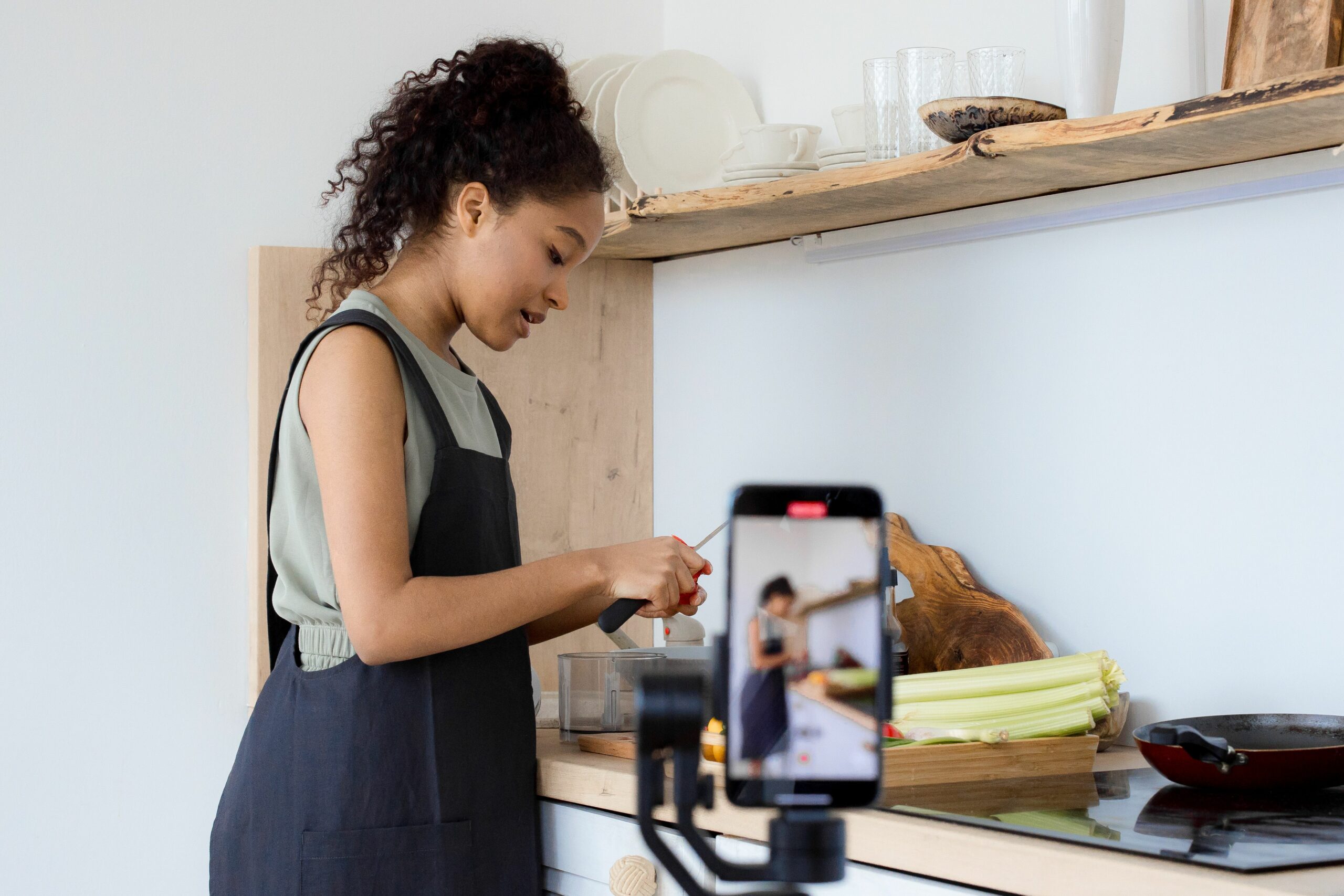
Before you compare performance across platforms, align on definitions. Otherwise, you will argue about screenshots instead of improving outcomes. Here are the core terms you should lock in with your team and partners, plus how to use them in practice.
- Reach: Unique accounts that saw the content. Use it to estimate how many new people you touched.
- Impressions: Total views including repeats. Use it to understand frequency and creative fatigue.
- Engagement rate (ER): Engagements divided by reach or impressions (choose one and stick to it). A simple version is: ER = (likes + comments + shares + saves) / reach.
- CPM: Cost per thousand impressions. CPM = cost / (impressions / 1000). Useful for comparing paid amplification and influencer whitelisting.
- CPV: Cost per view (often video views). CPV = cost / views. Use it when watch time matters more than clicks.
- CPA: Cost per acquisition (purchase, signup, lead). CPA = cost / conversions. Best for performance campaigns.
- Whitelisting: Brand runs ads through a creator’s handle (or uses their content in ads). This can boost trust but requires clear permissions.
- Usage rights: Permission to reuse content (organic, paid, website, email). Define duration, channels, and geography.
- Exclusivity: Creator agrees not to work with competitors for a period. This should increase price because it limits their income.
Example calculation: You pay $2,500 for a creator video that generates 180,000 impressions and 1,200 link clicks. CPM = 2500 / (180000/1000) = $13.89. If 36 clicks convert, CPA = 2500 / 36 = $69.44. That tells you whether to optimize creative, landing page, or targeting before you blame the creator.
Platform shifts to watch: search, saves, and watch time
One of the most durable changes is that social is behaving more like search. People now look up product recommendations, tutorials, and local tips directly inside apps. That means captions, on-screen text, and clear naming matter again. Instead of vague hooks, lead with what the viewer will get: “How to choose running shoes for flat feet” beats “You need to see this.”
At the same time, “quiet engagement” is rising. Saves, shares, and completion rate often signal value more than likes. If your reporting still focuses on likes alone, you will misread what the algorithm is rewarding. For video, watch time and retention are the real currency, so your first three seconds must set context, not just hype.
To keep this practical, build a simple creative QA checklist for every post: does the first frame show the product or outcome, does the caption include the exact phrase people would search, and does the video deliver the promise before the halfway mark? If you need a deeper library of measurement and reporting ideas, use the ongoing guides in the InfluencerDB blog to standardize your team’s approach.
- Takeaway: Add one “searchable” line to every caption (problem + solution) and one on-screen label that matches it.
- Takeaway: Track saves per 1,000 reach and 3-second to 50 percent retention as core health metrics.
Creator content trends: lo fi proof, serial formats, and collabs
Audiences have learned to spot overproduced ads, so “lo fi proof” is winning: real use, real context, and specific claims that can be shown. That does not mean sloppy. It means the production supports credibility rather than distracting from it. For brands, the move is to brief creators on what proof to capture: side-by-side comparisons, screen recordings, receipts, or time-lapse results.
Another pattern is serial content. Instead of one-off posts, creators build recurring segments that train audiences to return. Brands can plug into that by sponsoring a series rather than buying a single deliverable. Finally, collaborations are becoming a distribution lever. Creator-to-creator collabs can introduce you to adjacent audiences at a lower cost than broad targeting.
When you negotiate, ask for “series options” and “collab options” in the proposal. A series might be three short videos over three weeks with a consistent hook and CTA. A collab might be one joint live session plus two cutdowns. These structures often outperform isolated posts because they create repetition without feeling like repetition.
- Takeaway: Brief for proof: list 3 pieces of evidence the creator must capture (demo, comparison, testimonial).
- Takeaway: Prefer bundles: 3 posts + 3 story frames + 30-day usage rights is easier to optimize than one hero post.
Benchmarks table: what “good” looks like by platform
Benchmarks vary by niche, audience age, and content type. Still, you need starting ranges to spot outliers and set expectations. Use the table below as directional guidance, then calibrate with your own historical data after two to four weeks of consistent posting or a pilot campaign.
| Platform | Primary success signal | Healthy engagement indicators | Notes for 2026 planning |
|---|---|---|---|
| Instagram Reels | Reach and saves | Saves per 1,000 reach and shares rising week over week | Optimize for searchable captions and strong first frame context |
| TikTok | Watch time and completion | Retention curve stays stable past the first 3 seconds | Test multiple hooks; keep payoff early and clear |
| YouTube Shorts | View velocity | High views in first 24 hours relative to channel baseline | Repurpose winners from TikTok and Reels, then refine pacing |
| YouTube Longform | Watch time minutes | Strong average view duration and consistent subscriber lift | Best for evergreen search and deeper product education |
| Dwell time and comments | Meaningful comments and saves, not just likes | Use POV posts, case studies, and clear lessons learned |
Concrete use: If a Reel gets high reach but low saves, your content may be entertaining but not useful. If TikTok retention drops sharply at second two, your hook is unclear or mismatched to the title text. Benchmarks are not grades, but they help you diagnose where to fix the creative.
Pricing and deal structure table: how trends change influencer costs
As brands demand more measurable outcomes, deals are shifting from “one post” to packages that include usage rights, whitelisting, and performance reporting. That changes pricing because you are buying more than distribution. You are buying creative assets and permissions, which have real value if you plan to run ads or reuse content on owned channels.
| Deal element | What it means | When to use it | Pricing impact (rule of thumb) |
|---|---|---|---|
| Base deliverables | Posts, stories, videos, lives | Always | Anchor price |
| Usage rights | Brand can reuse content on specified channels | When you want to repurpose to ads, site, email | Add 20 to 100 percent depending on duration and channels |
| Whitelisting | Run paid ads from creator handle | When you want creator trust + paid scale | Monthly fee or 10 to 30 percent add on |
| Exclusivity | No competitor work for a period | When category conflict is a real risk | Add 25 to 200 percent based on category and length |
| Performance bonus | Extra pay if KPIs hit | When you want alignment without underpaying | 5 to 20 percent bonus tied to clear metrics |
Negotiation tip: If budget is tight, trade cash for clarity. Offer a smaller base fee with a defined performance bonus and limited usage rights. Creators often accept that if the rules are simple and the reporting is transparent.
A step by step framework to act on trends without wasting budget
Trends are only valuable if you can operationalize them. Use this six-step workflow to turn “we should try that” into a controlled test with a clear decision at the end.
- Pick one goal metric: Choose reach, saves, clicks, or CPA. Do not mix goals in the same test.
- Write a test hypothesis: “If we add searchable captions and on-screen labels, saves per 1,000 reach will increase by 20 percent in 14 days.”
- Control the variables: Keep posting time, creator tier, and offer consistent. Change only one major creative element.
- Set tracking: Use UTM links, unique codes, and a shared reporting sheet. For video, capture retention screenshots at 3 seconds and midpoint.
- Run a small pilot: 5 to 10 posts or 3 to 5 creators is enough to learn. Scale only after you see consistent lift.
- Decide and document: Adopt, iterate, or drop. Write down what you learned so the team does not repeat the same test next month.
For measurement standards and how platforms define key metrics, reference official documentation. For example, YouTube explains how watch time and audience retention work in its help resources: YouTube Analytics basics. Keep your internal definitions aligned with platform definitions so your reports stay credible.
Common mistakes (and how to avoid them)
The most expensive mistakes are usually process mistakes, not creative mistakes. First, teams chase a format without understanding the distribution mechanic behind it. If the platform is rewarding watch time, a trendy template will not save a boring story. Second, brands over-index on follower count and ignore audience fit and content consistency. That leads to high reach with low intent, then everyone blames the channel.
Third, many campaigns skip permissions until the last minute. If you want whitelisting or paid usage, you must negotiate it upfront. Fourth, teams report vanity metrics because they are easy to screenshot. If you cannot connect content to a business outcome, you will struggle to defend budget. Finally, some marketers run too many tests at once. Without a control, you cannot tell what worked.
- Fix: Require a one-page test plan with goal metric, hypothesis, and evaluation window.
- Fix: Add usage rights and whitelisting checkboxes to every contract template.
Best practices for 2026: measurement, disclosure, and repeatable systems
Build systems that survive platform changes. Start with measurement hygiene: standard UTMs, consistent attribution windows, and a shared dashboard. If you do influencer campaigns, ask creators to deliver raw performance data (reach, impressions, retention) in addition to screenshots. That makes it easier to compare creators fairly and spot anomalies.
Next, treat disclosure as part of performance, not a legal afterthought. Clear labeling can improve trust, which can improve conversion. The FTC’s endorsement guidance is the baseline for US campaigns: FTC endorsements and influencer guidance. If you operate globally, align with local rules as well, then bake disclosure language into briefs.
Finally, build a repeatable creator pipeline. Keep a shortlist by niche, creative style, and past performance. Rotate creators to avoid fatigue, but keep enough continuity to learn. When you need a practical place to keep improving your playbooks, regularly review the and turn the best ideas into templates your team actually uses.
- Best practice checklist: One reporting template, one contract addendum for rights, one test calendar, and one post-mortem doc after every campaign.
- Best practice checklist: Always define CPM, CPV, and CPA targets before you select creators.
Quick start plan: what to do this week
If you want to act immediately, keep it simple. Audit your last 30 days of posts and rank them by saves per 1,000 reach and by retention. Then pick the top two winners and create three variations each: new hook, new first frame, and a clearer searchable caption. In parallel, update your influencer brief to request proof shots, usage rights options, and a retention screenshot for video posts.
Once you have that baseline, run a two-week pilot with a small creator set and one clear goal. If performance improves, scale by increasing frequency or adding whitelisting. If it does not, you still win because you learned what not to do with minimal spend. That is how you keep up with change without burning your budget.