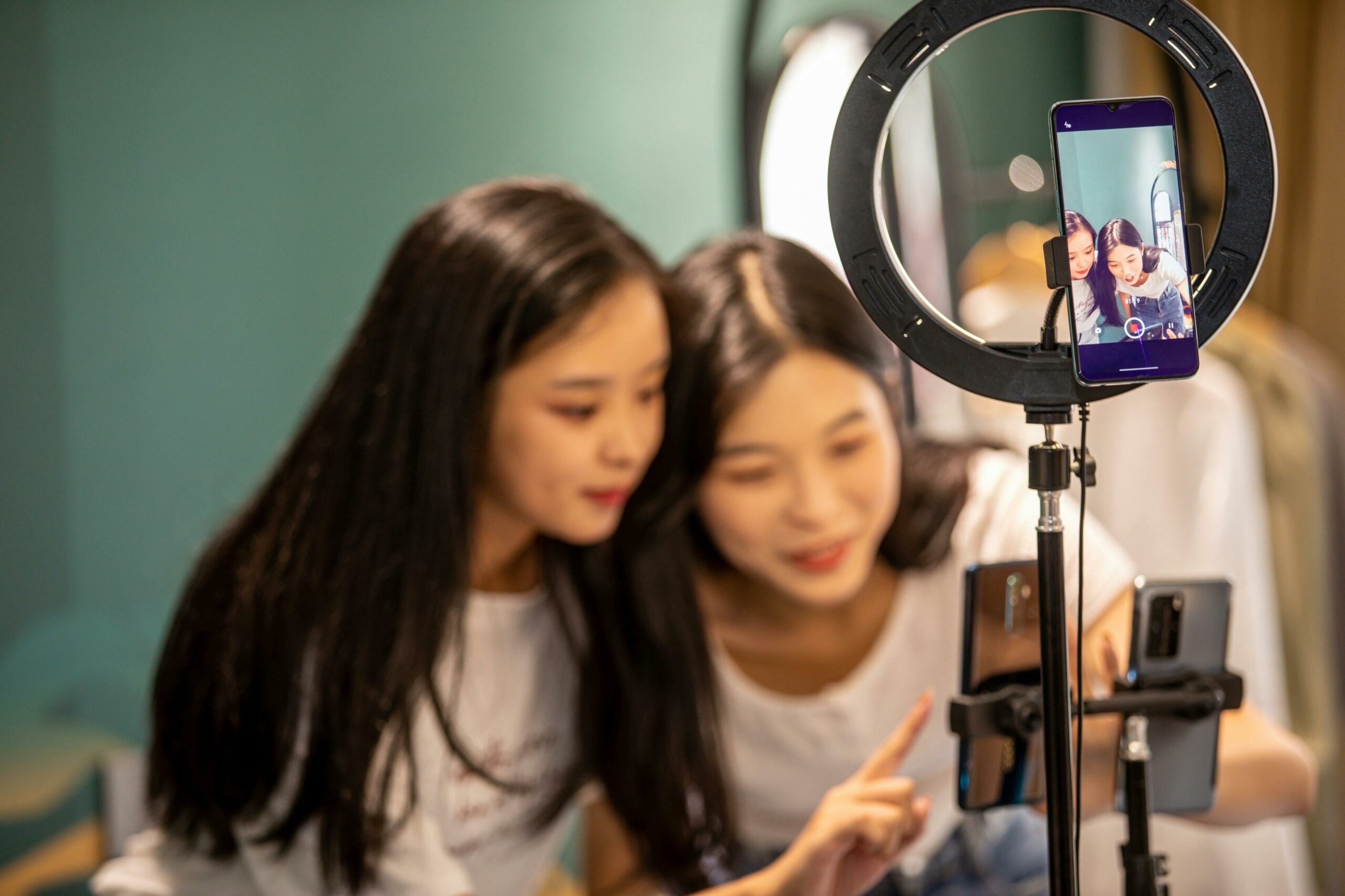

Get More Views on TikTok by treating every post like a tiny experiment – with a clear hook, a watch time goal, and a repeatable way to learn what the algorithm is rewarding. Most creators try to “post more” and hope for the best; instead, you want to improve the signals TikTok can measure: retention, rewatches, shares, saves, and search-driven discovery. This guide breaks down the mechanics in plain language, then gives you a step-by-step workflow you can run weekly. Along the way, you will also see how brands can evaluate creator performance without getting fooled by vanity metrics.
Get More Views on TikTok by understanding the signals that drive distribution
TikTok does not “rank” videos because they are pretty; it distributes videos because early viewers behave in ways that predict broader satisfaction. In practice, that means your first job is to earn attention fast, then keep it. The most important measurable signals are average watch time, completion rate, rewatches, and high-intent engagements like shares and saves. Comments matter too, but a video with strong retention and saves often outperforms a video with lots of low-quality comments. As a rule, if your video is not holding attention in the first 1 to 2 seconds, the rest of your optimization will not matter.
Define the core metrics so you can make decisions quickly:
- Reach – the number of unique accounts that saw your video.
- Impressions – total times your video was shown (can include multiple views from the same person).
- Engagement rate – engagements divided by views (or reach). Use one definition consistently.
- CPM – cost per thousand impressions. Formula: CPM = (Spend / Impressions) x 1000.
- CPV – cost per view. Formula: CPV = Spend / Views.
- CPA – cost per action (purchase, lead, install). Formula: CPA = Spend / Conversions.
- Usage rights – permission for a brand to use your content in its own channels, often time-bound.
- Whitelisting – a brand runs ads through a creator’s handle (often via Spark Ads), using creator identity to improve performance.
- Exclusivity – a period where the creator cannot work with competitors in the same category.
Takeaway: pick two north-star metrics per post: one attention metric (average watch time or completion rate) and one intent metric (shares or saves). Track them in a simple sheet so you can spot patterns.
Build videos for retention: hooks, pacing, and payoff

Retention is the closest thing TikTok has to a universal currency. To improve it, you need a hook that makes a promise, pacing that keeps the promise moving, and a payoff that lands. Start with a “pattern interrupt” in the first second: a surprising visual, a bold claim, or a clear before-and-after. Then, cut anything that does not move the story forward. If you are explaining something, show the result early and explain after, not the other way around.
Use this hook formula to generate ideas quickly: Audience + pain + outcome + time. Example: “If you run a small bakery, here is how to film a product video that sells in 15 seconds.” Next, structure the middle like a checklist: step 1, step 2, step 3, with on-screen text that matches your spoken words. Finally, end with a specific call to action that fits the content, such as “save this for your next shoot,” because saves are a strong signal.
Practical editing rules that consistently lift watch time:
- Cut pauses aggressively – if you breathe, do it on a cut.
- Change the visual every 1 to 2 seconds (angle, crop, b-roll, text).
- Use captions that add meaning, not just transcription.
- Front-load the most interesting clip, then explain how you got it.
Takeaway: rewrite your first line until it can stand alone as a headline. If it is not clickable as text, it will not be clickable as a video.
TikTok SEO: captions, on-screen text, and search intent
TikTok is now a search engine for many users, especially for product discovery and how-to content. That means you should optimize for search intent, not just trends. Start by choosing one primary query your viewer might type, then echo it in three places: spoken words, on-screen text, and the caption. Keep it natural; you are writing for humans first, but TikTok’s speech-to-text and OCR systems can still pick up the topic.
Here is a simple workflow: open TikTok search, type the first 2 to 3 words of your topic, and note the autocomplete suggestions. Those suggestions are real demand. Build your video around one of them, and make the first sentence match the query closely. For example, if autocomplete shows “how to style wide leg jeans,” say that phrase early and put it on screen. Then, add 3 to 5 hashtags that are specific to the topic and audience, not generic. Broad tags like #fyp are rarely the difference-maker; specificity helps you land in the right viewer pool.
Takeaway: treat every video like it has a “search title.” If you cannot write that title in 6 to 10 words, your topic is probably too vague.
Posting strategy: consistency, timing, and series that compound
Consistency matters, but not because TikTok “rewards” daily posting in a simple way. Consistency matters because it increases your sample size, which helps you learn faster. Instead of promising yourself 30 days of random posts, commit to a repeatable format you can sustain. Series content is the easiest way to do this: the viewer knows what they are getting, and you can improve the same structure over time.
Timing is often overhyped, yet it still plays a role in early velocity. Post when your audience is likely to be active so your first 200 to 500 impressions include more engaged viewers. Use TikTok analytics to find follower activity windows, then test two time slots for two weeks. Keep everything else similar so you can attribute changes. If you are a brand working with creators, ask them to post in their proven windows rather than forcing a global schedule.
Use this series planning checklist:
- Pick one audience promise (example: “15-second meal prep for students”).
- Define 10 episode angles (budget, tools, mistakes, quick wins).
- Standardize the first 2 seconds (same framing, same intro style).
- End with a teaser for the next episode to encourage follows.
Takeaway: if you do not have a series, you are reinventing your content every day. A series is a system, and systems scale.
Analytics that actually help: a weekly review you can stick to
Most creators open analytics only to feel good or bad. A better approach is to run a short weekly review that produces decisions. Start by sorting your last 10 videos by views, then by average watch time. Look for “quiet winners” – videos with modest views but strong retention. Those are often the formats that will scale if you improve the hook. Next, identify where viewers drop off. If your retention graph falls off a cliff at second 2, your hook is unclear. If it drops at second 7, your pacing is slow or your promise is not being delivered.
Here is a simple decision framework:
- If completion rate is low – shorten the video or tighten the middle.
- If watch time is decent but shares are low – add a stronger opinion, surprise, or utility.
- If saves are high – make a follow-up that expands the checklist and link the two videos.
- If comments ask the same question – reply with a video and use the question as the hook.
For a deeper measurement mindset, build a small testing log. Note the hook type, length, topic, and format. After 20 to 30 posts, patterns become obvious. If you want more measurement ideas and influencer reporting templates, the InfluencerDB Blog regularly breaks down what to track and how to interpret creator performance.
Takeaway: do not chase “viral” – chase repeatable lifts. A 10 percent retention improvement applied weekly beats one lucky spike.
Benchmarks and simple formulas: what “good” looks like
Benchmarks vary by niche, audience age, and video length, so treat them as starting points, not rules. Still, you need a reference range to know whether to iterate or pivot. The table below gives practical ranges creators and brands can use during audits. Use it alongside your own history, because your baseline is often the best benchmark.
| Metric | Short video (7 to 15s) | Mid video (16 to 35s) | Long video (36 to 60s) | How to use it |
|---|---|---|---|---|
| Average watch time | 6 to 11s | 10 to 20s | 14 to 28s | Improve hooks and pacing if you are below range |
| Completion rate | 60% to 95% | 35% to 70% | 20% to 50% | Shorten or restructure if drop-off is early |
| Share rate (shares per 1000 views) | 2 to 8 | 2 to 10 | 3 to 12 | Add utility, surprise, or a strong stance |
| Save rate (saves per 1000 views) | 3 to 12 | 4 to 15 | 5 to 18 | Turn tips into checklists and templates |
Now, apply basic paid and partnership math when you need to justify spend. Example: a brand boosts a creator post with $600. The video gets 120,000 impressions and 40,000 views. CPM = (600 / 120000) x 1000 = $5. CPV = 600 / 40000 = $0.015. If the campaign drives 30 purchases, CPA = 600 / 30 = $20. Those numbers mean little alone, so compare them to your historical results or your channel goals.
Takeaway: pick one benchmark to beat each month. For most accounts, improving completion rate by even 5 points can unlock a step change in distribution.
Creator and brand deal mechanics: whitelisting, usage rights, exclusivity
If you are a creator, more views are great, but monetization often depends on deal terms. If you are a brand, performance depends on getting the right permissions. Start by separating three things: the content deliverable, the right to use it, and the right to advertise it. A common mistake is bundling everything into one flat fee without clarifying duration and placement.
Use these decision rules in negotiation:
- Usage rights should specify where (TikTok, Instagram, website), how long (30, 90, 180 days), and whether paid amplification is included.
- Whitelisting usually deserves an additional fee because it ties your identity to performance and can affect your audience perception.
- Exclusivity should be priced based on category risk and duration. If a brand blocks you from working with competitors for 3 months, that is real opportunity cost.
For brands, require a brief that includes objective, audience, key message, do-not-say list, and success metrics. For creators, ask how the brand will measure success. If they only say “views,” push for a clearer KPI like click-through rate, installs, or qualified leads. TikTok also publishes guidance on ad formats and best practices in its official business resources, which can help align expectations before you sign anything: TikTok for Business.
Takeaway: treat rights like line items. Clear terms prevent scope creep and make performance reporting cleaner.
Campaign checklist table: from idea to post to iteration
Whether you are a solo creator or a brand team, a lightweight process keeps you from repeating the same mistakes. The table below is a practical workflow you can copy into a doc and run every week. Assign an owner, set a deadline, and keep the loop tight so learning compounds.
| Phase | Tasks | Owner | Deliverable | Quality check |
|---|---|---|---|---|
| Research | Pull 10 autocomplete queries, save 5 competitor examples, pick 1 angle | Creator or strategist | Topic and hook options | Hook states outcome in first 2 seconds |
| Scripting | Write hook, 3 beats, payoff, CTA; plan on-screen text | Creator | 15 to 45 second script | No filler lines, clear promise and payoff |
| Production | Film A-roll, capture b-roll, record clean audio, add captions | Creator | Edited draft | Visual change every 1 to 2 seconds |
| Publishing | Caption with target query, 3 to 5 specific hashtags, post in tested window | Creator or social manager | Live post | First frame readable, title text matches query |
| Iteration | Review retention graph, log metrics, make 1 follow-up or remix | Creator or analyst | Testing notes and next action | One clear hypothesis for the next post |
Takeaway: if your workflow does not produce a “next post decision,” it is not a workflow, it is just reporting.
Common mistakes that quietly kill views
Most view plateaus come from a handful of repeat errors. First, creators bury the lead, spending 5 seconds on context before delivering value. Second, they rely on generic hashtags and vague captions that do not match search intent. Third, they change formats constantly, which makes it harder for the algorithm and the audience to understand what you do. Another common issue is over-editing with effects that distract from the message; clarity beats flash. Finally, many accounts ignore comment signals, even when viewers are telling them exactly what to make next.
Takeaway: audit your last 10 posts and label each one with the mistake that applies. Fix the most frequent one first, because that will deliver the fastest lift.
Best practices that compound over time
Start with a repeatable format, then improve it with small, measurable changes. Use a consistent visual identity, such as the same text style and framing, so viewers recognize you instantly. Next, create “saveable” content at least once a week: checklists, templates, and step-by-steps. Collaborations also help, but only when the audience overlap is real; choose partners whose viewers will care about your topic the next day, not just in the moment. Finally, keep your content honest: if you are doing sponsored work, follow disclosure rules and platform policies, because trust is a growth lever.
For disclosure basics, review the FTC’s guidance on endorsements and testimonials: FTC influencer marketing guidance. Even if you are not in the US, the principles are widely used as a standard. When you combine trust, retention, and search intent, you get a channel that grows steadily instead of spiking randomly.
Takeaway: aim for one “system” improvement per week – a better hook template, a tighter edit rule, or a clearer SEO caption – and your baseline views will rise.