
Hootsuite video platforms are only as valuable as the decisions you make inside the dashboard, so this 2026 guide focuses on picking the right channels, formats, and metrics for real outcomes. Instead of treating video as one bucket, you will map each platform to a job: discovery, demand capture, community, or conversion. You will also learn how to compare performance apples to apples using CPV, CPM, CPA, and engagement rate. Along the way, we will define the terms teams argue about, show simple formulas, and give a repeatable workflow you can use for brand and creator campaigns. If you manage multiple clients or regions, the goal is to help you standardize reporting without flattening what makes each platform work.
What “best” means in Hootsuite video platforms (and the terms to align on)
Before you rank channels, define what “best” means for your campaign and your reporting. In practice, the best platform is the one that delivers the lowest cost for your target action while staying on brand and scalable for your team. Start by aligning on a small set of terms so your Hootsuite reports and stakeholder expectations match. If you skip this step, teams often chase vanity metrics, misread performance, or negotiate influencer fees without a shared baseline.
- Reach – unique people who saw your content at least once.
- Impressions – total views served, including repeat views to the same person.
- Engagement rate – engagements divided by impressions or reach (choose one and stick to it). A common formula is: ER by impressions = (likes + comments + shares + saves) / impressions.
- CPM (cost per mille) – cost per 1,000 impressions. CPM = spend / (impressions / 1000).
- CPV (cost per view) – cost per video view. Define “view” by platform, then use: CPV = spend / views.
- CPA (cost per acquisition) – cost per purchase, lead, or signup. CPA = spend / conversions.
- Whitelisting – running paid ads through a creator’s handle (often called creator licensing). This can change CPM and conversion rates significantly.
- Usage rights – what you can do with the creator’s content (organic reposting, paid ads, email, website) and for how long.
- Exclusivity – limits on the creator working with competitors for a period, usually priced as a premium.
Concrete takeaway: Put these definitions into your campaign brief and reporting template before you publish anything. It prevents “we thought views meant 3 seconds” debates after the fact.
The four best video platforms to manage in Hootsuite in 2026

Hootsuite supports planning, publishing, and reporting across multiple networks, but your “best four” should reflect where video actually drives outcomes in 2026. The shortlist below is built around typical brand and creator workflows: short-form discovery, long-form intent, community distribution, and professional reach. In other words, you want a mix that covers the funnel, not four copies of the same audience behavior.
1) YouTube (Shorts + long-form)
YouTube remains the most reliable video platform for compounding returns because search and suggested video keep working after the post date. Shorts can seed discovery, while long-form captures intent and builds trust with depth. For influencer programs, YouTube is also strong for evergreen product education, comparison content, and “how it works” demos. When you report performance, separate Shorts and long-form because watch time and click intent differ.
- Best for: evergreen discovery, education, product research, affiliate and conversion paths.
- Format rule: use Shorts to test hooks, then expand winners into 6 to 12 minute videos.
- Metric to prioritize: watch time and click-through to site, not just views.
Concrete takeaway: If a creator’s video drives high average view duration but modest likes, treat it as a conversion asset, not a “low engagement” problem.
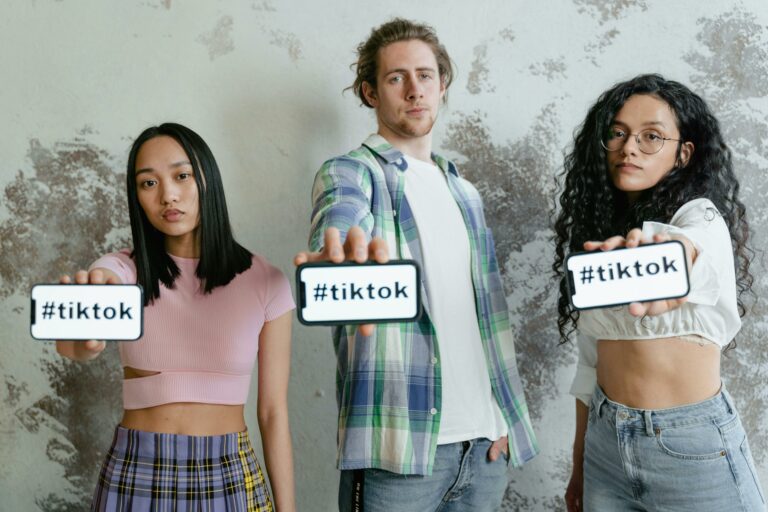
2) TikTok
TikTok is still the fastest way to validate creative angles and reach cold audiences, especially for products that benefit from demonstration. It is also the platform where creator voice matters most, so rigid scripts often underperform. In Hootsuite, you can keep a consistent publishing cadence and track post-level performance trends, which helps you spot when a concept is working across multiple creators. Because TikTok view definitions and retention curves can be misleading, pair view metrics with downstream actions like profile visits, link clicks, and attributed conversions.
- Best for: rapid creative testing, top-of-funnel reach, social proof, trend-driven storytelling.
- Format rule: open with the outcome in the first 1 to 2 seconds, then explain the “why.”
- Metric to prioritize: retention and conversion proxy metrics (clicks, adds to cart, leads).
Concrete takeaway: When a TikTok concept works, scale it through whitelisting rather than asking for five more “similar” posts that fatigue the audience.
3) Instagram (Reels)
Instagram Reels is the practical bridge between discovery and community because it combines reach with a mature social graph. For brands, it is often where influencer content gets saved, shared in DMs, and revisited before purchase. It also supports a clean handoff from video to profile, highlights, and product tags. In 2026, Reels works best when you treat it as a series, not a one-off, and when you align the hook with the creator’s usual tone.
- Best for: brand building, social proof, retargeting pools, creator partnerships with strong aesthetics.
- Format rule: build a 3-part series (problem, solution, proof) across 2 to 3 weeks.
- Metric to prioritize: saves and shares, plus profile actions.
Concrete takeaway: If saves are high but clicks are low, add a clearer next step in the caption and pin a comment with the offer.
4) LinkedIn (native video)
LinkedIn video is the sleeper pick for B2B and high-consideration offers, and it is increasingly useful for founders, executives, and subject-matter creators. The audience expects expertise, so simple “what we learned” clips and behind-the-scenes product decisions can outperform polished ads. If your influencer strategy includes industry creators, LinkedIn can deliver qualified reach even at lower view counts. In reporting, focus on audience quality signals: job titles, company size, and inbound messages.
- Best for: B2B demand, recruiting, thought leadership, partner ecosystems.
- Format rule: one insight per video, with a specific example and a clear takeaway.
- Metric to prioritize: comments quality and profile visits, not raw views alone.
Concrete takeaway: If your sales team says “these leads feel better,” capture that by tagging campaigns and tracking pipeline influence, not just engagement.
Platform comparison table: what to publish, how to judge success, and when to use each
Once you have your four, the next step is standardizing decisions. The table below gives you a quick way to choose the right platform for a campaign objective, plus the metric that should win arguments in reporting. Use it as a briefing tool so creators and stakeholders know what “good” looks like before posting.
| Platform | Primary job | Best video length | Creative that tends to win | North-star metric | Common pitfall |
|---|---|---|---|---|---|
| YouTube | Evergreen intent + trust | Shorts 15 to 45s; long 6 to 12m | Clear promise, structured demo, comparison | Watch time + clicks | Judging long-form by likes only |
| TikTok | Fast discovery + testing | 10 to 35s | Outcome-first hook, creator voice, proof | Retention + conversions | Over-scripting creators |
| Instagram Reels | Discovery to community | 15 to 45s | Series content, lifestyle + utility | Saves + shares | One-off posts with no follow-up |
| LinkedIn video | Qualified reach (B2B) | 30 to 90s | One insight, one example, one takeaway | Comment quality + profile actions | Reposting consumer-style ads |
Concrete takeaway: Pick one north-star metric per platform per campaign. Put it in the brief and in your Hootsuite report header so performance reviews stay focused.
A practical Hootsuite workflow: plan, publish, measure, and optimize video
Managing video across networks gets messy when each platform has different formats, metrics, and creative norms. A simple workflow keeps your team consistent while still leaving room for platform-native creativity. The steps below are designed for a weekly cadence, but you can run them biweekly for smaller programs.
- Set the objective and the conversion event. Decide whether the campaign is optimizing for reach, leads, trials, purchases, or pipeline. Then define the conversion event and attribution window you will use.
- Build a creative matrix. List 3 hooks, 3 proof points, and 3 calls to action. That gives you 27 combinations without forcing creators into identical scripts.
- Assign platform roles. For example: TikTok for testing hooks, Reels for social proof, YouTube for deep explanation, LinkedIn for credibility and B2B distribution.
- Publish with a naming convention. Use consistent labels like Brand – Product – Creator – Hook – Date. This makes reporting and creative learnings easier to find later.
- Measure with two layers. Layer 1 is platform-native performance (views, retention, saves). Layer 2 is business impact (clicks, signups, revenue).
- Optimize one variable at a time. Change the hook, the first frame, or the CTA, but not all three at once. Otherwise you will not know what drove the lift.
For more templates and measurement ideas you can adapt, use the resources in the InfluencerDB Blog as a reference point when you standardize briefs and reporting.
Concrete takeaway: If you only have time for one discipline, enforce naming conventions and objective definitions. That alone can cut reporting time and reduce stakeholder confusion.
How to compare performance fairly: formulas and an example calculation
Cross-platform comparisons fail when teams compare views on TikTok to watch time on YouTube or saves on Instagram. Instead, translate everything into cost and outcome metrics that map to your goal. Start with CPV for creative efficiency, then move to CPM for distribution efficiency, and finally CPA for business impact. When you do influencer campaigns, you can also compute an effective CPM or CPV based on the creator fee.
- Effective CPV (influencer): creator fee / total views
- Effective CPM (influencer): creator fee / (impressions / 1000)
- Blended CPA: (creator fees + paid spend) / total conversions
Example: You pay a creator $2,000 for one TikTok and one Instagram Reel. Combined, they deliver 120,000 views and 180,000 impressions. You also spend $1,500 whitelisting the TikTok post and get 75 conversions.
- Effective CPV (organic influencer content) = 2,000 / 120,000 = $0.0167
- Effective CPM (organic influencer content) = 2,000 / (180,000 / 1000) = 2,000 / 180 = $11.11
- Blended CPA (fees + ads) = (2,000 + 1,500) / 75 = 3,500 / 75 = $46.67
Now you can compare that $46.67 CPA to your paid social baseline or your target CPA. If it is above target, you can still salvage ROI by improving the landing page, tightening the offer, or changing the creator mix. For platform definitions of views and ad measurement, reference official documentation such as YouTube Help in a separate measurement appendix.
Concrete takeaway: Report CPV and CPA together. CPV tells you if the creative is efficient; CPA tells you if it is profitable.
Tooling and decision table: what to track per platform inside your dashboard
Even with a strong workflow, teams often track too many metrics and end up with reports nobody reads. The fix is to track a few leading indicators per platform, plus one business metric. Use the table below to set up your reporting views and weekly check-ins. It also helps you decide when to refresh creative versus when to adjust targeting or offers.
| Platform | Leading indicators to watch weekly | Business metric to pair with it | When to refresh creative | When to fix the funnel |
|---|---|---|---|---|
| YouTube | Average view duration, returning viewers | Click-through rate to site | Watch time drops after first 15 seconds | High CTR but low conversion rate |
| TikTok | 2-second hold, completion rate | Add to cart or lead rate | Hold rate is weak across multiple posts | Strong retention but weak conversion |
| Instagram Reels | Saves, shares, profile visits | Link clicks or product page views | Saves fall while reach stays stable | High profile visits but low clicks |
| LinkedIn video | Comment quality, follows | Inbound demos or meeting requests | Low dwell and shallow comments | Engagement is strong but no pipeline |
Concrete takeaway: If leading indicators are weak, fix creative first. If leading indicators are strong but business metrics lag, fix the offer, landing page, or attribution.
Common mistakes (and how to avoid them)
Most video programs fail for predictable reasons. The good news is you can prevent them with a few decision rules and a tighter brief. Start by auditing your last 10 posts per platform and see which mistake shows up most often. Then fix one root cause per week rather than rewriting your entire strategy.
- Mistake: Treating all views as equal. Fix: separate short-form and long-form reporting, and pair views with retention or watch time.
- Mistake: Negotiating creator fees without usage rights clarity. Fix: specify duration, placements, and paid usage in the contract, then price whitelisting separately.
- Mistake: Comparing platforms using one metric. Fix: choose a platform north-star metric plus one business metric, then report both.
- Mistake: Posting without a conversion path. Fix: ensure the profile, landing page, and offer match the video promise, and add UTM parameters.
- Mistake: Over-optimizing for trends. Fix: keep 70 percent evergreen concepts, 30 percent trend experiments.
Concrete takeaway: If you can only fix one thing, fix measurement definitions and usage rights. Those two issues create the most expensive misunderstandings.
Best practices for 2026: creators, rights, and compliance
Video performance is not just creative and distribution. It is also about the operational details that let you scale: creator selection, approvals, disclosure, and rights. In 2026, brands that win treat creators like production partners while still protecting brand safety and compliance. As you formalize your process, keep these best practices in your standard operating procedure.
- Write briefs that protect creativity. Specify the claim boundaries, must-say points, and prohibited topics, then let the creator choose the words.
- Price usage rights and exclusivity explicitly. A fair structure is base fee + paid usage add-on + exclusivity premium, each with a defined time window.
- Use disclosure consistently. Require clear “ad” or “sponsored” disclosures where applicable and confirm platform tools are used correctly. For guidance, reference the FTC disclosure guidelines in your compliance checklist.
- Plan for whitelisting early. If you might run ads through a creator handle, get permissions and assets upfront so you do not lose momentum when a post takes off.
- Build a learning loop. After each campaign, document the top hook, top proof point, and top objection, then feed that into the next brief.
Concrete takeaway: Treat rights and disclosure as part of performance. Clean permissions and compliant posts are what allow you to scale winners quickly.
Quick checklist: choosing your best four for your brand
If you are still unsure which four to prioritize, use this decision checklist. It is designed to be answered in 10 minutes and forces trade-offs. Once you pick your four, commit for one quarter so you can learn, rather than constantly switching based on the last post’s performance.
- Do you need evergreen search demand? If yes, prioritize YouTube.
- Do you need fast creative validation? If yes, prioritize TikTok.
- Do you need saves, shares, and community proof? If yes, prioritize Instagram Reels.
- Do you sell to businesses or need executive credibility? If yes, prioritize LinkedIn video.
- Can your team support platform-native editing and cadence? If not, reduce platforms and increase consistency.
Concrete takeaway: The “best” set is the one you can publish consistently, measure cleanly, and scale with rights and whitelisting when a concept wins.