
TikTok SEO tips matter more in 2026 because TikTok search now behaves like a discovery engine – users type problems, compare options, and buy based on what ranks. If you want consistent views without relying on a single viral spike, you need a repeatable system for keyword targeting, on-screen text, captions, and retention signals. This guide breaks that system into practical steps you can apply to one video today, then scale across your content calendar. Along the way, you will also learn how to measure results with simple formulas and avoid the mistakes that quietly cap reach.
TikTok SEO tips: how TikTok search works in 2026
TikTok search is driven by relevance and satisfaction signals. Relevance comes from the words TikTok can read and hear – your spoken hook, on-screen text, caption keywords, and even text in your thumbnail cover. Satisfaction comes from how people behave after clicking – watch time, completion rate, rewatches, saves, shares, and whether they refine the query or stop searching. In practice, that means you can rank with a smaller account if your video answers a specific query better than bigger creators. It also means “pretty good” content often loses to “highly specific” content, even if the production value is lower. Your first takeaway: treat every video as an answer to a search query, not just a post.
Use this quick decision rule before filming: if you cannot write the exact search phrase your video solves in 6 to 10 words, the topic is probably too broad. For example, “best running shoes” is broad, while “best running shoes for flat feet” is specific and more rankable. Next, think in clusters: one pillar topic can support 10 to 20 long-tail videos. If you need inspiration, scan the latest strategy breakdowns on the InfluencerDB Blog and translate each idea into a search-first video prompt.
Define the metrics and terms you will use (so you can improve)

Before optimization, align on definitions so you can measure progress without guessing. Here are the terms you will see in TikTok reporting, creator deals, and performance reviews. Reach is the number of unique accounts that saw your video, while impressions are total views, including repeats. Engagement rate is typically engagements divided by views or reach, but you must state which one you use because the numbers differ. CPM is cost per 1,000 impressions, CPV is cost per view, and CPA is cost per acquisition, such as a purchase or email signup. Whitelisting means a brand runs ads through a creator’s handle, and usage rights define where and how long the brand can reuse your content. Exclusivity is a clause that limits you from working with competitors for a time window, which should increase your fee.
For SEO-style TikTok work, add two more performance concepts: retention and query match. Retention is how long viewers stay, often measured as average watch time and completion rate. Query match is how closely your video aligns to the words typed into search, which you influence through keyword placement and clarity. Concrete takeaway: pick one primary metric for ranking (completion rate) and one for business impact (CPA or click-through to your landing page) so you do not optimize blindly.
Keyword research for TikTok: a fast workflow you can repeat
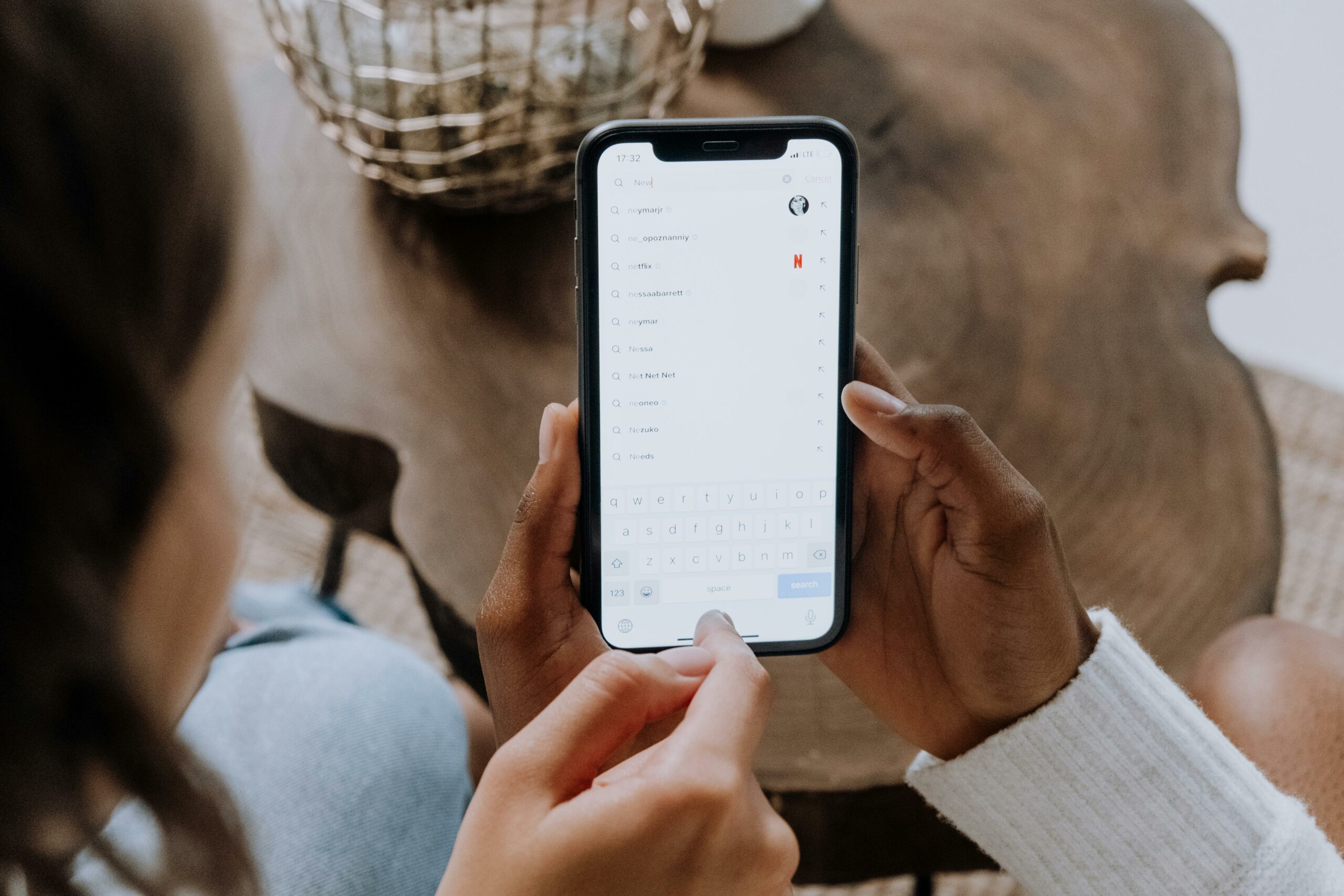
Keyword research on TikTok is less about volume estimates and more about intent and competition. Start inside TikTok search: type your topic and note the autocomplete suggestions, then open the top 10 results and look for repeated phrasing in captions and on-screen text. Next, check comments for “follow-up” questions because those are often perfect long-tail queries. After that, validate on Google to see if the same query exists cross-platform, which can signal durable interest. Google’s own guidance on how search systems interpret content is a useful mental model, even if TikTok is not Google – see Google Search: creating helpful content for the principle of answering real user needs.
Then, build a simple keyword map for each video: one primary query and two supporting phrases. Your primary query should appear in the first seconds of speech, the first line of on-screen text, and early in the caption. Supporting phrases can appear later in the caption or in a pinned comment. Keep it tight: if you cram five unrelated keywords into one clip, TikTok cannot confidently categorize it. Takeaway checklist for each video topic:
- Primary query: exact phrase you want to rank for
- Audience intent: learn, compare, buy, or troubleshoot
- Angle: beginner, budget, pro, or niche-specific
- Proof point: demo, before-after, test, or data
- Call to action: save, follow, comment a question, or visit link in bio
On-screen text, captions, and spoken keywords: where to place them
TikTok can parse text and audio, so you should treat your video like a structured answer. Put the primary query in three places: spoken in the hook, shown as on-screen text, and written in the caption. However, do not repeat it word-for-word five times in the caption because that reads spammy and can reduce clarity. Instead, use natural language variations after the first mention, such as “how to,” “best way,” or “step-by-step.” Also, keep on-screen text large and high contrast so it is readable on small screens, which indirectly helps because viewers stay longer when they understand the promise quickly.
Captions should be written for humans first, with keywords as signposts. A practical structure is: one sentence that states the problem, one sentence that previews the steps, then 2 to 4 short lines with supporting phrases and context. Add 3 to 6 hashtags, mixing one broad category tag with 2 to 3 niche tags and one branded tag if relevant. Your takeaway: if your caption reads like a list of tags, rewrite it until it reads like a mini brief.
Retention is your ranking lever: improve watch time with a simple script
Even perfect keywords will not hold rankings if people bounce. TikTok rewards videos that satisfy the query quickly and keep attention through the end. Use a three-part script that is easy to repeat: Promise, Proof, Plan. Promise states the outcome in one line. Proof shows why you are credible, such as a quick result, a screenshot, or a one-sentence credential. Plan delivers 3 steps with visual changes every 1 to 2 seconds, such as cuts, overlays, or examples. This structure reduces drop-off because viewers know what they will get and when it will end.
Here are practical retention upgrades that do not require fancy editing:
- Open with the result, not the backstory
- Use a countdown overlay: “Step 1 of 3”
- Show the final output early, then explain how you got it
- Cut filler words and pauses to tighten pacing
- End with a next video prompt that matches the same keyword cluster
Concrete takeaway: aim for a completion rate that is competitive in your niche, then iterate the first 2 seconds until you see improvement. If you are running brand campaigns, align retention goals with the brief so creators know the priority is satisfaction, not just impressions.
Measurement framework: track rankings, engagement, and ROI
You cannot improve TikTok search performance without a lightweight measurement routine. Start by tracking which queries you target per video, then check whether you appear in search results after 24 hours, 72 hours, and 7 days. Pair that with performance metrics that indicate satisfaction. Use these simple formulas so your reporting stays consistent:
- Completion rate = (video completions / video views) x 100
- Engagement rate by views = (likes + comments + shares + saves) / views x 100
- CPV = spend / views
- CPM = (spend / impressions) x 1000
- CPA = spend / conversions
Example calculation: you spend $600 boosting a creator’s whitelisted post and get 120,000 impressions, 48,000 views, and 80 purchases. CPM = (600 / 120,000) x 1000 = $5.00. CPV = 600 / 48,000 = $0.0125. CPA = 600 / 80 = $7.50. Now connect SEO to business: if the same video also ranks for a query and continues to deliver 5,000 organic views per week, your blended CPV drops over time. That is why search-first content can outperform one-off trend posts in long-term efficiency.
| Goal | Primary KPI | Supporting KPI | What to change if it is low |
|---|---|---|---|
| Rank for a query | Search placement over 7 days | Completion rate | Tighten hook, match query wording, add clearer steps |
| Grow followers | Follows per 1,000 views | Saves | Add stronger “why follow” line and a series promise |
| Drive site actions | CPA | Click-through rate | Improve offer clarity, add proof, reduce friction on landing page |
| Brand lift | View-through rate | Shares | Use clearer brand integration and a more memorable takeaway |
Creator and brand checklist: briefs, usage rights, and whitelisting
If you manage influencer campaigns, TikTok SEO changes how you write briefs. Instead of “make it fun,” you should specify the target query, the promise, and the proof you need on screen. Also, clarify commercial terms early because they affect how content gets reused and amplified. Usage rights define whether the brand can post the video on its own channels, use it in ads, or cut it into new assets. Whitelisting can improve performance because the creator’s handle carries social proof, but it requires access permissions and clear ad disclaimers. Exclusivity should be priced like an opportunity cost, not treated as a free add-on.
For disclosure, follow platform and regulator expectations so you do not risk takedowns or trust issues. The FTC’s endorsement guidance is the baseline reference for US campaigns – see FTC endorsements and testimonials guidance. Takeaway: put disclosure requirements in the brief and in the contract, then confirm the creator’s exact wording before posting.
| Brief element | What to include | Why it matters for search | Acceptance check |
|---|---|---|---|
| Target query | One primary phrase + 2 supporting phrases | Improves categorization and ranking relevance | Query appears in hook, on-screen text, caption |
| Hook promise | Outcome in one sentence | Boosts click and early retention | Clear in first 2 seconds |
| Proof | Demo, result, or credential | Reduces bounce and increases saves | Shown before Step 2 |
| Usage rights | Channels, duration, paid usage, edits allowed | Enables repurposing of ranking content | Written terms approved |
| Whitelisting | Access method, ad handle, spend cap, timeline | Scales winners while organic ranking builds | Permissions tested pre-launch |
| Exclusivity | Competitor list, category scope, time window | Protects the query space for the brand | Fee uplift agreed |
Common mistakes that stop videos from ranking
Most TikTok SEO failures are simple and fixable. One common mistake is targeting a broad keyword with no clear angle, which puts you in direct competition with high-authority accounts. Another is writing captions that are either too short to provide context or so stuffed with keywords that they read like spam. Creators also often forget that the spoken hook matters, then wonder why a video with perfect text overlays still underperforms. Finally, many teams measure only views and likes, ignoring completion rate and saves, which are closer to satisfaction. Takeaway: if a video does not rank, audit query clarity first, then retention, and only then experiment with hashtags.
Best practices you can apply this week (a practical plan)
To make this actionable, run a 7-day TikTok search sprint. Day 1: pick one topic cluster and list 15 long-tail queries from TikTok autocomplete and comments. Day 2: script three videos using Promise, Proof, Plan, each targeting a different query in the same cluster. Day 3: publish one video and reply to every relevant comment with a short answer, then pin the best question to reinforce intent. Day 4: publish the second video and link it to the first with a “part 2” line that repeats the cluster theme, not the exact same phrase. Day 5: publish the third video and test a new thumbnail cover text that mirrors the query. Day 6: review retention graphs and rewrite your first 2 seconds on the weakest performer. Day 7: check search placement and decide which query deserves a follow-up video.
If you manage a brand account, pair this sprint with creator partnerships. Commission creators to produce search-first assets, then negotiate usage rights so you can repurpose the best clips into ads and product pages. For more campaign planning ideas that connect creator content to measurable outcomes, keep an eye on new playbooks in the. Concrete takeaway: publish in clusters, measure completion rate, and build a library of query-targeted videos that compound over time.
Quick audit: score any TikTok video for SEO readiness
Use this fast audit to decide whether to re-edit, repost, or leave a video alone. Score each item 0 or 1 and aim for 8 out of 10 before you scale the format. First, does the hook state the outcome in plain language? Second, does the primary query appear in the first sentence spoken or on-screen? Third, does the caption explain the value in 2 to 4 lines and include natural supporting phrases? Fourth, do visuals change frequently enough to avoid dead air? Fifth, is there proof early, such as a demo or result? Sixth, does the video deliver steps, not just opinions? Seventh, is the call to action aligned with intent, such as “save this checklist” for how-to content? Eighth, do comments show that people got the answer, not just reacted? Ninth, does the thumbnail cover include readable text that matches the query? Tenth, can you create two follow-ups in the same cluster without repeating yourself?
When you treat TikTok like a search product, your content becomes easier to plan, easier to brief, and easier to measure. That is the core advantage of SEO-first TikTok in 2026: you are building an asset library, not chasing a trend cycle.