

AI analytics tools are reshaping how brands and creators plan campaigns, spot fake engagement, and prove ROI in 2025. The promise is speed – faster reporting, faster insights, faster decisions – but the risk is also real: automated dashboards can hide weak attribution, messy tracking, or biased benchmarks. This guide breaks down what these tools actually do, which features matter most for influencer work, and how to use them without getting fooled by pretty charts.
AI analytics tools: the metrics and terms you must know first
Before you compare platforms, lock in shared definitions so your team does not argue about numbers later. Most disputes come from mismatched terms, not bad intent. In practice, you want a one page glossary in your brief and in your reporting template. That way, creators, agencies, and finance all read the same scoreboard.
- Reach – unique accounts that saw content at least once.
- Impressions – total views, including repeat views by the same person.
- Engagement rate (ER) – engagements divided by a denominator. Always state which: by impressions, by reach, or by followers.
- CPM (cost per mille) – cost per 1,000 impressions. Formula: CPM = (Cost / Impressions) x 1000.
- CPV (cost per view) – cost per video view. Formula: CPV = Cost / Views.
- CPA (cost per acquisition) – cost per conversion such as purchase, signup, or install. Formula: CPA = Cost / Conversions.
- Whitelisting – creator grants a brand permission to run ads through the creator handle.
- Usage rights – permission to reuse creator content in brand channels or ads, usually time bound and channel specific.
- Exclusivity – creator agrees not to work with competitors for a defined window and category.
Concrete takeaway: In every report, label ER as “by impressions” or “by reach,” and include the formula in a footnote. It prevents silent metric swapping.
What AI can and cannot do in influencer analytics
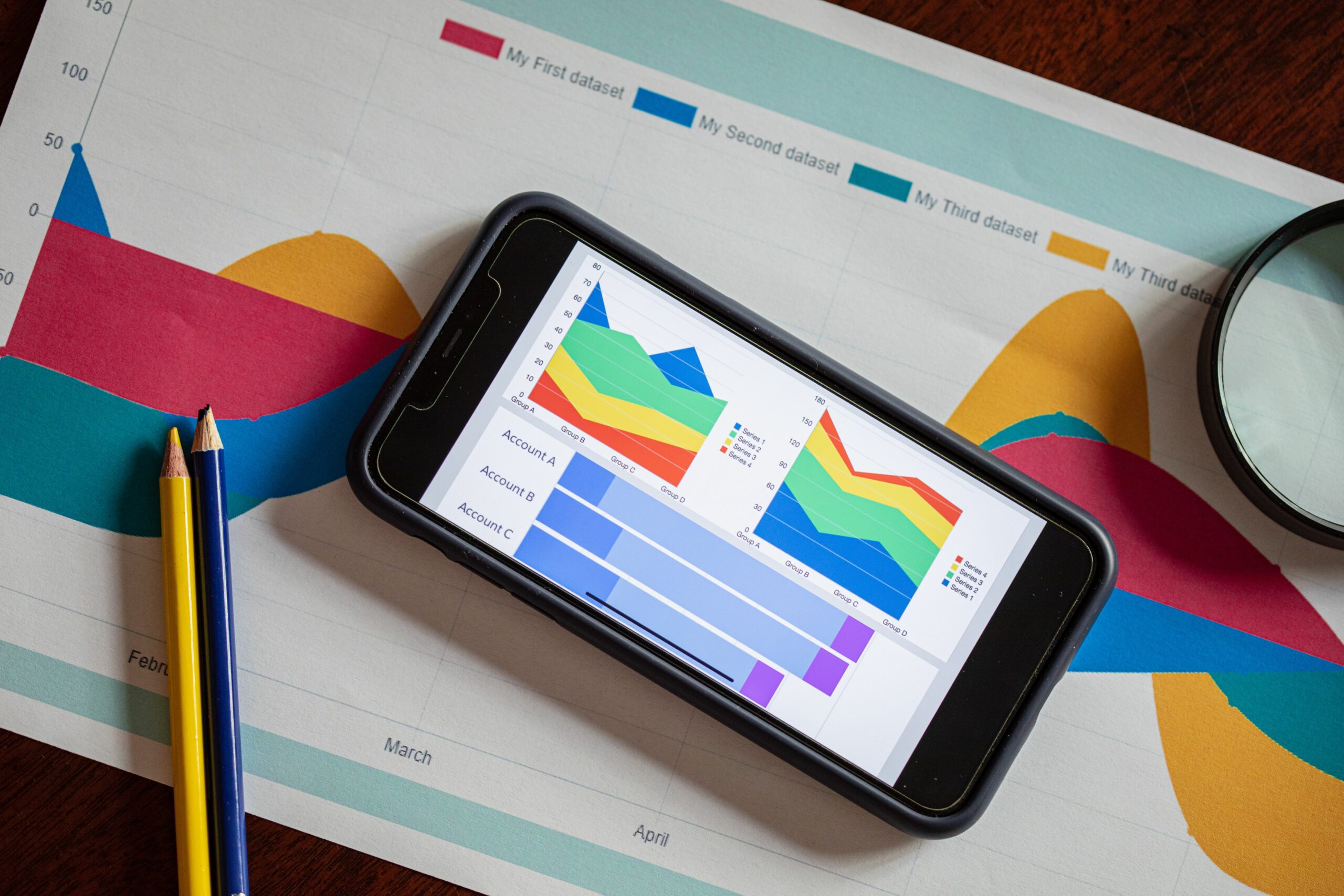
AI is best at pattern recognition across messy datasets: content performance, audience overlap, comment sentiment, and anomaly detection. It can also speed up tasks that used to take analysts hours, like tagging content themes or clustering creators by style. However, AI does not magically fix missing data, and it cannot infer causality when tracking is broken. If your UTMs are inconsistent or your pixel is misfiring, the model will confidently summarize the wrong story.
In 2025, the most useful AI features tend to fall into four buckets. First is data cleaning – deduping posts, normalizing metrics across platforms, and flagging outliers. Second is prediction – forecasting views or conversions based on past posts and seasonality. Third is diagnostics – explaining which variables correlate with performance, like hook length, posting time, or creator audience mix. Fourth is automation – scheduled reporting, anomaly alerts, and brief generation.
Concrete takeaway: Treat AI outputs as “decision support,” not “decision authority.” Require every AI insight to cite the underlying metric and time window.
A practical selection framework: how to choose the right tool
Start with your use case, not a feature list. A DTC brand that needs conversion tracking will pick differently than a CPG brand optimizing reach and creative lift. To keep the process clean, score tools against a short set of decision rules. Then run a two week pilot using the same campaign dataset across candidates.
Use this step-by-step framework:
- Define your primary outcome – awareness (reach, CPM), consideration (video views, CPV, site visits), or conversion (CPA, ROAS).
- List required data sources – platform APIs, Shopify, GA4, affiliate networks, ad accounts, and creator whitelisting access.
- Decide your attribution standard – last click, view through, or blended model. Write it down.
- Set minimum QA rules – audit sampling, fraud checks, and how often data refreshes.
- Run a pilot – same creators, same time window, same UTMs, then compare outputs.
During evaluation, keep a running log of “unknowns” the tool cannot answer. For example, if it cannot separate paid whitelisted impressions from organic impressions, your CPM math will be wrong. Likewise, if it cannot ingest first party conversion data, your CPA will be guesswork.
Concrete takeaway: If a tool cannot clearly explain how it calculates reach, ER, and attribution, do not buy it. Ambiguity becomes a budget fight later.
| Evaluation area | Questions to ask | Pass criteria |
|---|---|---|
| Data access | Which APIs and exports are supported? Any sampling? | Supports your core platforms and exports raw tables |
| Attribution | How are conversions tied to creators? Supports UTMs, pixels, promo codes? | Explains model, allows your preferred attribution view |
| Fraud detection | How does it detect bots, pods, bought followers? | Shows signals, thresholds, and confidence, not a single “score” |
| Creative insights | Can it tag hooks, topics, sentiment, and format? | Outputs are auditable and map to specific posts |
| Reporting | Can you customize dashboards and schedule exports? | Role based views for brand, agency, and creator |
Tool comparison: features that matter most in 2025
Most platforms claim they do everything. Instead, focus on the features that change decisions: identity resolution, cross platform normalization, and explainable forecasting. Also look for workflow details, like whether you can lock a reporting period after invoicing so numbers do not drift. If you are building a creator program, you will also care about CRM features, contract storage, and usage rights tracking.
To stay grounded, compare tools by “fit” rather than “best.” A lightweight reporting tool can be perfect for a small team, while an enterprise stack may be overkill if you only run a few campaigns per quarter. If you want ongoing education on measurement and creator ops, the InfluencerDB Blog resource hub is a useful place to cross-check tactics before you commit to a workflow.
Concrete takeaway: Prioritize tools that let you export post-level data and conversions in a flat file. If you cannot export, you cannot audit.
| Tool type | Best for | Key AI features to demand | Common blind spot |
|---|---|---|---|
| Influencer reporting dashboard | Fast campaign summaries and stakeholder reporting | Anomaly alerts, auto-tagging content themes, narrative summaries with citations | Weak attribution if it cannot ingest first party conversion data |
| Social listening and sentiment | Brand health, share of voice, creator discovery by topic | Topic clustering, sentiment with sarcasm handling, trend detection | Sentiment errors on slang and niche communities |
| MMM and incrementality tools | Measuring lift across channels and long cycles | Bayesian models, scenario planning, confidence intervals | Needs lots of clean historical data to be stable |
| Creator CRM and workflow | Scaling outreach, briefs, contracts, and rights | Auto follow-ups, brief generation, risk flags for compliance | Can become a data silo if it does not integrate well |
How to measure ROI with simple formulas and a worked example
AI can speed up analysis, but you still need a measurement spine. Build your reporting around a small set of metrics that map to your objective, then add diagnostics second. For awareness, you care about reach, impressions, and CPM. For consideration, track views, watch time, clicks, and CPV. For conversion, track add to cart, purchases, CPA, and revenue per creator.
Here is a simple example you can copy into a spreadsheet. Suppose you pay $6,000 total across three creators. The campaign delivers 480,000 impressions and 1,200 purchases tracked via UTMs and post-purchase survey.
- CPM = (6000 / 480000) x 1000 = $12.50
- CPA = 6000 / 1200 = $5.00
Now add a sanity check. If your average order value is $40, revenue is 1,200 x $40 = $48,000. That looks strong, but verify whether purchases were incremental or just captured demand. When you can, run a holdout test or compare geo splits. For measurement standards and definitions, it helps to align with industry references like the IAB measurement guidelines so your reporting language matches what partners expect.
Concrete takeaway: Always report CPM and CPA together when possible. CPM tells you efficiency of distribution, while CPA tells you business impact.
Fraud detection and data quality: an audit checklist
In 2025, fraud is less about obvious bot accounts and more about subtle manipulation: engagement pods, recycled audiences, and inflated story taps. AI can help by flagging anomalies, but you still need human review. A good tool should show the signals behind a risk flag, not just a red badge.
Use this audit checklist before you sign a contract or approve a renewal:
- Audience authenticity – look for sudden follower spikes, high follow-unfollow churn, and suspicious geography mismatches.
- Engagement quality – scan comments for repetition, generic phrasing, and timing clusters that suggest coordination.
- View consistency – compare median views to follower count and to recent post history, not a single viral outlier.
- Content fit – check whether the creator can credibly integrate your product without breaking their usual style.
- Tracking integrity – validate UTMs, landing pages, and promo codes before launch.
Also, be careful with “one score” fraud ratings. They can be useful for triage, yet they often penalize creators in emerging markets or niche communities where engagement patterns differ. Ask for transparency: what thresholds trigger a flag, and can you override with notes?
Concrete takeaway: Require screenshots or exports for any fraud claim. If a tool cannot show evidence, treat the flag as a hypothesis, not a verdict.
Campaign workflow that pairs well with AI reporting
AI works best when your campaign workflow is structured. If briefs are inconsistent and deliverables change mid-flight, the model cannot compare performance apples to apples. Start by standardizing inputs: creative format, posting window, CTA, and tracking links. Then let AI help with monitoring and post-campaign analysis.
Below is a simple campaign checklist you can adapt. Assign an owner for each phase so tasks do not disappear between brand, agency, and creator.
| Phase | Tasks | Owner | Deliverables |
|---|---|---|---|
| Planning | Define objective, KPIs, budget, and audience | Brand | Measurement plan and KPI definitions |
| Creator selection | Shortlist, fraud audit, negotiate usage rights and exclusivity | Brand or agency | Creator list with risk notes and rates |
| Briefing | Creative direction, do and do not list, tracking links, deadlines | Brand | Final brief and asset checklist |
| Execution | Publish, monitor comments, log issues, capture whitelisting permissions | Creator plus agency | Live links and screenshots |
| Reporting | Normalize metrics, calculate CPM/CPA, summarize learnings | Analyst | Post-level dataset and narrative report |
Concrete takeaway: Lock your tracking plan before any content goes live. Retroactive fixes rarely recover lost attribution.
Common mistakes with AI analytics in 2025
Most teams do not fail because they picked the “wrong” tool. They fail because they trust automation too early, or they never validate data against reality. As a result, they optimize toward the wrong metric and wonder why sales did not move.
- Using engagement rate without a denominator – “ER” alone is meaningless without stating impressions, reach, or followers.
- Comparing creators across platforms without normalization – a TikTok view and an Instagram impression behave differently.
- Letting the tool define success – dashboards often default to vanity metrics because they are easy to collect.
- Ignoring rights and whitelisting in ROI math – paid amplification can change CPM and CPA dramatically.
- Not auditing AI summaries – narrative insights can be persuasive even when the underlying data is thin.
Concrete takeaway: Add a “data confidence” line to every report: high, medium, or low, with one sentence explaining why.
Best practices: getting reliable insights without overcomplicating it
Once you have the basics in place, AI can genuinely improve performance. The key is to build a repeatable loop: plan, measure, learn, and update. Keep your KPI set small, but make your data clean. Then use AI for what it does best: spotting patterns you might miss.
- Standardize naming – consistent UTMs, campaign IDs, and creator IDs across every system.
- Use a two-layer dashboard – an executive view for KPIs and a diagnostic view for post-level details.
- Calibrate benchmarks – compare creators to their own history and to similar creators, not to a global average.
- Document deal terms – usage rights, exclusivity, and whitelisting should sit next to performance data.
- Validate with platform sources – cross-check key numbers against official docs and native analytics when something looks off.
For example, if you are running YouTube integrations, confirm view and ad measurement definitions against official references like YouTube Help documentation so your reporting aligns with how the platform counts views and analytics events.
Concrete takeaway: Build one reusable template for briefs and one for reporting, then let AI fill in drafts. Humans should still approve the final story.