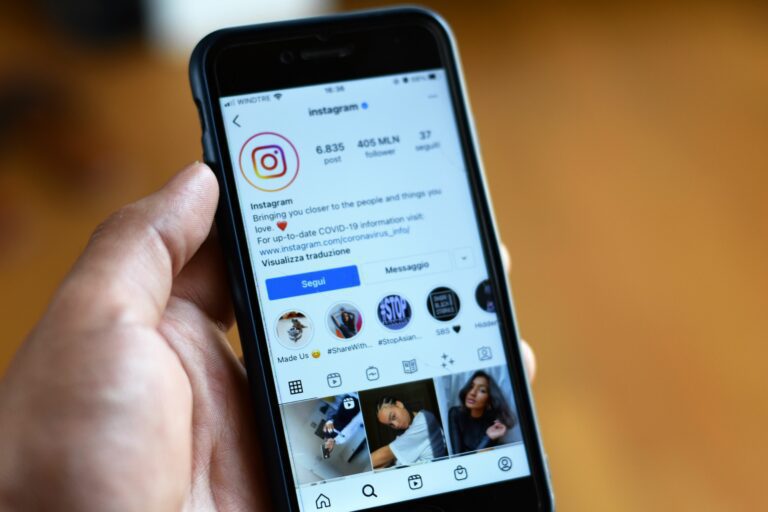

Instagram target audience work in 2025 starts with one decision: who you are willing to ignore so your content can land with the people who matter. Instagram has matured into a mixed feed of Reels, carousels, Stories, search, and DMs, so “posting consistently” is not a strategy by itself. You need a clear audience hypothesis, a way to validate it with data, and a repeatable system for turning insights into creative and creator partnerships. This guide walks through definitions, a practical framework, and the metrics that tell you whether you are attracting the right people or just collecting views.
Instagram target audience: define it with a simple 3 layer model
Before you touch Insights, define your audience in three layers: identity, intent, and context. Identity is who they are (role, life stage, location, language). Intent is what they are trying to do right now (learn, compare, buy, be entertained, get inspired). Context is how they use Instagram (Reels-first scrollers, Story-heavy lurkers, search-driven shoppers, DM-centric communities). When you write these layers down, you stop guessing and start designing content that matches real behavior.
Use this quick worksheet and keep it to one page. First, write one primary audience segment and two secondary segments. Next, list the top three “jobs to be done” for each segment, such as “choose a foundation shade,” “find a beginner lifting plan,” or “plan a weekend in Lisbon.” Finally, add the context clues: what format they prefer, what time they browse, and what would make them share or save. The takeaway: if you cannot describe intent and context, you do not have an actionable audience yet.
- Primary segment – the group you will optimize for in the next 30 days.
- Secondary segments – groups you will serve occasionally without diluting the main message.
- Exclusion list – who you are not targeting (important for creative clarity and ad spend efficiency).
Key terms you will use to measure audience fit
Audience strategy fails when teams use metrics loosely. Define your terms early so your reporting stays consistent across organic, influencer, and paid. Reach is the number of unique accounts that saw your content. Impressions are total views, including repeats. Engagement rate is engagement divided by reach or impressions, depending on your standard – pick one and stick to it. CPM is cost per thousand impressions, useful for awareness. CPV is cost per view, common for video. CPA is cost per acquisition, the bottom-line metric for performance.
On the influencer side, you will also hear whitelisting, which means running paid ads through a creator’s handle (with permission) to leverage their identity in ads. Usage rights define how you can reuse creator content (where, how long, and in what formats). Exclusivity restricts a creator from working with competitors for a period. The takeaway: clarify these terms in your brief and contract, because they change pricing and what “success” looks like.
How to find your audience using Instagram Insights and search behavior
Instagram Insights is not perfect, but it is enough to validate or challenge your assumptions. Start with three screens: Accounts Reached, Accounts Engaged, and Total Followers. Look for mismatches. For example, if your followers skew 25 to 34 but your reach is mostly 18 to 24, your content is traveling beyond your base. That can be good, but only if the younger audience aligns with your product and conversion path.
Next, treat Instagram like a search engine. In 2025, many users discover brands through keyword search, suggested results, and “related” content clusters. Build a list of 20 to 30 keywords your audience would type, including problem phrases (“how to fix…”, “best for…”, “beginner…”) and category phrases (“vegan protein bar”, “budget travel bag”). Then audit the top results: what formats dominate, what hooks repeat, and what comments reveal about intent. As a rule, if you cannot find your content category through search, your audience definition may be too vague or your SEO signals are weak.
For platform-specific guidance, cross-check your approach with official documentation. Meta’s help resources explain how insights and ad targeting work at a high level, which is useful when you are aligning organic and paid measurement: Meta Business Help Center.
- Action step: Pick your top 5 posts by saves and shares, then map each to a clear audience intent. If you cannot map it, the post likely did not serve a defined need.
- Action step: Review top cities and languages in Insights, then adjust captions and on-screen text to match how your audience actually reads.
Build audience segments you can actually target (organic, influencer, and paid)
A segment is only useful if it changes what you do next. In practice, that means each segment needs a content angle, a creator profile, and a conversion path. Here is a practical way to write segments that work across channels: name the segment, define the trigger moment, list the proof they need, and choose the format that delivers that proof fastest. For instance, “New runners with knee pain” has a trigger (pain after first runs), proof needs (credibility, safety, progression), and a likely format (short Reels with clear form cues plus a carousel checklist).
Influencer selection should mirror the segment definition. If your segment needs trust, prioritize creators with high comment quality and consistent expertise. If your segment needs inspiration, prioritize creators with strong saves and aesthetic consistency. You can find more tactical guidance and examples in the InfluencerDB.net blog, especially when you are comparing creator tiers and deliverables.
| Audience segment | Trigger moment | Best formats | Creator fit signals | Primary KPI |
|---|---|---|---|---|
| Problem-aware beginners | Searching “how to” and saving tips | Reels tutorials, carousel checklists | High saves per reach, helpful comments | Saves rate, profile visits |
| Comparison shoppers | Asking “which is best” in comments | Side-by-side demos, FAQs in Stories | Clear product explanations, low hype tone | Link clicks, CTR |
| Ready-to-buy | DMs about price, shipping, availability | UGC testimonials, offer-focused Reels | Strong conversion history, clean CTAs | CPA, purchases |
| Community seekers | Engaging in Q&As and Lives | Stories, Lives, broadcast channels | High reply rates, recurring series | DM replies, returning viewers |
The takeaway: if you cannot assign a KPI and a “creator fit signal” to a segment, you are not ready to brief influencers or run paid amplification.
A step by step framework to validate your audience with small tests
Audience definition is a hypothesis. Validation is a test. Run a 14 day sprint with three content pillars and one controlled variable per pillar. For example, keep the offer constant but change the hook, or keep the hook constant but change the format. This approach helps you learn faster because you can attribute changes in performance to a specific choice, not to random posting.
Step 1: Write one sentence per pillar: “For [segment], we will publish [format] about [topic] to drive [KPI].” Step 2: Produce four posts per pillar, spaced out, so timing does not dominate results. Step 3: Track reach, saves, shares, profile visits, and follows per reach. Step 4: After two weeks, kill one pillar, double down on one, and refine one. The takeaway: you are not looking for a viral outlier, you are looking for repeatable signal.
| Metric | Formula | What it tells you | Decision rule |
|---|---|---|---|
| Engagement rate (by reach) | (Likes + Comments + Saves + Shares) / Reach | Content resonance with the people you reached | If it rises while reach is stable, keep the angle |
| Saves rate | Saves / Reach | Utility and future intent | If saves rate is high, build a series |
| Share rate | Shares / Reach | Social currency and word of mouth | If shares spike, repurpose into Reels and Stories |
| Follower conversion | Follows / Reach | Whether the audience wants more from you | If low, tighten your profile promise and CTAs |
| CPM (paid) | (Spend / Impressions) x 1000 | Cost to reach your audience | If CPM is high, broaden targeting or refresh creative |
| CPA (paid or affiliate) | Spend / Conversions | Cost to acquire a customer | If CPA is above margin, change offer or landing page |
Example calculation: if a Reel reaches 40,000 people and gets 1,200 total engagements, your engagement rate by reach is 1,200 / 40,000 = 3%. If it also gets 600 saves, your saves rate is 600 / 40,000 = 1.5%. In many categories, saves rate is a stronger “right audience” signal than likes because it implies future action.
Influencer campaigns: match creator audiences to your segments
When brands say “the creator has my audience,” they often mean “the creator has my demographics.” Demographics are a start, but audience match is mostly about intent and trust. Ask creators for audience insights that matter: top countries and cities, age ranges, and gender split, but also what content drives saves, what questions show up in DMs, and what products their audience already buys. Then compare that to your segment worksheet.
Build a short creator scorecard before outreach. Include: audience fit (intent match), content fit (format and tone), performance fit (median views, not best views), and business fit (usage rights, whitelisting permission, exclusivity constraints). If you plan to run ads through a creator handle, specify whitelisting and usage rights up front because it changes the quote. For disclosure and compliance, align your briefs with the FTC’s guidance on endorsements: FTC Endorsement Guides.
The takeaway: the best creator for your Instagram target audience is often the one with consistent comment quality and clear category authority, not the one with the biggest follower count.
Common mistakes that distort your audience data
First, teams chase reach without checking who that reach is. A broad meme-style Reel can inflate views while pulling in people who will never buy, which then confuses your next month of content decisions. Second, they mix metrics across formats. Stories and Reels have different consumption patterns, so comparing raw engagement totals is misleading. Third, they rely on one viral post as proof of audience fit, even though it may be driven by a trend unrelated to the brand.
Another frequent issue is failing to separate organic learning from paid learning. If you boost posts too early, you may mask what the algorithm would have done naturally and you will not know whether the creative truly resonates. Finally, many influencer briefs skip measurement details. Without defining CPM, CPV, CPA, and engagement rate standards, you cannot compare creators fairly or negotiate based on performance.
- Do not optimize for likes if your product needs consideration – watch saves, shares, and qualified DMs.
- Do not accept “my audience is everyone” from creators – ask for specifics tied to your segment.
- Do not ignore negative signals – low retention on Reels often means the hook mismatches the audience intent.
Best practices for reaching the right audience in 2025
Start with your profile promise. Your bio, pinned posts, and Highlights should tell a new visitor exactly who you help and what they will get by following. Next, design content for “save and share” behavior. Checklists, templates, before and after breakdowns, and myth-busting explainers tend to attract the right people because they reward attention with utility. Then, build series. A series trains the algorithm and your audience at the same time, and it makes your learning cleaner because you can compare episodes.
On the distribution side, use collaborations intentionally. Collab posts and creator partnerships can import a new audience segment quickly, but only if the topic matches the partner’s audience intent. If you plan to amplify creator content with ads, negotiate whitelisting and usage rights in writing, including duration and placements. For measurement standards and definitions, it helps to align with widely used industry references. The IAB’s measurement resources are a solid baseline for common advertising terms and comparability: Interactive Advertising Bureau.
- Checklist: Update pinned posts monthly to match your current primary segment.
- Checklist: Add on-screen keywords to Reels so search-driven users self-select into your niche.
- Checklist: Track median performance, not best performance, when judging audience fit.
A practical 30 day plan to refine your Instagram target audience
Week 1 is research and setup. Write your 3 layer audience model, list 20 to 30 keywords, and audit five competitors or adjacent accounts for recurring hooks and formats. Also, clean up your profile: bio promise, link destination, Highlights, and pinned posts. Week 2 is testing. Publish three pillars with one controlled variable, and document results in a simple sheet. Week 3 is collaboration. Partner with one creator or brand that overlaps with your primary segment, and run one Collab post plus Story support.
Week 4 is conversion and measurement. Add one clear conversion path, such as a lead magnet, a DM keyword flow, or a limited offer, then track CPA if you are running paid. If you are working with creators, compare performance using the same definitions for engagement rate, reach, and impressions. Finally, write a one-page recap: what segment responded, what content angle won, and what you will stop doing next month. The takeaway: audience strategy is not a one-time exercise, it is a monthly operating rhythm.
If you want more templates for briefs, creator evaluation, and campaign measurement, browse the latest guides in the and adapt the checklists to your niche.