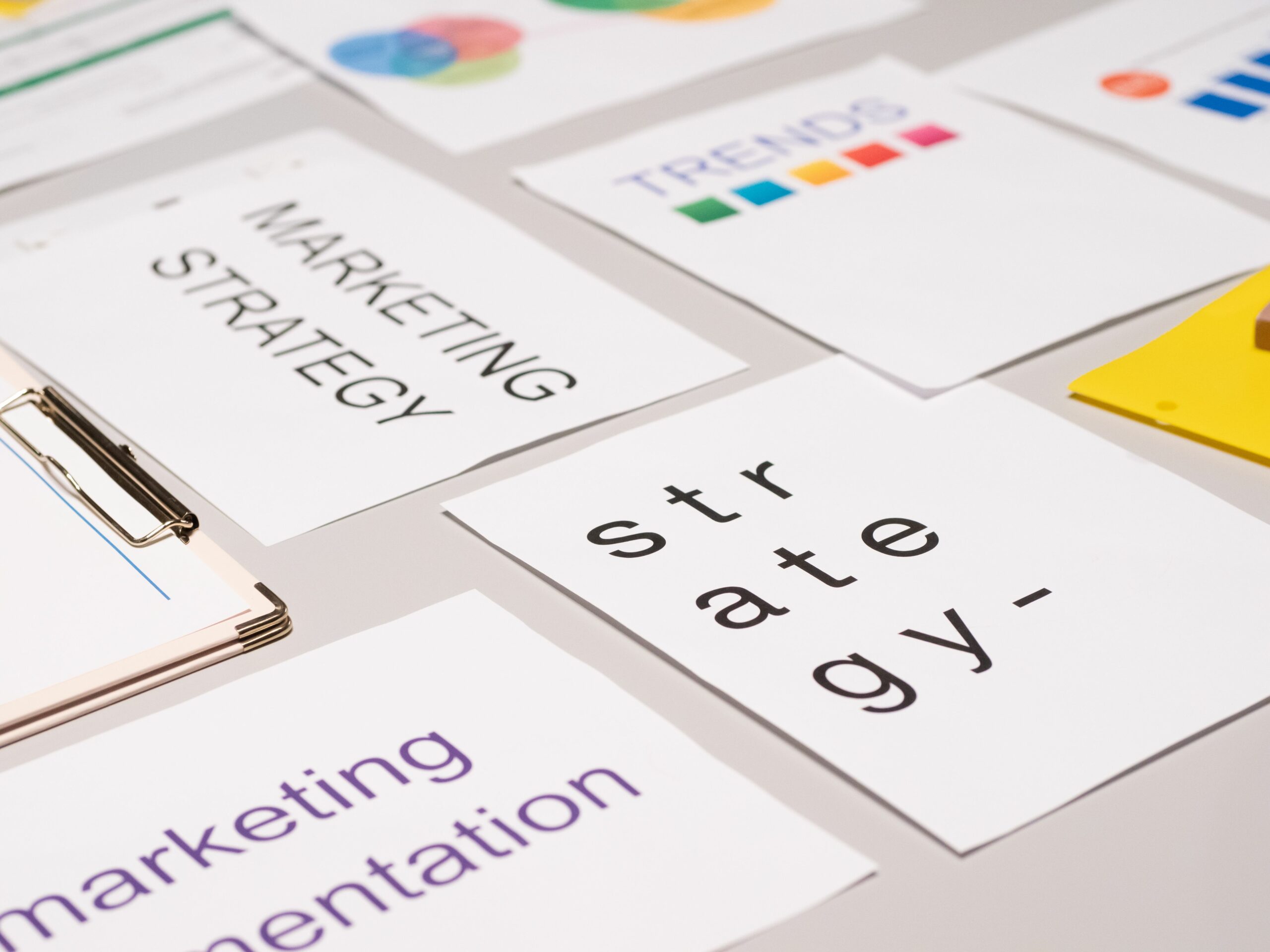

Brand positioning is the fastest way to make influencer marketing feel consistent instead of random. When your positioning is clear, you can pick creators with less guesswork, write briefs that do not contradict themselves, and evaluate performance against the same promise every time. In practice, it also reduces wasted spend because creators understand what to say, what to show, and what not to claim. This guide turns positioning from a slide into a working system you can use to select influencers, price deliverables, and measure outcomes.
What brand positioning means in influencer marketing
Brand positioning is the specific place you want to occupy in a customer’s mind, relative to alternatives, and supported by proof. In influencer marketing, positioning becomes the filter for creator selection, creative direction, and measurement. If you cannot describe your position in one sentence, creators will fill in the gaps with their own assumptions, which leads to off-brand hooks and inconsistent claims. On the other hand, a tight position gives creators freedom inside clear boundaries, which usually improves authenticity and conversion.
Use this simple positioning sentence to start: For [audience], [brand] is the [category] that [primary benefit] because [reason to believe]. Then add two guardrails: what you will not be, and what you will never claim. Those “no” statements matter because influencer content moves fast, and ambiguity is where risky or misleading messaging sneaks in.
- Takeaway: Write your positioning sentence and two “no” guardrails before you contact any creators.
Define the metrics and terms you will use (so creators and analysts agree)

Positioning fails when teams argue about what “worked.” Align on terms early, especially if you plan to compare creators across platforms. Below are practical definitions you can paste into a brief or reporting doc.
- Reach: Estimated unique accounts that saw content at least once.
- Impressions: Total views, including repeat views by the same person.
- Engagement rate (ER): Engagements divided by impressions or reach (pick one and stick to it). A common formula is ER = (likes + comments + shares + saves) / impressions.
- CPM: Cost per 1,000 impressions. CPM = cost / (impressions / 1,000).
- CPV: Cost per view (often for video). CPV = cost / views.
- CPA: Cost per acquisition (purchase, signup, install). CPA = cost / conversions.
- Whitelisting: Running paid ads through a creator’s handle (also called creator licensing). It can boost performance, but it changes pricing and approvals.
- Usage rights: Permission to reuse creator content (organic, paid, website, email). Rights should specify duration, channels, and geography.
- Exclusivity: A period where the creator agrees not to work with competitors. This is usually priced as a premium.
For platform-specific measurement rules, rely on official documentation when you set expectations. For example, YouTube’s help center explains how views and engagement are counted and why they can change after verification: YouTube Help.
- Takeaway: Put your chosen ER denominator (impressions or reach) in writing, and use it everywhere.
Brand positioning inputs: audience, competitors, proof, and voice
Good positioning is not just “premium” or “for everyone.” It is built from inputs you can verify. Start with four blocks, then turn them into creator-ready guidance.
- Audience reality: Who buys, who influences the buyer, and what they already believe. Pull this from reviews, support tickets, and creator comment sections, not only surveys.
- Competitive set: Name 3 to 5 alternatives customers actually compare you to. Include “do nothing” and substitutes, not only direct brands.
- Proof: The evidence that makes your promise believable. Proof can be clinical data, third-party testing, patents, ingredient sourcing, founder credibility, or measurable results.
- Voice and boundaries: The tone you want, plus claims you will not make. This is where you prevent compliance issues and brand drift.
Once you have these blocks, translate them into a creator brief section called “What to emphasize” and “What to avoid.” If you need examples of how brands turn strategy into creator guidance, browse recent frameworks and templates on the and adapt the structure to your category.
- Takeaway: If you cannot list your proof points in bullets, your promise is probably too broad for influencer content.
A step-by-step brand positioning framework you can use this week
This workflow is designed for influencer programs where you need clarity fast, not a six-week rebrand. It produces a one-page positioning sheet you can share with agencies and creators.
- Collect raw language: Pull 50 to 100 customer phrases from reviews, DMs, and creator comments. Highlight repeated words and emotional triggers.
- Choose one primary benefit: Pick the benefit that is both distinctive and provable. If you have two, decide which one wins in a 3-second hook.
- Write your positioning sentence: Use the template from earlier. Keep it under 25 words.
- List 3 proof bullets: Each bullet should be verifiable and easy to show on camera.
- Define 5 message pillars: Pillars are repeatable angles creators can rotate through. Example pillars: “how it works,” “before and after,” “routine integration,” “myth busting,” “comparison.”
- Create guardrails: Add banned claims, required disclosures, and competitor mentions rules.
- Build a creator selection rubric: Score creators on audience fit, content fit, and trust signals, not only follower count.
Example: If you sell a hydration product, “tastes great” is not a position unless you can prove it is uniquely better. A sharper position might be “hydration for people who hate sugary drinks,” supported by ingredients, taste tests, and creator demonstrations. That position then informs which creators you choose: people who talk about clean eating, endurance sports, or low-sugar swaps.
- Takeaway: Your one-page sheet should include a positioning sentence, 3 proofs, 5 pillars, and 5 guardrails.
Turn positioning into creator selection, briefs, and pricing logic
Positioning becomes real when it changes decisions. Start with creator selection. If your position is “dermatologist-tested sensitive skin,” then creators who rely on shock-value skincare hacks are a poor fit, even if their views are high. Conversely, a smaller creator with a calm, educational style may deliver better trust and lower CPA.
Next, turn positioning into a brief that creators can execute. Include: the single most important takeaway, two mandatory proof points, and one creative freedom area. Also specify deliverables, usage rights, and exclusivity in plain language. For disclosure expectations, use the FTC’s guidance as your baseline: FTC Disclosures 101.
Finally, connect positioning to pricing. If your position requires high production value or technical demonstrations, expect higher rates. If you need whitelisting or broad usage rights, budget for it explicitly rather than trying to “bundle it in” later.
| Positioning requirement | What it changes | Budget impact | Decision rule |
|---|---|---|---|
| Strong proof on camera (tests, demos) | More scripting, props, retakes | Higher creation fee | Pay more for creators with repeatable demo formats |
| Premium brand cues (set, styling) | Production quality expectations | Higher day rate or studio costs | Prioritize creators whose feed already matches the look |
| Whitelisting for paid amplification | Approvals, ad account access, iterations | Licensing fee plus paid media | Only whitelist creators with stable brand-safe performance |
| Exclusivity in a tight category | Limits creator income opportunities | Exclusivity premium | Use shorter windows unless you can prove incremental lift |
- Takeaway: If you require whitelisting, usage rights, or exclusivity, separate those line items so negotiations stay clean.
Measurement: connect brand positioning to KPIs and simple formulas
Positioning should determine what you measure first. A “best value” position might prioritize conversion rate and CPA, while a “category creator” position might prioritize reach, share of voice, and branded search lift. Still, you can keep reporting simple by using a small KPI stack: one awareness metric, one consideration metric, and one outcome metric.
Use these formulas to standardize comparisons across creators:
- CPM: cost / (impressions / 1,000)
- CPV: cost / views
- CPA: cost / conversions
- Engagement rate: engagements / impressions (or reach)
Example calculation: You pay $2,000 for a TikTok video that generates 180,000 views and 220,000 impressions, plus 320 purchases tracked via a unique code. CPM = 2000 / (220000 / 1000) = $9.09. CPV = 2000 / 180000 = $0.011. CPA = 2000 / 320 = $6.25. Those numbers only matter, however, relative to your positioning goal. If your position is premium and you need high-intent buyers, CPA may be the lead metric even if CPM looks average.
| Positioning goal | Primary KPI | Secondary KPI | What “good” looks like |
|---|---|---|---|
| Premium, trust-first | Conversion rate or CPA | Save rate, comment quality | Fewer but higher-intent clicks, strong questions in comments |
| Best value, broad appeal | CPM and CTR | New customer rate | Efficient reach and steady click volume |
| Category education | Watch time or view-through | Follower growth, shares | High completion rates and frequent shares |
| Community and belonging | Repeat engagement | UGC volume, mentions | People tag friends and post their own versions |
- Takeaway: Pick one KPI that best proves your position, then use the others as supporting signals, not competing goals.
Common mistakes that break positioning in influencer campaigns
Most positioning problems are self-inflicted. Teams either over-control creators, or they provide so little guidance that creators improvise the brand story. Here are the failures that show up repeatedly in postmortems.
- Trying to own too many benefits: If you ask creators to cover five features, the hook dies and the message blurs.
- Confusing audience with platform: “TikTok users” is not an audience. Define the buyer’s context and pain point.
- Proof points that cannot be shown: If your proof is a lab report, translate it into a visual or a simple demonstration.
- Inconsistent usage rights language: Vague rights lead to delays and resentment. Specify duration and channels.
- Not budgeting for exclusivity: Asking for exclusivity late forces creators to say no or raise rates sharply.
- Takeaway: If your brief includes more than one “main message,” rewrite it until one message wins.
Best practices: make positioning stick across creators and quarters
Positioning is only useful if it survives multiple creators, formats, and campaign cycles. To make it durable, build systems that reinforce the same promise while allowing creative variation.
- Use message pillars as a rotation plan: Assign each creator one pillar so you cover the full story without cramming every video.
- Standardize a “proof kit”: Provide b-roll, test results summaries, founder quotes, and product shots that make proof easy to show.
- Run a positioning pre-check: Before approval, ask: does the hook match the position, does the proof appear, and do claims stay inside guardrails?
- Separate creative and licensing fees: Treat usage rights and whitelisting like media assets, not freebies.
- Keep a creator feedback loop: Ask creators what questions their audience asked. Those questions often reveal the next best pillar.
When you need to adjust positioning, do it deliberately. Update the one-page sheet, then test the new angle with a small creator set before you roll it out widely. That way, you evolve without confusing returning customers.
- Takeaway: A one-page positioning sheet plus a pre-check process prevents most off-brand content without slowing creators down.
Quick-start checklist: your next influencer brief, aligned to brand positioning
Use this checklist to translate your positioning into something a creator can execute in one read. It is also a useful internal QA tool before you send anything out.
- Positioning sentence in one line
- One primary benefit and one supporting benefit
- Three proof bullets that can be shown on camera
- One chosen KPI (CPM, CPV, CPA, or conversion rate) tied to the campaign goal
- Disclosure requirement and any claim restrictions
- Deliverables list with due dates
- Usage rights terms (channels, duration, geography)
- Whitelisting terms if applicable (access, approvals, duration)
- Exclusivity terms if applicable (category definition, time window)
If you want more templates and reporting structures, keep a running swipe file from the InfluencerDB Blog and adapt them to your category and risk tolerance.