

Affiliate marketing courses are everywhere in 2025, but only a small slice will actually help you build a repeatable system that earns commissions. The difference is not hype or production quality – it is whether the course teaches a measurable workflow, gives you practice assets, and matches your traffic strengths (SEO, short-form video, email, or paid). In this update, you will learn how to evaluate a course like an analyst: what to look for in the syllabus, what numbers to demand, and how to estimate payback before you buy. You will also get a practical checklist, a comparison table, and simple formulas you can use to forecast revenue.
Affiliate marketing courses: what you should learn (and what you can skip)
A good course is not a motivational talk with a few screenshots. It should teach a complete loop: pick an offer, create content that matches intent, track clicks and conversions, and iterate based on data. Before comparing instructors, make sure you understand the core terms, because the best programs use them precisely and expect you to apply them. If a course avoids numbers entirely, treat that as a warning sign.
Key terms, defined in plain English:
- CPA (cost per acquisition) – what the advertiser pays per sale or lead. For affiliates, this is often your commission per conversion.
- CPM (cost per mille) – cost per 1,000 impressions. Useful when comparing affiliate content to sponsored content or paid media.
- CPV (cost per view) – cost per video view. More common in paid video, but helpful when you model top-of-funnel content.
- Engagement rate – engagements divided by reach or impressions (the denominator matters). Use it to sanity-check whether an audience is active.
- Reach – unique people who saw a post. Good for estimating how many individuals you can influence.
- Impressions – total times content was shown, including repeats. Useful for frequency and awareness modeling.
- Whitelisting – a brand runs ads through a creator account (or uses their handle/content) to leverage social proof.
- Usage rights – permission to reuse your content (for ads, website, email). In affiliate, it matters if you repurpose UGC.
- Exclusivity – a restriction on promoting competing products for a period. It can reduce your earning options.
Takeaway: Pick a course that teaches measurement and decision rules, not just “post consistently.” You want templates for tracking, examples of real funnels, and clear guidance on compliance.
How to evaluate a course in 15 minutes: a scoring rubric
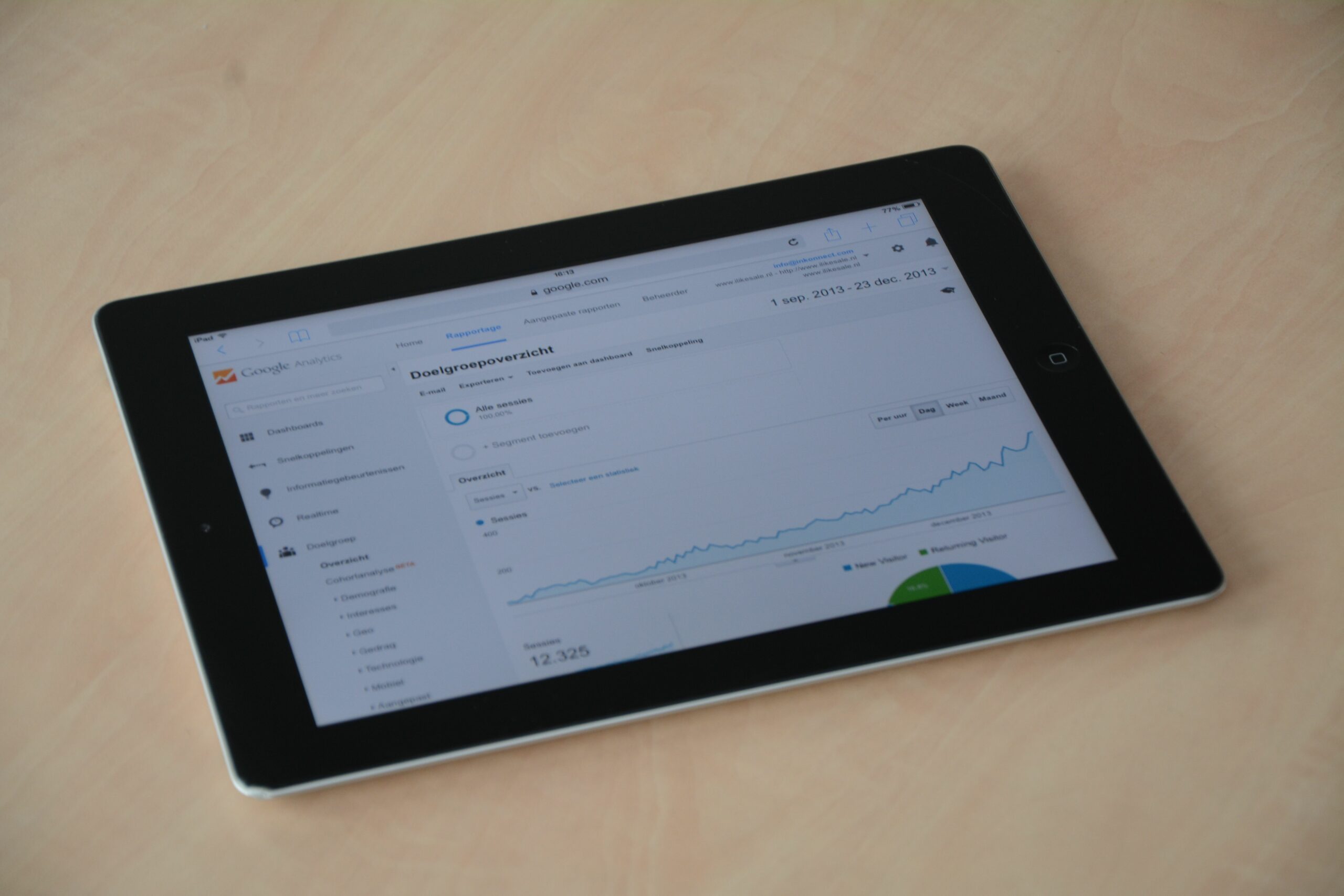
You can save time by grading each course against the same criteria. Start with the sales page and syllabus, then look for proof of process: sample lessons, downloadable assets, and a clear path from beginner to execution. Next, check whether the instructor’s results are replicable. A creator with a huge audience can earn via brand demand alone, which does not translate to a student starting from zero.
Use this rubric and give each category a 1 to 5 score. If a course cannot earn at least 18 out of 25, keep looking.
| Criterion | What “good” looks like | Red flags | Score (1 to 5) |
|---|---|---|---|
| Strategy clarity | Defines a niche, traffic source, and offer selection method | “Anyone can do this” with no positioning | |
| Execution assets | Templates for content briefs, tracking sheets, outreach, and email sequences | No downloads, only videos | |
| Measurement | Teaches tracking links, attribution basics, and testing cadence | Focus on vanity metrics only | |
| Platform fit | Specific playbooks for SEO, YouTube, TikTok, email, or paid | Generic advice across all platforms | |
| Ethics and compliance | Clear disclosure guidance and examples | Encourages hiding affiliate links or misleading claims |
Takeaway: If the course does not show you how to track performance and improve it, you are buying inspiration, not instruction.
Course formats compared: cohort, self-paced, mentorship, and “community”
Format matters as much as content because affiliate marketing is a skill that improves through repetition. A self-paced course can be perfect if you already have discipline and a clear weekly schedule. On the other hand, a cohort can accelerate progress because deadlines force output and feedback prevents you from repeating the same mistakes. Mentorship is expensive, but it can be worth it if you need personalized niche selection or you are scaling paid traffic.
| Format | Best for | Typical price range | What to demand before buying |
|---|---|---|---|
| Self-paced course | Busy creators who can execute solo | $49 to $499 | Full syllabus, templates, and updated lessons |
| Cohort-based | Beginners who need structure and feedback | $300 to $2,000 | Office hours, graded assignments, peer reviews |
| Group mentorship | Intermediate affiliates stuck at a plateau | $1,000 to $5,000 | Access rules, response times, case studies |
| 1:1 coaching | Scaling, paid traffic, or complex funnels | $2,000 to $15,000+ | Clear deliverables, tracking plan, and boundaries |
| Community subscription | Ongoing support and accountability | $10 to $99 per month | Active moderation, searchable library, real Q and A |
Takeaway: Choose format based on your execution risk. If you struggle to publish consistently, pay for structure. If you already ship content weekly, prioritize advanced measurement and offer strategy.
A simple payback model: estimate ROI before you enroll
Affiliate education should be treated like an investment. You do not need perfect forecasting, but you do need a baseline model. Start with the traffic you can realistically generate, then work down the funnel using conservative conversion assumptions. If the instructor cannot explain their own funnel math, that is a problem.
Core formulas you can use:
- Clicks = Content views or sessions × Click-through rate (CTR)
- Conversions = Clicks × Conversion rate (CVR)
- Revenue = Conversions × Commission per conversion
- Payback period (months) = Course cost ÷ Monthly profit attributable to the course
Example calculation (conservative): You publish 8 YouTube videos per month. Each gets 1,500 views on average after 30 days, so you have 12,000 views. If your CTR to the affiliate link is 1.5%, you get 180 clicks. If the offer converts at 3%, you get 5.4 conversions, round down to 5. If the commission is $40 per sale, revenue is $200 per month. A $400 course pays back in about 2 months, assuming you keep publishing and the videos keep getting views.
Now stress-test the model. Drop CTR to 1% and CVR to 2%. If the math collapses, you either need a higher-intent traffic source (SEO and email tend to win here) or a higher-paying offer. For a deeper measurement mindset, browse the analysis and tracking guides on the InfluencerDB blog and adapt the same discipline to affiliate content.
Takeaway: If you cannot outline a plausible path to payback in 90 days, do not buy yet. Fix your traffic plan first, then use education to remove specific bottlenecks.
What the best affiliate marketing courses teach in 2025 (a practical syllabus)
Affiliate marketing has matured. In 2025, the best courses focus less on “secret hacks” and more on systems that survive platform changes. That means first-party audience building, clean tracking, and content that matches user intent. It also means understanding when affiliate is the right monetization model versus sponsorships, digital products, or subscriptions.
Look for these modules and deliverables:
- Niche selection with constraints – a method that balances demand, competition, and your credibility. Deliverable: a one-page niche thesis.
- Offer selection and economics – commission structures, cookie windows, payout thresholds, refund rates. Deliverable: offer scorecard.
- Content-to-intent mapping – informational vs commercial intent, comparison posts, “best” lists, tutorials, and review frameworks. Deliverable: 30-topic content map.
- Creative and conversion – hooks, proof, demos, and objections. Deliverable: a repeatable script or outline template.
- Tracking and attribution basics – UTM parameters, link shorteners, and platform analytics. Deliverable: tracking sheet and KPI dashboard.
- Compliance – disclosure placement, language, and platform policies. Deliverable: disclosure swipe file.
- Scaling – repurposing, email capture, retargeting, and testing. Deliverable: weekly experiment plan.
Compliance deserves special attention because it is easy to get wrong. The FTC is explicit that endorsements must be clearly disclosed, and “hidden” disclosures are not enough. Read the official guidance and compare it to what your course recommends: FTC guidance on endorsements and testimonials.
Takeaway: A strong course gives you outputs you can publish and measure within two weeks, not just theory you plan to use someday.
Common mistakes when buying affiliate marketing courses
Most bad outcomes come from mismatched expectations, not from a lack of intelligence. People buy a course that teaches SEO when they actually plan to grow on TikTok, or they buy an advanced paid traffic program without a proven offer. Another common issue is confusing “income screenshots” with a repeatable process. Screenshots prove someone made money once, but they do not prove you can reproduce it.
- Buying before choosing a traffic lane – decide whether you will focus on SEO, YouTube, short-form, email, or paid. Then buy training that matches.
- Ignoring offer economics – low commissions and short cookie windows can make the math impossible.
- Overvaluing community – a chat room is not a curriculum. Demand structured lessons and feedback loops.
- Skipping disclosure – this creates legal and platform risk, and it can damage trust.
- No execution schedule – without weekly output goals, even a great course becomes entertainment.
Takeaway: If you cannot name your traffic source, your niche, and your first three offers, you are not ready for an advanced course. Start with fundamentals and a publishing plan.
Best practices: how to get results from a course in the first 30 days
Even the best training fails if you consume it like a series. Instead, treat it like a sprint with deliverables. Start by setting a weekly publishing target you can hit without burnout. Then build a feedback loop: track clicks, conversions, and content performance, and adjust one variable at a time. Progress comes from iteration, not from finishing every lesson.
30-day execution plan:
- Days 1 to 3: Choose one niche and one primary platform. Write a niche thesis and a simple audience promise.
- Days 4 to 7: Pick 2 to 3 affiliate programs and build an offer scorecard. Confirm payout terms, cookie window, and allowed traffic sources.
- Week 2: Publish 3 pieces of content tied to commercial intent (review, comparison, “best for”). Add clear disclosures and track links.
- Week 3: Publish 3 more pieces and test one improvement – new hook, different CTA placement, or a stronger demo.
- Week 4: Audit results, double down on what converts, and create a 60-day content map based on winners.
When you measure, keep it simple. Track sessions or views, CTR, conversions, and earnings per piece of content. If you want a neutral reference for analytics concepts and definitions, Google’s documentation is a solid baseline: Google Analytics reporting overview.
Takeaway: Your goal in month one is not perfection. It is proof of motion: published content, tracked links, and at least one conversion signal you can improve.
Quick checklist: questions to ask before you buy
Finally, use these questions to pressure-test any course page or sales call. They are designed to surface whether you are buying a real curriculum or a brand. If the answers are vague, assume you will be left to figure it out alone.
- What traffic sources does the course specialize in, and which does it explicitly not cover?
- Does it teach CPA-style thinking – offer economics, conversion rates, and payback math?
- Are there updated lessons for 2025 platform changes and disclosure expectations?
- What deliverables will I produce by the end of week two?
- Is there a refund policy tied to completion or participation?
- Do students get feedback on content, not just access to a forum?
- Does the instructor show anonymized dashboards or case studies, not only revenue claims?
Takeaway: The best affiliate marketing courses reduce uncertainty. They give you a system, a schedule, and the measurement habits to keep improving after the lessons end.