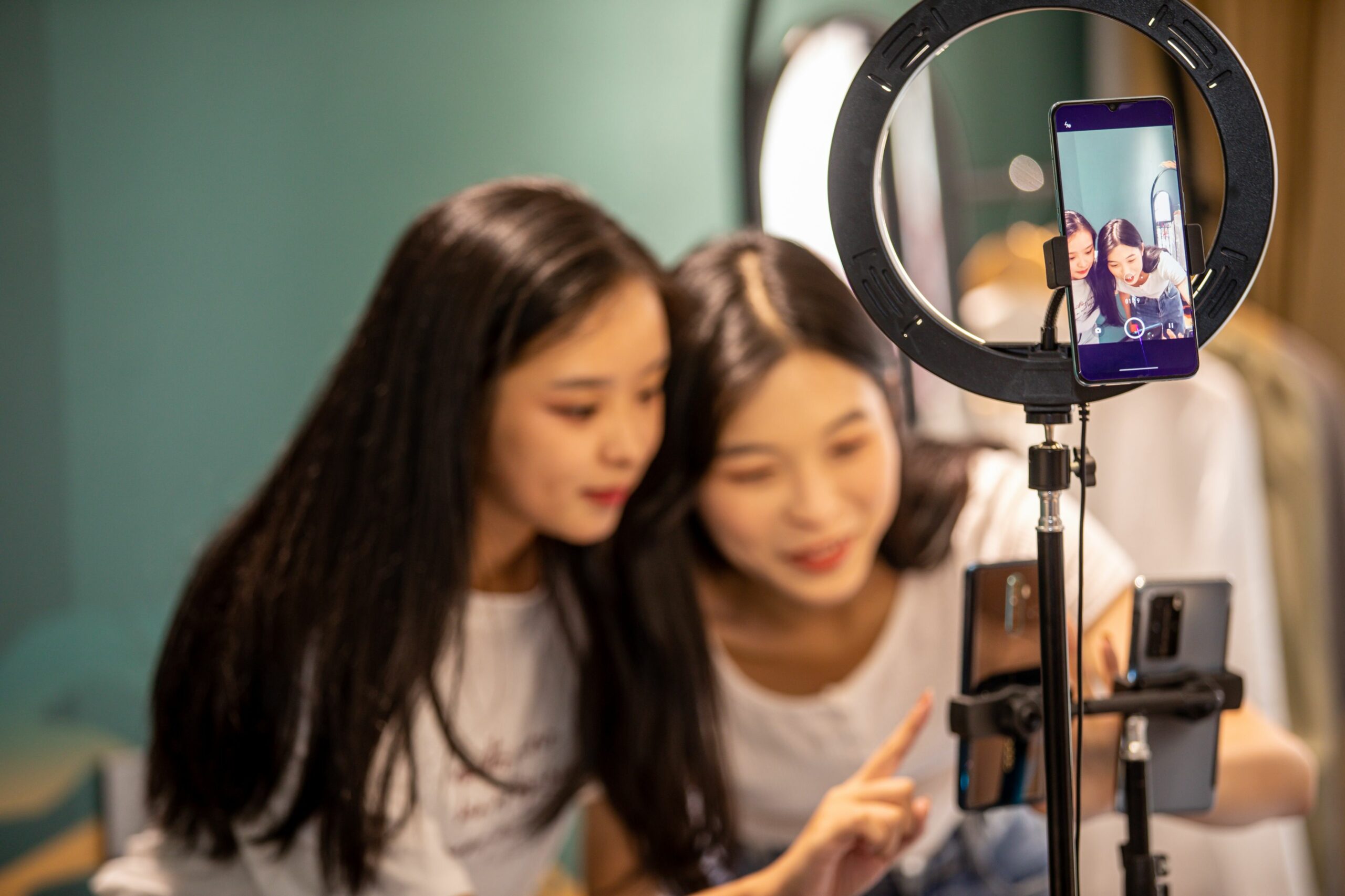

Influencer Marketing TikTok Examples are only useful if you can reverse-engineer why they worked and apply the same mechanics to your own product, budget, and audience. In this guide, you will get a practical swipe file of campaign patterns, plus a framework to brief creators, estimate pricing, and measure results without guessing. Along the way, you will see concrete deliverables, simple formulas, and decision rules you can use even if you are running your first TikTok activation. If you want more tactical breakdowns like this, the InfluencerDB Blog is a good place to keep learning between campaigns.
Influencer Marketing TikTok Examples: 7 campaign patterns you can copy
Instead of listing viral videos you cannot replicate, focus on repeatable patterns that show up across high-performing TikTok collaborations. Each pattern below includes a takeaway you can plug into a brief. As you read, pick two patterns that match your funnel stage – awareness, consideration, or conversion – and build your first test around those.
- Problem – agitation – solution demo: Creator opens with a pain point in the first 2 seconds, shows the “before,” then demonstrates your product as the “after.” Takeaway: require a hook line and a visible before/after moment.
- Routine integration: Product appears naturally in a morning, gym, or work routine. Takeaway: ask for 3 natural touchpoints where the product can appear without feeling like an ad.
- Myth-busting: Creator challenges a common belief in your category and proves it wrong with a quick test. Takeaway: provide 2 to 3 myths and one simple proof method.
- Duet or Stitch reaction: Creator reacts to a brand claim, review, or trending clip, then adds their perspective. Takeaway: give approved source clips and exact claims they can reference.
- Mini tutorial: Step-by-step how to use the product in under 30 seconds. Takeaway: define the “one job” the tutorial must accomplish and the exact steps to show on screen.
- Challenge with a measurable goal: A 7-day or 14-day challenge with a visible metric (time saved, skin change, reps, money saved). Takeaway: set a clear metric and require day 1 and day 7 check-ins.
- Social proof montage: Creator compiles comments, reviews, or UGC clips, then adds their own verdict. Takeaway: supply 5 to 10 approved review snippets and usage rights for any UGC you provide.
Decision rule: if you need conversions quickly, prioritize “demo,” “tutorial,” and “myth-busting.” If you need reach, “routine integration” and “challenge” tend to generate more saves and shares, which can extend distribution.
Define the metrics and terms before you brief creators

Many TikTok influencer campaigns underperform because the brand and creator are optimizing for different outcomes. Define your terms in writing before you talk pricing or deliverables. That way, you can compare creators fairly and avoid post-campaign arguments about what “good performance” means.
- Reach: unique accounts that saw the content at least once.
- Impressions: total views served, including repeat views to the same person.
- Engagement rate (ER): (likes + comments + shares + saves) divided by views or reach. Use one method consistently.
- CPM: cost per 1,000 impressions. Formula: (cost / impressions) x 1000.
- CPV: cost per view. Formula: cost / views.
- CPA: cost per acquisition (purchase, signup, install). Formula: cost / conversions.
- Whitelisting (spark ads / creator authorization): creator allows the brand to run paid ads from the creator’s handle. This typically costs extra.
- Usage rights: permission for the brand to reuse the content (on site, email, ads). Define duration and channels.
- Exclusivity: creator agrees not to work with competitors for a defined period. This is a premium add-on.
Concrete takeaway: put these definitions in your campaign brief and contract, then specify which metric is the primary KPI (for example, CPA for DTC, or CPM for reach). TikTok also publishes ad and measurement guidance you can align with when you plan paid amplification – see TikTok Business Help Center.
A simple framework to build a TikTok influencer brief that gets usable content
A good brief is not a script. It is a set of constraints that protects your brand while leaving room for the creator’s voice. Start with outcomes, then move to guardrails, then deliverables. If you do it in this order, creators can propose ideas that still meet your business goal.
- Objective and KPI: pick one primary KPI (CPA, CPM, or qualified clicks) and one secondary KPI (save rate, comment sentiment, or view-through rate).
- Audience and context: who is this for, and what moment are they in (researching, impulse buying, comparing options)?
- Key message: one sentence. Example: “This protein bar keeps you full for 3 hours without chalky texture.”
- Proof points: 3 bullets maximum, ideally with numbers (ingredients, test results, warranty, shipping speed).
- Creative guardrails: must-say claims, banned claims, pronunciation, visual do-not’s, and required disclosures.
- Deliverables: number of videos, length range, raw footage requirements, captions, and whether you need a pinned comment.
- Usage and paid: whitelisting terms, usage rights duration, and where you will repurpose content.
- Tracking: unique link, discount code, UTM structure, and reporting timeline.
Concrete takeaway: ask for two hooks and two endings per video (recorded as alternates). Those extra 10 seconds can save a campaign because you can test different openings in paid without reshooting the whole concept.
Benchmarks and pricing: estimate what “fair” looks like on TikTok
Pricing varies by niche, creator demand, and production complexity, so you will never get a single universal rate card. Still, you can anchor negotiations with a CPM-based model and adjust for usage, exclusivity, and whitelisting. The goal is not to “win” the negotiation – it is to buy predictable outcomes at a sustainable cost.
| Creator tier | Typical followers | Common deliverable | Indicative CPM range (USD) | When it makes sense |
|---|---|---|---|---|
| Nano | 1k – 10k | 1 video + 3 day link in bio | $8 – $18 | Seeding, UGC volume, niche credibility |
| Micro | 10k – 100k | 1 video + 1 story style post | $12 – $30 | Performance testing, efficient CPA potential |
| Mid-tier | 100k – 500k | 1 to 2 videos | $18 – $45 | Scaling winners, broader reach with relevance |
| Macro | 500k – 1M+ | 1 video + cross-post option | $30 – $80 | Big launches, brand trust, top-of-funnel reach |
Now translate CPM into a working estimate. Example: you expect 200,000 impressions from a micro creator, and you agree on a $20 CPM. Estimated fee = (200,000 / 1,000) x $20 = $4,000. Then add premiums if needed: usage rights (often +20% to +100% depending on duration and channels), whitelisting (often +10% to +30% monthly), and exclusivity (commonly +25% to +200% depending on category and length).
| Add-on | What it covers | Typical pricing approach | Negotiation tip |
|---|---|---|---|
| Usage rights | Brand reposting on site, email, organic social, ads | Flat fee or % uplift based on term | Ask for 6 months paid + organic, then renew if it performs |
| Whitelisting | Running ads from creator handle | Monthly fee + setup | Offer a shorter initial term (30 days) with performance-based renewal |
| Exclusivity | No competitor deals during the period | Tiered premium by weeks and category closeness | Narrow the definition of “competitor” to reduce cost |
| Raw footage | Unedited clips for brand edits | Flat add-on | Specify file format, length, and delivery timeline up front |
Measurement that ties TikTok content to outcomes (with formulas)
To evaluate influencer performance, you need two layers of measurement: platform signals (views, watch time, saves) and business signals (clicks, signups, purchases). Start simple, then add sophistication once you have repeatable creative. Importantly, decide what “success” means before content goes live.
- Engagement rate by views: ERv = (likes + comments + shares + saves) / views. Use this when you want a creative quality proxy.
- Click-through rate: CTR = clicks / impressions. Use this when the offer and call to action matter.
- Conversion rate: CVR = conversions / clicks. Use this to diagnose landing page and offer fit.
- CPA: CPA = total spend / conversions. This is your bottom-line metric for performance campaigns.
Example calculation: you pay $6,000 for a creator package. The content drives 1,500 clicks and 60 purchases. CPA = $6,000 / 60 = $100. If your gross margin per order is $80, that CPA is too high unless you have strong repeat purchase. In that case, either negotiate a lower fee, improve the offer, or use whitelisting to test different hooks and targeting.
Concrete takeaway: require creators to share post-level analytics screenshots at day 3, day 7, and day 14. That cadence catches early winners you can amplify and flags underperformers before you commit more budget.
How to audit creators before you pay: a quick due diligence checklist
Good TikTok creators are not just “high engagement.” They have consistent formats, audience trust, and a track record of making branded content feel native. Before you sign, audit recent posts and look for signals you can verify. This step is also where you reduce fraud risk and avoid mismatched audiences.
- Content fit: do they already make videos in a format your product can live in (tutorials, routines, reviews)?
- Consistency: check the last 15 posts for stable view ranges. One viral spike is not a strategy.
- Comment quality: look for specific questions and real conversations, not only emojis or generic praise.
- Brand safety: scan for controversial topics, risky claims, or inconsistent disclosure habits.
- Audience match: ask for audience geography and age distribution if your product has shipping limits or compliance constraints.
- Past sponsorships: if they promote a new competitor every week, their recommendations may not carry weight.
Concrete takeaway: ask creators to send 2 screenshots from TikTok analytics – top territories and average watch time for a recent post. Those two images often tell you more than follower count. For disclosure expectations, align your requirements with the FTC’s guidance on endorsements and testimonials: FTC influencer marketing guidance.
Common mistakes (and how to fix them fast)
Most campaign issues are preventable. They come from unclear objectives, weak tracking, or over-controlling creators. Fixing them does not require a bigger budget, just tighter process.
- Mistake: Paying for followers instead of outcomes. Fix: price against expected impressions and add performance bonuses for CPA or qualified clicks.
- Mistake: One creator, one video, no learning plan. Fix: run a small batch test (5 to 10 creators) with the same offer and compare hooks.
- Mistake: No usage rights in writing. Fix: specify channels, duration, and whether paid use is included.
- Mistake: Vague briefs that lead to off-brand claims. Fix: provide must-say and must-not-say bullets, plus an example of compliant phrasing.
- Mistake: Measuring only likes. Fix: track clicks, CVR, and CPA with UTMs and unique codes.
Concrete takeaway: if you can only fix one thing this week, fix tracking. A clean UTM structure and unique code per creator makes every future negotiation easier because you can prove what worked.
Best practices: turn one good TikTok collab into a repeatable system
Once you find a winning creator and format, your job shifts from “finding a viral hit” to building a repeatable pipeline. That means documenting what worked, standardizing your brief, and creating a clear path to scale through paid amplification. Over time, this is how brands build a durable advantage on TikTok.
- Build a hook library: save the first 3 seconds of every top performer and tag it by angle (price, speed, transformation, comparison).
- Standardize deliverables: require at least one direct-response version (clear CTA) and one native version (story-first).
- Negotiate renewal options: include a pre-priced option to extend usage rights if the content performs.
- Use whitelisting selectively: whitelist only the top 20% of posts by early signals (save rate, watch time, CTR).
- Close the loop with creators: share performance feedback and what you will test next. Better creators want data.
Concrete takeaway: create a one-page “winning ad spec” after each campaign – hook, key message, proof, CTA, and on-screen text. Next time you brief creators, you are no longer guessing; you are iterating.
A quick planning checklist you can use today
If you want to move from inspiration to execution, use this checklist to plan a small but rigorous test. It is designed to produce learnings even if you do not get a breakout viral post.
- Pick one objective (CPA, CPM, or qualified clicks) and define success thresholds.
- Select 5 to 10 creators who already publish in your preferred format (tutorial, routine, myth-busting).
- Write a brief with one key message, three proof points, and clear do-not-say claims.
- Set tracking: UTMs, unique codes, and a reporting schedule (day 3, 7, 14).
- Negotiate usage rights and whitelisting terms up front, even if you do not plan to use them.
- After launch, rank posts by early signals (watch time, saves, CTR), then amplify the top performers.
When you treat Influencer Marketing TikTok Examples as patterns you can test, not one-off viral moments, you end up with a system that improves every month. That is the real advantage: faster learning, cleaner measurement, and content you can reuse across organic and paid.