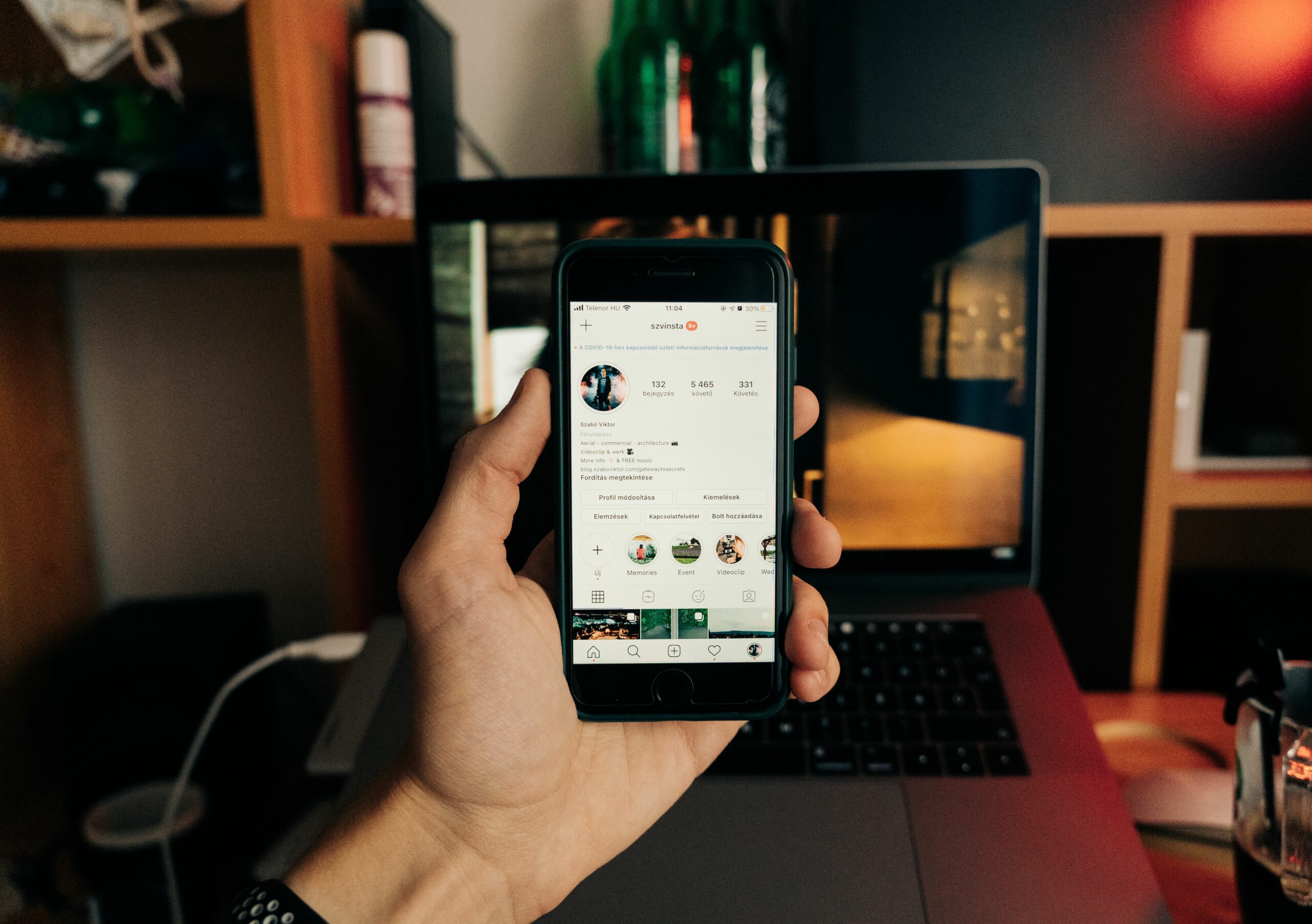

Instagram bio ideas are only useful if they help a real person understand who you are, what you do, and what to do next in under five seconds. Your bio is not just decoration – it is a conversion surface that affects follows, link clicks, DMs, and brand inquiries. The good news is you do not need to be clever to be effective; you need to be specific. In this guide, you will get a repeatable framework, plug and play templates, and a simple way to measure whether your bio is working. Along the way, we will also define common marketing terms brands use so your profile reads like a professional storefront, not a vague mood board.
Instagram bio ideas that start with a clear positioning statement
The fastest way to improve your bio is to lead with positioning: who you help and what outcome you deliver. Positioning beats personality because it reduces friction for new visitors. If someone cannot tell what you post in a glance, they will not follow, even if your content is strong. Start by writing one sentence that answers three questions: niche, audience, and promise. Then add proof or differentiation in a second line, and finish with a single call to action.
- Niche: What topic do you cover consistently? (Example: budget travel, home workouts, skincare science)
- Audience: Who is it for? (Example: busy parents, first time founders, students)
- Promise: What result do they get? (Example: save money, build strength, fix acne)
Takeaway: If you can remove one word from your positioning line without losing meaning, it is probably too generic. Replace it with a concrete descriptor like “plant based meal prep” instead of “healthy food.”
Bio anatomy: the 6 parts that drive clicks and inquiries

Most high performing bios follow the same structure, even when the tone changes. Think of your bio as a mini landing page with limited space. Each line should earn its place by answering a visitor question. If you are a creator, your goal is usually follows and link clicks. If you are a brand or agency profile, your goal is often DMs, email leads, or credibility for partnerships.
- Name field: Use searchable keywords, not only a nickname. This field is indexed in Instagram search.
- Positioning line: One sentence that says what you do and for whom.
- Proof: Numbers, credentials, or recognizable work. Keep it verifiable.
- Content promise: What followers can expect weekly.
- Call to action: One action only: “Download,” “Book,” “Shop,” “Watch,” or “DM.”
- Link strategy: One link that matches the CTA. Avoid sending people to a generic homepage.
Takeaway: If you have multiple CTAs, pick the one that matters most this month. You can rotate CTAs based on campaigns, launches, or seasonal content.
Define the terms brands care about (and how to reflect them in your bio)
Creators often lose deals because their profile does not signal professionalism. Brands scan for clarity, fit, and basic measurement readiness. That is why it helps to understand the language used in briefs and negotiations. You do not need to cram these terms into your bio, but you should know what they mean so you can write a bio that supports your business goals and makes it easy to contact you.
- Reach: Unique accounts that saw your content.
- Impressions: Total views, including repeat views by the same person.
- Engagement rate: Engagements divided by reach or followers (brands may specify which). A simple version is (likes + comments + saves + shares) / followers.
- CPM: Cost per thousand impressions. Formula: cost / (impressions / 1000).
- CPV: Cost per view, often used for Reels or video. Formula: cost / views.
- CPA: Cost per acquisition or action, like a sale or signup. Formula: cost / conversions.
- Whitelisting: A brand runs ads through your handle (often via Meta permissions). This is different from you posting organically.
- Usage rights: Permission for a brand to reuse your content on their channels or ads, usually for a set time and region.
- Exclusivity: Agreement not to work with competing brands for a period of time.
How to reflect this in your bio: Add a “collabs” contact line, specify your niche tightly, and include a link that can host a media kit or rate card. For example, “Collabs: email@domain.com” plus “UGC for clean beauty brands” signals fit and makes outreach easy. For more on how brands evaluate creators, browse recent analysis on the InfluencerDB Blog and mirror the language brands use when they describe outcomes.
Step by step: write your bio in 15 minutes (with decision rules)
This process works whether you are a creator, a small business, or a brand account. Set a timer and write messy first, then tighten. The key is to make decisions, not to brainstorm forever. Use the rules below to keep your bio focused and readable.
- Pick one primary goal: follows, link clicks, DMs, or email leads. Do not pick two.
- Write your positioning line: “I help [audience] do [outcome] with [method].”
- Add one proof point: a credential, a result, or a recognizable feature. Keep it honest.
- Choose one CTA: match it to your goal. If your goal is deals, your CTA can be “Email for collabs.”
- Align your link: the link destination should complete the CTA in one click.
- Scan for fluff: remove vague words like “passionate,” “lover,” “dreamer,” unless your account is purely personal.
Decision rules: If you cannot explain your niche without using the word “and” twice, you are covering too much. If your CTA requires a visitor to think about which link to tap, it is too complex. If your proof point is not verifiable, replace it with a content promise like “3 Reels weekly.”
Example calculation for a media kit line: If a brand asks for CPM and you typically get 80,000 impressions per Reel, a $800 Reel fee implies CPM = 800 / (80000/1000) = $10. That number can guide negotiations, even if you do not display it publicly.
Templates and examples you can copy (by creator type)
Templates help because they force structure. Still, you should swap in specifics so you do not sound like everyone else. Keep each line short enough to scan on a phone. Also, avoid stacking too many emojis; they can reduce clarity and make your bio harder to translate for international audiences.
| Creator type | Bio template | CTA that fits |
|---|---|---|
| Fitness coach | I help busy professionals build strength in 30 minutes a day. Evidence based training + simple meals. New workouts weekly. | Book a consult |
| Beauty creator | Skincare reviews for sensitive skin. Ingredient breakdowns, routine fixes, before after tests. UGC for clean beauty. | Email for collabs |
| Food creator | Weeknight dinners that taste expensive. 20 to 40 minute recipes, grocery lists, leftovers that work. | Get the recipe pack |
| Travel creator | Budget travel guides for first timers. Routes, costs, safety notes, and what is actually worth it. | Download the itinerary |
| Photographer | Portraits with clean light and real emotion. BTS tips, editing breakdowns, client stories. | Inquire for shoots |
| Small business | Handmade candles with bold scents. Small batches, fast shipping, limited drops. | Shop the drop |
Takeaway: After you paste a template, replace at least three generic words with measurable specifics: frequency, audience, or method. That is usually enough to sound original.
Keyword and search optimization: the name field, niche terms, and readability
Instagram search behavior is simple: people type what they want. Your job is to show up when they do. The most important field is the “Name” line, not your handle. Add one or two niche keywords that match how people search, then keep the rest of the bio readable. Keyword stuffing can backfire because it makes you look spammy and reduces comprehension.
- Name field examples: “Maya Chen – Budget Travel,” “Jordan Lee – Acne Skincare,” “Sam Patel – Home Workouts.”
- Bio keyword placement: Use one niche phrase in the positioning line and one in the proof or content promise line.
- Readability check: If you read it out loud and run out of breath, shorten it.
For platform specific guidance on profiles and account settings, reference Meta’s official help documentation in your own research. A good starting point is the Instagram Help Center, especially if you are troubleshooting link behavior or professional account features.
Takeaway: Use keywords where humans expect them, not everywhere. One strong keyword in the name field plus one in the first bio line is usually enough.
Link in bio strategy: one destination, clean tracking, and proof
Your link is the bridge between attention and action. If you send people to a page with too many choices, you lose them. Instead, match the link to your current CTA and keep the next step obvious. If you use a link hub, put the primary button first and label it with the same words as your CTA.
| Goal | Best link destination | What to include on the page | Simple tracking |
|---|---|---|---|
| Brand deals | Media kit landing page | Niche, audience, top metrics, past partners, packages, contact | UTM tag on the bio link |
| Sales | Single product or collection page | Best seller, social proof, shipping info, FAQ | Discount code unique to IG |
| Email growth | Lead magnet opt in page | One benefit, preview, signup form, delivery promise | Form source field set to Instagram |
| Bookings | Scheduling page | Services, pricing range, availability, intake questions | Calendar link parameters |
Formula tip: If you want to estimate bio conversion rate, use: bio link clicks / profile visits. For example, 300 clicks from 6,000 profile visits is a 5% rate. Improve it by tightening your CTA and matching the link destination to that promise.
When you work with brands, you may be asked to follow disclosure rules for sponsored content. Even though your bio is not the main disclosure surface, understanding the standards helps you avoid problems later. Review the FTC Disclosures 101 for social media influencers to align your workflow with expectations.
Takeaway: One link can outperform five if it completes a single promise quickly. Rotate the destination monthly based on your priority.
Common mistakes (and quick fixes you can do today)
Most weak bios fail for predictable reasons. They try to sound interesting instead of being useful. They also hide the action step, which is a problem because visitors are impatient. Fixing these issues usually takes less than an hour, including updating your link destination.
- Mistake: No niche clarity. Fix: Add one specific topic and one audience descriptor.
- Mistake: Multiple CTAs. Fix: Pick one action and delete the rest for now.
- Mistake: Proof that is vague. Fix: Replace “featured in many places” with one named feature or a content cadence.
- Mistake: Contact is hard to find. Fix: Add an email line or enable the email button.
- Mistake: Link does not match the bio. Fix: Update the landing page headline to mirror your CTA words.
Takeaway: If you only do one thing, make your first line and your CTA match. Consistency reduces drop off.
Best practices: a monthly bio audit checklist for creators and brands
Your bio is not set and forget. It should change when your content pillars change, when you launch something, or when you shift the type of partnerships you want. A monthly audit keeps it aligned with your goals and prevents outdated links from quietly killing conversions. Treat it like a storefront sign: small tweaks can have outsized impact.
- Check that your positioning line matches your last 12 posts.
- Confirm your CTA matches your link destination exactly.
- Update proof points: recent results, new credentials, or current offers.
- Review contact options: email button, DM keyword, or booking link.
- Scan for readability: remove filler words and keep lines short.
Takeaway: Keep a simple change log. If you change your bio, note the date and your profile visits and link clicks for the next seven days so you can learn what moved the needle.
Mini swipe file: 25 bio line starters (mix and match)
Use these starters to draft your first two lines quickly. Then, add one proof point and one CTA. The goal is not to copy a line perfectly; it is to get to specificity faster. If a line feels too broad, narrow it by adding an audience, a format, or a constraint like “under $50” or “for beginners.”
- I help [audience] learn [skill] without [pain].
- [Topic] tips that fit into a real schedule.
- Weekly breakdowns of [topic] you can actually use.
- Honest reviews of [product category] for [audience].
- Simple [topic] systems – less overwhelm, more results.
- [Format] tutorials: step by step, no fluff.
- From [starting point] to [outcome] – here is how.
- UGC for [industry] brands: [style] content that converts.
- Behind the scenes of [job] – tools, process, lessons.
- Recipes for people who hate complicated recipes.
- Travel guides with costs, routes, and mistakes to avoid.
- Evidence based takes on [topic].
- Beginner friendly [topic] – start here.
- Minimalist [topic] for small spaces.
- Affordable [topic] finds under [$].
- [City] local spots, new openings, and weekend plans.
- Short workouts, strong results.
- Style formulas you can repeat.
- Career advice for [role] – resumes, interviews, growth.
- Daily practice for [skill] in 10 minutes.
- Real talk about [topic] – what works, what does not.
- Productivity for people who get distracted.
- Learning [language] with practical phrases.
- Home upgrades that look expensive but are not.
- Data backed marketing notes for [audience].
Final takeaway: A strong bio is a promise plus a path. Make the promise specific, then make the path one tap or one message. If you want more data driven guidance on how brands evaluate creators and campaigns, keep an eye on the and update your bio to match the opportunities you want next.