

Social media strategy nonprofits needs to do more than earn likes in 2025 – it must reliably drive donations, volunteer signups, event attendance, and trust. The challenge is that most nonprofit teams run lean, so every post has an opportunity cost. This update gives you a practical system: define outcomes, pick the right metrics, build a repeatable content engine, and report results in a way that boards and funders understand. Along the way, you will see simple formulas, decision rules, and examples you can copy.
Social media strategy nonprofits starts with outcomes and a measurement map
Before you touch a content calendar, decide what success means in plain language: “increase monthly donors,” “fill 40 volunteer shifts,” or “get 200 people to a screening event.” Next, translate that into a measurement map that connects platform metrics to real-world actions. This is where many teams get stuck, because reach and impressions feel tangible while donations happen elsewhere. The fix is to define a small set of KPIs that ladder up to your outcome, then track them consistently for 90 days. As a rule, if a metric does not change a decision, it does not belong in your weekly report.
Core terms to define early (and use consistently):
- Reach – unique people who saw your content.
- Impressions – total times content was shown (includes repeats).
- Engagement rate – engagements divided by reach or impressions (pick one definition and stick to it).
- CPM – cost per 1,000 impressions. Formula: CPM = (Spend / Impressions) x 1000.
- CPV – cost per video view. Formula: CPV = Spend / Views.
- CPA – cost per action (donation, signup, registration). Formula: CPA = Spend / Conversions.
- Whitelisting – running ads through a creator or partner account (often called branded content ads) to use their handle and social proof.
- Usage rights – permission to reuse photos or videos in your channels, email, ads, or website.
- Exclusivity – agreement that a creator will not work with similar organizations or opposing causes for a set period.
Decision rule: choose 1 primary KPI per campaign (example: donations) and 2 supporting KPIs (example: landing page views and email signups). Everything else is diagnostic.
| Nonprofit goal | Primary KPI | Supporting KPIs | What to change if it is low |
|---|---|---|---|
| Grow monthly donors | Monthly donor conversions | Landing page views, conversion rate | Test new CTA, simplify form, add proof points |
| Recruit volunteers | Volunteer applications | Link clicks, saves | Clarify time commitment, show day in the life |
| Event attendance | Registrations | Video completion rate, shares | Lead with agenda, add urgency, pin key info |
| Awareness in a region | Reach in target area | Follower growth, profile visits | Improve hooks, local partners, post timing |
Build a 2025 content system: pillars, proof, and a weekly cadence
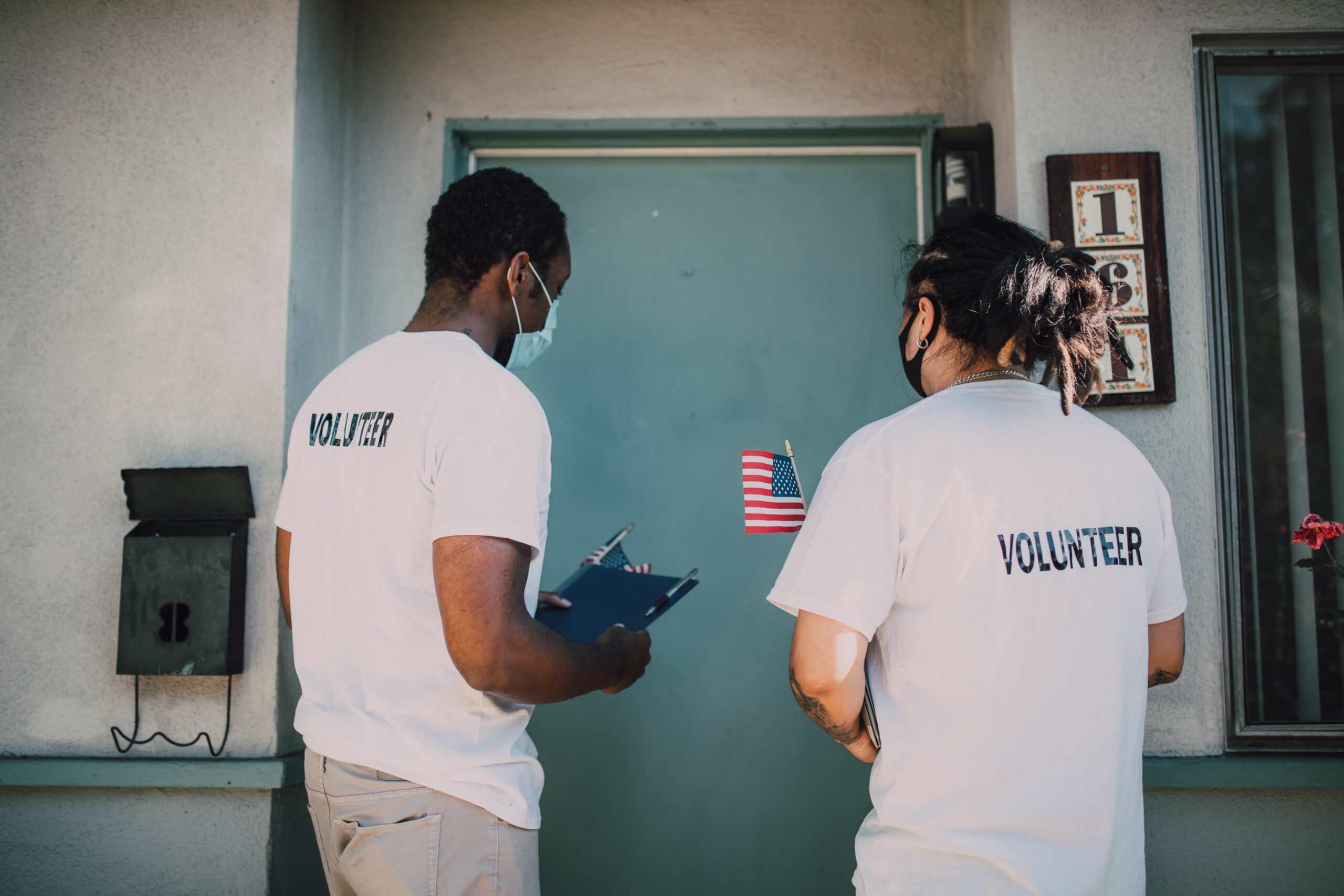
A strong plan is less about “posting more” and more about posting with intent. Start by choosing 3 to 5 content pillars that reflect what your organization actually does and what supporters care about. Then assign a format to each pillar so production stays predictable. For example, impact stories might be short vertical video, while policy updates might be carousels with one clear takeaway per slide. Finally, lock a weekly cadence your team can sustain without burning out.
Recommended nonprofit content pillars (pick 3 to 5):
- Impact – before and after, outcomes, beneficiary stories (with consent).
- Behind the scenes – staff, volunteers, operations, how funds are used.
- Education – explain the problem, myths vs facts, what works.
- Advocacy – action steps, calls to contact representatives, petitions.
- Community – partner spotlights, UGC, supporter shoutouts.
Concrete takeaway: create a “proof bank” folder with 30 assets you can pull into posts: stats with sources, testimonials, photos, short clips, and FAQs. This reduces last-minute scrambling and keeps messaging consistent.
| Pillar | Best formats | Hook ideas | CTA that fits |
|---|---|---|---|
| Impact | Reels, Shorts, TikTok | “What $25 does in 24 hours” | Donate, become a monthly donor |
| Behind the scenes | Stories, photo posts | “Here is where your donation goes” | Follow, share, volunteer |
| Education | Carousels, explainers | “3 myths about homelessness” | Save, subscribe to newsletter |
| Advocacy | Carousels, Lives | “This vote is next week – here is why it matters” | Call, sign, register |
Platform choices in 2025: pick fewer channels and win with formats
Nonprofits often feel pressure to be everywhere, but focus beats presence. Choose channels based on where your supporters already spend time and what formats your team can produce. Vertical video remains the most efficient way to earn reach, while email capture is still the most reliable way to convert. Therefore, treat social as the top of the funnel and build clear paths to owned channels. If you need a reality check on what is working across the industry, keep an eye on practical breakdowns in the InfluencerDB.net blog and apply the same testing discipline to your nonprofit content.
Quick selection guide:
- Instagram – strong for community, Stories, Reels, and fundraising stickers in some regions.
- TikTok – discovery engine for storytelling and education, especially with creators.
- YouTube – best long-term search value; Shorts can feed the channel.
- LinkedIn – effective for corporate partners, grants, and hiring volunteers with professional skills.
Concrete takeaway: commit to 2 primary platforms for 90 days. Use a third platform only for repurposing, not original production.
Influencers and partners: a nonprofit-friendly collaboration model
Creators can help nonprofits reach new audiences quickly, but the partnership has to be structured. Start with mission fit and audience overlap, then decide what you can offer: a fee, a donation in their name, exclusive access, or co-created content. In 2025, many creators expect clear usage rights and a defined posting schedule, even for cause work. You will also want to plan for whitelisting if you intend to put paid spend behind a creator post, because that changes approvals and permissions.
How to audit a creator in 15 minutes:
- Scan the last 30 posts for tone, values, and any risky topics.
- Check consistency: do they post regularly, and do comments look authentic?
- Look for audience signals: are commenters in your geography or relevant communities?
- Ask for basic performance screenshots: reach, saves, shares, and audience location.
- Confirm deliverables in writing: number of posts, format, timeline, and review steps.
Pricing and value terms (plain-English version): CPM and CPV help you compare awareness-focused creator content to ads, while CPA is the cleanest way to judge conversion campaigns. Engagement rate is useful, but only when paired with reach and click behavior. Usage rights determine whether you can reuse the content in ads or email, and exclusivity affects price because it limits the creator’s future work.
Example calculation: You pay $600 for a creator Reel that gets 40,000 impressions. CPM = (600 / 40,000) x 1000 = $15. If you also run $200 in whitelisted spend and generate 20 donations, CPA = (600 + 200) / 20 = $40 per donation. Now you can compare that to your usual donation CPA from paid social.
Campaign framework: brief, production, launch, and reporting
A repeatable campaign framework prevents chaos and makes results comparable across quarters. Write a one-page brief that anyone can understand, including a single audience insight and one primary action you want people to take. Then build creative around one clear promise: what supporters get by acting, whether it is impact, belonging, or urgency. During launch, monitor early signals quickly, because the first 48 hours often tell you whether the hook and CTA are working. Afterward, report outcomes, not activity, and include what you will change next time.
| Phase | Tasks | Owner | Deliverables |
|---|---|---|---|
| Brief | Define goal, audience, offer, KPI, constraints | Campaign lead | One-page brief, tracking plan |
| Production | Script hooks, gather proof, capture video, design assets | Content owner | 3 to 6 creatives per platform |
| Launch | Publish, pin key post, respond to comments, adjust CTAs | Community manager | Live posts, comment moderation log |
| Optimize | Test new hooks, swap thumbnails, refine landing page | Growth owner | Weekly experiment notes |
| Report | Summarize results, insights, next actions | Analyst or lead | One-slide summary, KPI table |
Concrete takeaway: for every campaign, pre-write two backup hooks and two backup CTAs. If performance is soft, you can pivot without re-shooting everything.
Compliance, consent, and trust: protect the mission while you grow
Nonprofits trade on trust, so your content standards need to be stricter than a typical brand. Get written consent for beneficiary stories, avoid revealing identifying details when safety is a concern, and keep financial claims precise. If you work with creators, require clear disclosures so supporters understand when content is sponsored or incentivized. The Federal Trade Commission lays out disclosure expectations in its endorsement guidance, which is worth bookmarking for your team: FTC endorsements and influencer marketing guidance.
Concrete takeaway checklist:
- Use release forms for photos and video, including usage rights scope and duration.
- Document how donations are used, and link to audited reports when possible.
- For creator posts, require “Paid partnership” tools where available plus clear language in captions.
- Keep an internal list of restricted topics and safety rules for field content.
Common mistakes to avoid (and what to do instead)
Most nonprofit social problems are not creative problems – they are system problems. Teams post inconsistently, chase vanity metrics, and forget to build a path from attention to action. Another frequent issue is asking for donations too often without earning attention through education and proof. Finally, many organizations do not repurpose their best work, even though repetition is how messages stick. Fixing these issues does not require a bigger budget, just tighter decisions.
- Mistake: measuring success by follower growth alone. Do instead: track conversions and conversion rate by campaign.
- Mistake: posting “awareness” content with no next step. Do instead: add a single CTA and a landing page built for mobile.
- Mistake: inconsistent storytelling. Do instead: use 3 to 5 pillars and a weekly cadence you can sustain.
- Mistake: unclear creator agreements. Do instead: define deliverables, usage rights, and exclusivity in writing.
Best practices that reliably improve results in 2025
Once the basics are in place, small improvements compound quickly. Start with creative testing: change one variable at a time, such as the first three seconds of a video or the headline on a carousel. Next, tighten distribution by reposting winners, pinning key posts, and turning high-performing organic content into paid tests when budget allows. Also, build community signals by replying to comments with substance, not just thanks, because discussion increases reach and trust. If you need platform-specific rules, official documentation is often clearer than hot takes, such as YouTube Creator Academy guidance for building sustainable channel habits.
Concrete best-practice checklist:
- Write hooks first, then shoot content to serve the hook.
- Use one message per post, and repeat it across formats for two weeks.
- Add proof points: numbers, third-party sources, and real stories with consent.
- Design for saves and shares: templates, checklists, and “what to do next” steps.
- Report monthly with a single page: goal, KPI trend, top content, next experiments.
A simple 30-day rollout plan you can start this week
This final section turns the strategy into a calendar you can execute with a small team. Week 1 is for setup: define KPIs, build your proof bank, and draft two campaign briefs. Week 2 is for production: create 8 to 12 posts across your pillars, with at least four short videos. Week 3 is for launch and learning: publish consistently, watch retention and clicks, and adjust hooks quickly. Week 4 is for reporting and iteration: document what worked, repurpose the winners, and plan the next month based on evidence.
30-day steps:
- Day 1 to 3: choose 1 outcome, 1 primary KPI, and 2 supporting KPIs.
- Day 4 to 7: build a proof bank of 30 assets and write 10 hooks.
- Week 2: produce content in batches and schedule posts for two weeks.
- Week 3: run two micro-tests (hook A vs hook B, CTA A vs CTA B).
- Week 4: calculate CPM, CPV, and CPA where relevant, then decide what to scale.
Final takeaway: if you can only do one thing, tighten the link between content and action. Every post should either build trust, teach something useful, or move a supporter one step closer to donating or showing up.