
TikTok marketing strategies work best when you treat the platform like a performance channel – not a lottery ticket. The algorithm rewards watch time, relevance, and repeatable creative patterns, which means you can build a system that reliably generates reach and sales. In this guide, you will get a practical framework for planning, creator selection, measurement, and optimization. You will also learn the core terms marketers use so you can brief creators clearly and negotiate without confusion. Finally, you will leave with checklists, tables, and example calculations you can copy into your next campaign.
TikTok marketing strategies start with clear goals and definitions
Before you write a brief or DM a creator, define what success looks like and align on the language. Otherwise, teams argue about results because they tracked different metrics. Use the terms below in your kickoff doc and require creators and agencies to mirror them in reporting. That single step prevents most mid-campaign confusion. As a rule, pick one primary KPI and two supporting KPIs per campaign phase. Then, map each KPI to a tracking method you can actually implement.
- Reach – unique accounts that saw the content at least once.
- Impressions – total views, including multiple views by the same person.
- Engagement rate (ER) – engagements divided by views or reach (define which). A common view-based formula is: ER = (likes + comments + shares + saves) / views.
- CPM – cost per 1,000 impressions. Formula: CPM = (spend / impressions) x 1000.
- CPV – cost per view. Formula: CPV = spend / views.
- CPA – cost per acquisition (purchase, lead, install). Formula: CPA = spend / conversions.
- Whitelisting – creator grants permission for a brand to run ads through the creator handle (often called Spark Ads authorization on TikTok).
- Usage rights – permission to reuse creator content on brand channels, ads, email, or retail screens for a defined time and region.
- Exclusivity – creator agrees not to work with competitors for a defined period and category scope.
Concrete takeaway: write a one-page measurement note that defines ER (views or reach), attribution window, and what counts as a conversion. If you need platform definitions, TikTok’s official business documentation is the cleanest reference point: TikTok for Business.
Build a campaign plan that matches TikTok behavior
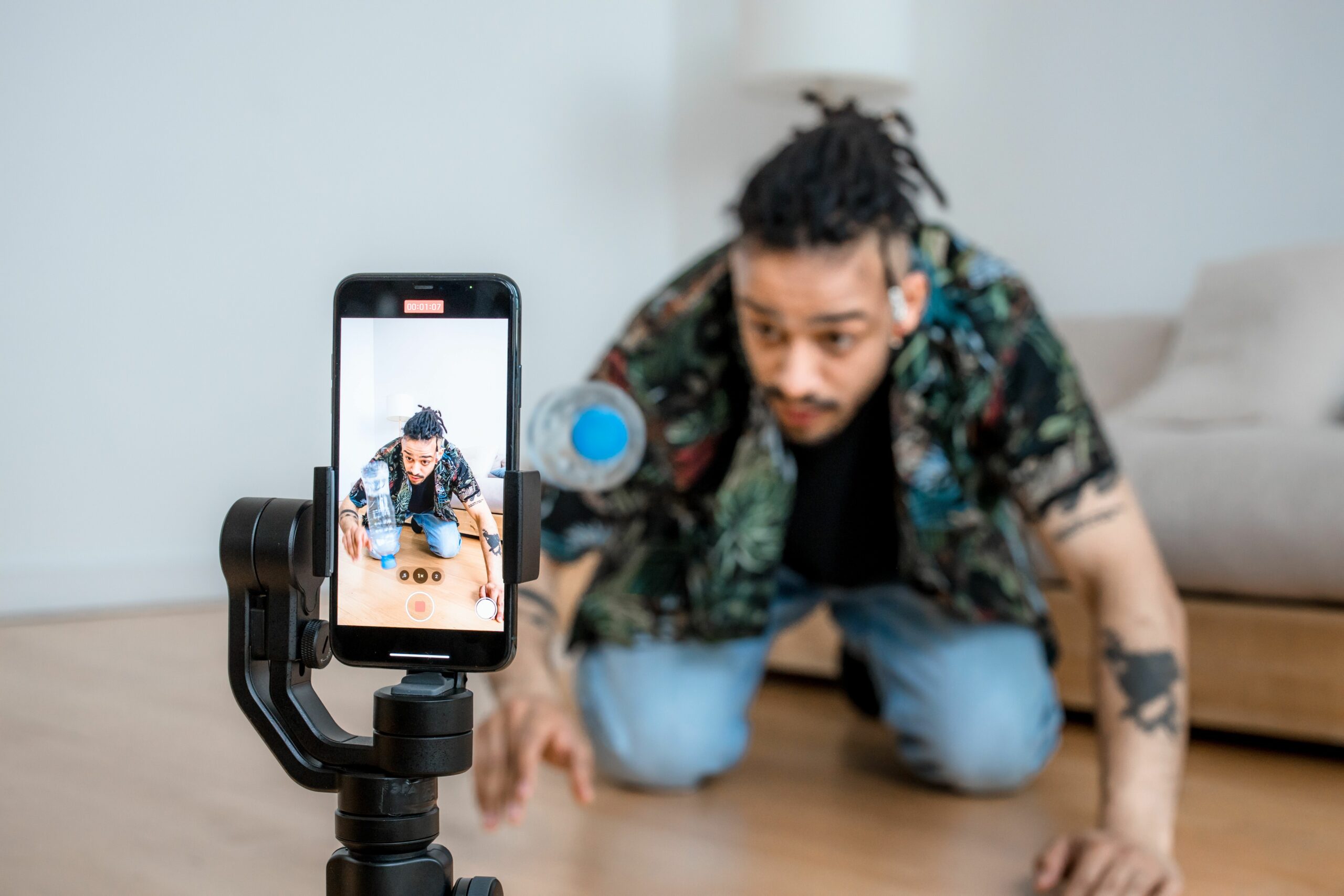
TikTok is not a “post and pray” platform because distribution is iterative. You publish, learn from retention and comments, then publish again with tighter hooks and clearer payoffs. Therefore, plan in sprints: a testing sprint to find winning angles, then a scaling sprint to repeat what works with more creators and paid amplification. Keep your plan simple enough that a creator can execute it without a call. If your brief reads like a brand manifesto, you will get safe content that underperforms.
Use this decision rule to pick your campaign type: if you need awareness fast, optimize for reach and video views; if you need sales, optimize for click-through and conversion events; if you need proof, optimize for saves, comments, and UGC volume. Then, choose 3 to 5 creative “lanes” that fit TikTok’s native patterns, such as problem-solution, before-after, myth-busting, or a quick tutorial. Each lane should have a clear hook, a product moment, and a call to action that feels like advice, not an ad.
| Phase | Primary KPI | Creative goal | What to ship | Owner |
|---|---|---|---|---|
| Test (Week 1) | 3-second hold rate | Find hooks that stop the scroll | 8 to 12 videos across 3 lanes | Creators + brand editor |
| Validate (Week 2) | Average watch time | Improve retention and clarity | 6 to 8 iterations of top hooks | Creators + analyst |
| Convert (Weeks 3 to 4) | CPA | Turn attention into action | 4 to 6 conversion-focused videos + landing page tweaks | Performance marketer |
| Scale (Month 2) | Blended ROAS | Repeat winners with more volume | Creator whitelisting + paid amplification | Paid social lead |
Concrete takeaway: in your sprint plan, commit to a minimum number of iterations per winning hook. On TikTok, the second and third version often outperform the first because the creator tightens pacing and the audience learns what to expect.
Creator selection: how to pick accounts that can actually move metrics
Follower count is a weak predictor of performance on TikTok because distribution is video-led. Instead, you want creators with repeatable formats, strong audience fit, and proof they can land a message quickly. Start by defining your “audience truth” in one sentence, such as “first-time runners training for a 5K who want injury-proof routines.” Then, search for creators whose comment sections match that truth. Comments are the fastest qualitative signal you can audit without tools.
Next, evaluate creators using a simple scorecard. Look at the last 15 videos and note: median views (not the best view), average watch time if shared, frequency of saves and shares, and whether the creator can make branded moments feel native. Also check brand safety: do they post controversial topics, risky claims, or inconsistent messaging? Finally, confirm logistics: turnaround time, willingness to do whitelisting, and whether they can deliver raw files for editing.
- Fit: audience overlap and tone match.
- Format: a repeatable series style you can brief into.
- Proof: consistent median views and active comments.
- Flexibility: openness to iterations and paid usage.
Concrete takeaway: ask for a screenshot of TikTok analytics for the last 28 days, including top territories and age bands. If the creator cannot provide it, treat that as a risk signal and reduce your upfront commitment.
For more creator research and campaign planning ideas, keep a running swipe file from the InfluencerDB Blog and add examples of hooks, captions, and comment prompts that consistently trigger replies.
Pricing, usage rights, and negotiation: a practical way to avoid overpaying
TikTok pricing varies widely because you are buying creative skill and distribution potential, not guaranteed impressions. To negotiate well, separate the components: content creation fee, posting fee (if posted on creator handle), usage rights, whitelisting access, and exclusivity. When you bundle everything into one number, you lose leverage and creators feel underpaid for rights that can be valuable. Instead, itemize and decide what you truly need for this campaign phase.
Use benchmarks as guardrails, then adjust based on creator consistency and deliverable complexity. A creator who can produce multiple angles quickly is often more valuable than a creator with one viral hit. Also, remember that whitelisting can extend the life of a good video because you can put paid behind it and target lookalikes. That is why many brands pay an additional monthly fee for whitelisting access and ad usage.
| Deliverable component | What it includes | Common pricing approach | Negotiation tip |
|---|---|---|---|
| Content creation | Scripting, filming, editing, 1 to 2 revisions | Flat fee per video | Offer a bundle for 3 videos to get iteration |
| Posting on creator handle | Publishing + community management for 24 to 48 hours | Add-on fee | Ask for a posting window, not an exact minute |
| Usage rights | Brand reposting and paid ads usage for X months | Percentage of creation fee or monthly license | Limit to paid social only if you do not need full omnichannel |
| Whitelisting | Spark Ads authorization and handle-based ads | Monthly fee | Start with 30 days and extend only if CPA is strong |
| Exclusivity | No competitor work in a category for X weeks | Premium add-on | Define category narrowly to reduce cost |
Example calculation: you pay $1,500 for a creator post and spend $2,500 boosting it via whitelisting, total spend $4,000. The video generates 800,000 impressions and 120 purchases. Your CPM is (4000 / 800000) x 1000 = $5. Your CPA is 4000 / 120 = $33.33. Concrete takeaway: negotiate whitelisting as a separate line item so you can pause it if CPA rises.
Creative that converts: hooks, structure, and iteration rules
On TikTok, creative is targeting. The first two seconds decide whether you get a chance to sell, so your hook must be specific and audience-coded. Avoid vague openings like “You guys asked for this” unless the creator has a series where that line is proven. Instead, lead with a problem, a surprising claim, or a visual payoff. Then, deliver the value quickly and show the product in use, not as a static beauty shot.
Use a simple structure that creators can repeat without sounding scripted: Hook – Proof – How-to – Offer. Proof can be a quick demo, a before-after, a quote from comments, or a measurable result. The how-to should be short enough that viewers can remember it, which increases saves and shares. Finally, the offer should feel like a next step, such as “Try this routine for a week” or “Use the link for the starter kit.”
- Hook examples: “If your concealer creases by noon, do this first.” “Three mistakes new runners make in week one.”
- Iteration rule: keep the same hook, change the proof. Or keep the proof, change the hook. Do not change everything at once.
- Comment prompt: ask a binary question that invites replies, such as “Team gel or cream?”
Concrete takeaway: require each creator to deliver two hook options per concept. You can test both hooks with the same body footage, which saves production time and speeds learning.
If you want a grounded view of what tends to work across industries, this overview from HubSpot’s TikTok marketing guide is a useful cross-check, especially for content formats and cadence.
Measurement and reporting: what to track, how to attribute, and when to scale
Measurement is where many TikTok programs break down because teams mix platform metrics with business outcomes. Start with a clean reporting sheet that separates: creative signals (retention, shares, saves), traffic signals (CTR, landing page views), and conversion signals (purchases, leads). Then, decide how you will attribute conversions: last-click, view-through, or blended. For influencer work, blended measurement is often more honest because TikTok can create demand that converts later through branded search or email.
Here is a practical weekly reporting routine: pull creator-level metrics, compute CPM and CPV for any paid spend, and compare performance by creative lane. Next, read the top 50 comments on the best and worst videos to identify message clarity issues. After that, decide whether to iterate, scale, or stop using a simple threshold. For example, if a video’s CPA is 20 percent below target after 3 days of spend, scale budget by 20 to 30 percent and keep creative constant. If CPA is 30 percent above target, pause and test a new hook.
| Metric | What it tells you | Simple benchmark to watch | Action if weak |
|---|---|---|---|
| 3-second hold rate | Hook strength | Higher is better; compare across your own videos | Rewrite first line, add visual payoff in frame 1 |
| Average watch time | Pacing and clarity | Rising over iterations | Cut intro, add captions, tighten steps |
| Shares and saves | Utility and social value | Spikes signal a scalable concept | Add a checklist, a “do this, not that” moment |
| CTR | Intent to learn more | Stable across creators | Clarify offer, show outcome earlier |
| CPA | Business efficiency | At or below your target | Change landing page, test new angle, adjust targeting |
Concrete takeaway: do not compare your CPM or ER to random internet averages. Compare lanes and creators inside your own program, then scale what beats your baseline.
Common mistakes that quietly kill TikTok performance
Most TikTok failures look like “the algorithm hates us,” but the root cause is usually controllable. One common mistake is over-branding the first seconds with logos and product shots, which signals “ad” before viewers get value. Another is writing briefs that force creators into unnatural scripts, which reduces authenticity and comment volume. Teams also misread virality by chasing one spike instead of building a repeatable series. Finally, many brands skip rights and whitelisting terms until after a video hits, then scramble and overpay.
- Measuring only likes instead of retention and saves.
- Changing hook, edit style, and offer all at once, which hides what caused the lift.
- Using discount codes as the only attribution method, which undercounts view-through impact.
- Ignoring comment sentiment, especially confusion about how to use the product.
Concrete takeaway: add a “first 2 seconds” review step to approvals. If the hook does not promise a clear payoff, send it back before filming.
Best practices: a repeatable playbook you can run every month
The fastest way to improve results is to standardize what you can and leave room for creator instincts where it matters. Build a monthly cadence: recruit new creators, refresh creative lanes, and keep a small always-on budget for boosting proven posts. In addition, keep a library of top-performing hooks and the exact on-screen text used, because small wording changes can shift retention. When you find a winner, scale with more creators who can execute the same lane in their own voice. That approach creates consistency without turning TikTok into a factory.
- Briefing: one page, three lanes, two non-negotiables, and examples of “do” and “do not.”
- Creative testing: minimum 10 videos per month, with structured iteration.
- Rights: pre-negotiate usage and whitelisting so you can move fast.
- Measurement: weekly lane review plus a monthly creative retro.
- Compliance: require clear disclosures and review claims for regulated categories.
Concrete takeaway: create a “winning angles” doc that includes the hook, the proof type, the CTA, and the audience segment. Treat it like a product roadmap and update it after every sprint.
For disclosure rules that apply to influencer partnerships, reference the FTC’s endorsement guidance: FTC Endorsements, Influencers, and Reviews. Keep it simple in practice: disclosures should be clear, easy to notice, and placed where viewers will see them without hunting.
A simple 7-step workflow you can copy for your next campaign
If you want one repeatable process, use this workflow and assign an owner to each step. Start with goals and definitions so reporting is clean. Then, select creators using a scorecard and confirm rights before production begins. After that, run a two-week creative sprint to find hooks that hold attention, and only then scale with whitelisting and paid support. Finally, close the loop with a retro that turns learnings into the next month’s brief.
- Set one primary KPI and define ER, reach, and attribution.
- Write three creative lanes with example hooks and proof points.
- Shortlist creators by median views, comment quality, and format consistency.
- Negotiate line items: creation, posting, usage rights, whitelisting, exclusivity.
- Publish 8 to 12 test videos and document retention and comments.
- Iterate winners, then scale spend gradually based on CPA thresholds.
- Run a monthly retro and update your hook library.
Concrete takeaway: treat TikTok like a lab. When you document hooks, proof styles, and offers, you stop guessing and start compounding results.