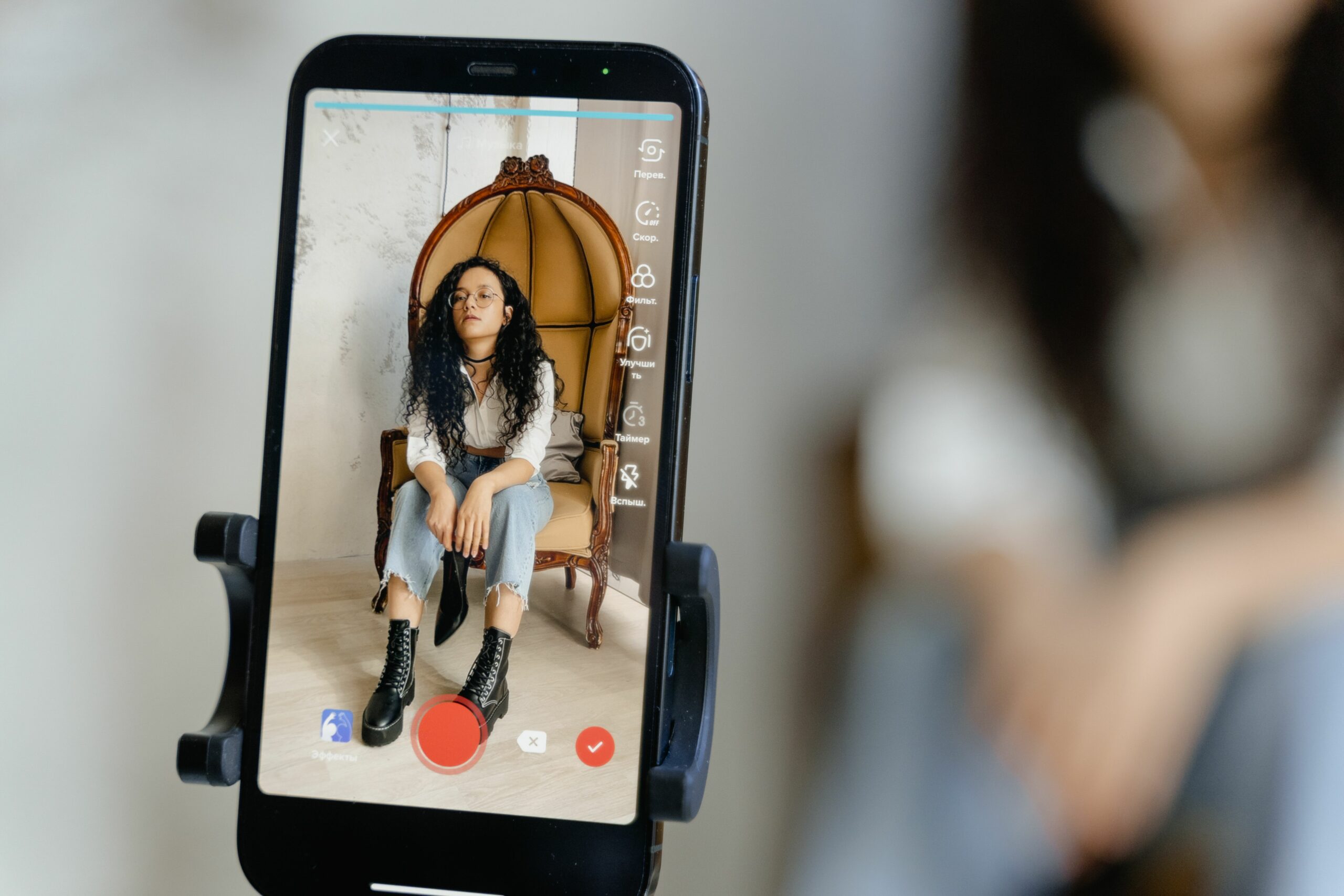

TikTok Creator Next is a TikTok program that helps creators access monetization opportunities and helps brands identify creators who are serious about earning, consistency, and performance. For marketers, it is less about a badge and more about a signal – a creator is likely optimizing content, tracking results, and thinking commercially. Still, you should not treat it as a guarantee of quality. In this guide, you will learn how to evaluate Creator Next creators, estimate fair pricing, build a clean brief, and measure outcomes with simple formulas and decision rules.
What TikTok Creator Next is – and what it is not
TikTok Creator Next is best understood as a pathway into TikTok monetization products and creator tools, not a single pay program with one fixed rate. Depending on region and account status, creators may get access to features like tipping, gifts, subscriptions, and other monetization surfaces TikTok rolls out over time. For brands, the practical takeaway is this: Creator Next can correlate with creators who post frequently, understand audience retention, and treat content like a business. However, it does not automatically mean brand safety, good communication, or strong conversion performance.
Before you build a shortlist, ask two verification questions. First, what monetization features does the creator actually use today, and what portion of their income comes from them? Second, do their recent posts show stable reach, or are they riding one viral spike? A creator can be in the program and still have inconsistent delivery. Conversely, a creator outside the program can outperform on brand outcomes. Use Creator Next as one input, then validate with data.
Key terms you must define before you negotiate
Clear definitions prevent pricing arguments later. Put these terms in your brief and contract so both sides measure success the same way. As a rule, define metrics, attribution windows, and what counts as a deliverable before you talk about money.
- Reach: unique accounts that saw the content at least once.
- Impressions: total views, including repeat views by the same account.
- Engagement rate (ER): engagements divided by views or reach (you must specify which). A common TikTok version is (likes + comments + shares) / views.
- CPM: cost per 1,000 impressions. Formula: CPM = (Cost / Impressions) x 1000.
- CPV: cost per view. Formula: CPV = Cost / Views.
- CPA: cost per acquisition (purchase, signup, install). Formula: CPA = Cost / Conversions.
- Whitelisting: the brand runs ads through the creator’s handle (also called creator licensing). This usually costs extra because it extends distribution and risk.
- Usage rights: permission to reuse the creator’s content on your channels or in ads. Define duration, placements, and territories.
- Exclusivity: the creator agrees not to work with competitors for a period. This is a direct opportunity cost and should be paid.
Concrete takeaway: include a one-line metric definition block in every brief. It reduces back-and-forth and makes reporting comparable across creators.
TikTok Creator Next eligibility signals you can audit fast
TikTok changes requirements and product access over time, so do not rely on screenshots from old threads. Instead, treat eligibility as a set of observable signals you can audit in 15 minutes. Start with consistency, then validate audience fit, and only then discuss commercial terms.
- Posting cadence: look for a steady rhythm over the last 30 to 60 days, not a burst followed by silence.
- Content repeatability: identify 2 to 3 formats the creator can reproduce for your product (series, hooks, demos, comparisons).
- Comment quality: scan comments for purchase intent, questions, and peer tagging. Empty praise is weaker than problem-solving.
- Audience match: ask for top countries, age ranges, and gender split from TikTok analytics screenshots.
- Brand safety: check recent captions, lives, and pinned posts for risky topics or aggressive claims.
To ground your audit in official guidance, reference TikTok’s business resources and ad policies when you set boundaries for claims and restricted categories. Use: TikTok for Business.
Concrete takeaway: require a simple “last 30 days” analytics packet before contracting – top videos, average views, audience geo, and watch time. If a creator cannot provide it quickly, expect delays later.
Pricing TikTok creators: a practical benchmark table
TikTok pricing varies by niche, production quality, and how much distribution you are buying. Still, you need a starting point to avoid random offers. The table below is a planning range for a single organic TikTok post (one video) with basic usage on the creator’s channel only. Treat it as a budget draft, then adjust using performance and rights.
| Follower tier | Typical avg views per post | Planning range per post (USD) | When to pay above range |
|---|---|---|---|
| 10k to 50k | 3k to 25k | $150 to $600 | High-intent niche, strong comments, proven conversions |
| 50k to 200k | 15k to 120k | $600 to $2,500 | Repeatable series format, strong retention, clean brand fit |
| 200k to 1M | 60k to 600k | $2,500 to $12,000 | Category authority, high production, consistent reach |
| 1M+ | 200k to 2M+ | $12,000 to $60,000+ | Mass reach, strong brand lift, multi-platform amplification |
Now convert any quote into comparable metrics. Example: a creator charges $2,000 and averages 80,000 views. CPV = 2000 / 80000 = $0.025. If you expect 120,000 impressions, CPM = (2000 / 120000) x 1000 = $16.67. Concrete takeaway: always compute CPV and CPM for every creator quote so you can compare across tiers and formats.
If you want a deeper library of negotiation and pricing concepts, you can cross-check your approach with other guides on the InfluencerDB blog, especially when you are standardizing rate cards across campaigns.
Deal structure table: deliverables, rights, and add-on fees
Most pricing disputes happen because the brand thinks it is buying a post, while the creator thinks they are selling a post plus creative development plus licensing. Solve that by itemizing add-ons. The table below gives a clean menu you can adapt into your SOW.
| Item | What it includes | Common pricing method | Decision rule |
|---|---|---|---|
| Base TikTok post | One organic video on creator channel | Flat fee | Use as anchor, then add rights separately |
| Hook variants | 2 to 3 alternate first 3 seconds | 10% to 25% of base fee | Buy when you plan to test paid amplification |
| Usage rights | Reuse on brand social, website, email | +20% to +100% depending on term | Define duration and placements in writing |
| Whitelisting | Run ads through creator handle | Monthly fee or % of spend | Only buy if you have an ad budget and tracking |
| Exclusivity | No competitor deals for a period | +25% to +200% depending on category | Pay more for longer terms and broader categories |
| Raw footage | Unedited clips for your editor | Flat add-on | Request only if you have a clear edit plan |
Concrete takeaway: separate “content creation” from “media value.” When you pay for whitelisting or usage rights, you are buying distribution and licensing, not just labor.
A step-by-step framework to evaluate Creator Next creators with numbers
Use a repeatable scoring system so your team does not overpay for hype. This framework works whether you are selecting five micro creators or one large creator for a launch. Keep it simple enough that you can run it in a spreadsheet.
- Collect inputs: last 10 posts views, engagements, average watch time if available, audience geo, and quote.
- Compute baseline ER: ER = (likes + comments + shares) / views. Use the average across the last 10 posts.
- Estimate expected impressions: use median views, not the highest view. Median reduces the “one viral post” bias.
- Calculate CPV and CPM: compare creators on the same units.
- Assign a fit score (1 to 5): based on audience match, content style, and brand safety.
- Assign an execution score (1 to 5): based on responsiveness, past brand work, and clarity in communication.
- Make a decision: prioritize creators with acceptable CPV/CPM plus high fit and execution scores.
Example calculation: Creator A quotes $1,200. Their last 10 posts have a median of 50,000 views and average engagements of 2,500. ER = 2500 / 50000 = 5%. CPV = 1200 / 50000 = $0.024. If your target CPV is under $0.03 for awareness, this is within range. Concrete takeaway: set one threshold metric per campaign objective, then filter creators before you negotiate details.
For measurement standards and definitions that align with broader marketing reporting, it helps to use consistent terminology from industry references like the IAB guidelines. That way, your influencer reporting matches how your media team talks about impressions and viewability.
Brief, tracking, and reporting: what to put in writing
A strong brief protects performance and relationships. Start with a single message, a single action, and a single proof point. Then add guardrails so creators can stay authentic without risking compliance or brand safety. If you are working with multiple creators, standardize the brief template so reporting is comparable.
- Objective: awareness, consideration, or conversion. Tie it to one primary KPI.
- Deliverables: number of posts, length, whether Spark Ads or whitelisting is included, and revision limits.
- Mandatory talking points: 2 to 4 bullets max, written in creator-friendly language.
- Do-not-say list: prohibited claims, competitor mentions, restricted topics.
- Tracking: UTM link, promo code, landing page, attribution window, and what counts as a conversion.
- Reporting: require screenshots or exports within 7 to 14 days after posting.
For disclosure, do not leave it vague. In the US, align your requirements with the FTC’s endorsement guidance: FTC Endorsements and Testimonials. Concrete takeaway: include a disclosure line in the brief and require the creator to place it where it is hard to miss, not buried in hashtags.
Common mistakes brands make with Creator Next creators
These errors show up repeatedly in postmortems. Fixing them usually improves results more than switching creators. Use the list as a pre-flight check before you send contracts.
- Overweighting follower count: median views and audience match matter more than the top-line number.
- Buying broad exclusivity: paying for “no beauty brands” is expensive and often unnecessary. Narrow it to direct competitors.
- Skipping usage terms: assuming you can repost or run ads later creates conflict. Put usage rights in the SOW.
- Confusing views with intent: high views can be entertainment-only. Validate with comment signals and click data.
- Weak creative direction: vague briefs lead to generic content. Provide hooks, scenarios, and product proof points.
Concrete takeaway: if you only have time to fix one thing, standardize your measurement and rights language. It prevents the most expensive surprises.
Best practices: how to get repeatable wins
Repeatable performance comes from systems, not luck. Build a small testing engine, then scale what works. Start with 5 to 10 creators, test two creative angles, and keep your evaluation window consistent.
- Use a two-angle test: one problem-solution demo and one social proof story. Compare CPV and saves/shares.
- Ask for hook options: the first 2 to 3 seconds drive retention. Paying for variants is often worth it.
- Negotiate options, not just price: offer a lower base fee with a performance bonus tied to tracked conversions.
- Build a creator bench: keep notes on turnaround time, revision quality, and results so you can rebook fast.
- Plan for paid amplification: if a post performs, have usage rights and whitelisting terms ready so you can move quickly.
Concrete takeaway: treat each collaboration as a data point. After every campaign, update your benchmarks for CPV, CPM, and CPA by niche and creator tier, then use those numbers to set your next round of offers.
Quick checklist you can copy into your next campaign
Use this as a final pass before you sign. It keeps Creator Next selection grounded in execution and measurement, not vibes.
- Collected last 30 to 60 days analytics screenshots and audience geo
- Computed median views, ER, CPV, and CPM from recent posts
- Confirmed deliverables, revision limits, and posting date in writing
- Defined usage rights, whitelisting terms, and exclusivity scope
- Set tracking (UTMs, codes) and a reporting deadline
- Included disclosure requirements and prohibited claims
If you run this checklist consistently, TikTok Creator Next becomes a useful filter rather than a marketing label. You will select creators faster, negotiate cleaner deals, and report outcomes in a way your finance team can trust.