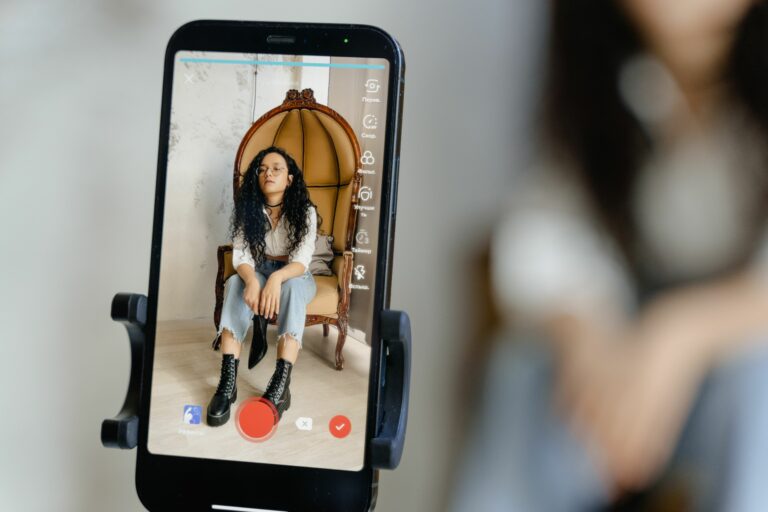

Influencer outreach email templates are only effective when they are built on clear numbers, clean terms, and a fast path to “yes.” In 2025, inboxes are crowded and creators protect their time, so your message has to be specific, respectful, and easy to action. This guide gives you plug and play emails, plus a simple framework to personalize without writing from scratch. Along the way, you will learn the key terms that shape negotiations and how to avoid the mistakes that quietly kill response rates.
Influencer outreach email templates – what to prep before you hit send
Before you copy a single template, gather the details a creator needs to decide quickly. The fastest way to lose a reply is to ask basic questions you could have answered in the first email. Instead, prep a one page “offer snapshot” and keep it consistent across your outreach. If you do not have final numbers yet, include a range and the decision rule you will use to confirm it after a quick call.
- Brand and product: one sentence on what you sell and who it is for.
- Campaign goal: awareness, consideration, or conversions. Tie it to a metric.
- Deliverables: platform, format, count, and rough timing.
- Compensation: flat fee, performance, gifted, or hybrid. Add a budget range when possible.
- Usage rights: whether you want to repost organically, run paid ads, or both.
- Exclusivity: category and duration, or confirm “no exclusivity.”
- Tracking: link, code, or whitelisted ads setup.
- Next step: a simple yes or no question and two time options.
Takeaway: if you cannot summarize the offer in eight bullets, the creator will struggle to understand it in eight seconds.
Key terms creators expect you to understand (with quick formulas)

Creators and managers spot vague marketers fast. Define your terms internally so your emails stay consistent and your negotiation does not drift. Use the definitions below in your brief and, when relevant, in your outreach.
- Reach: unique accounts that saw the content.
- Impressions: total views, including repeat views by the same person.
- Engagement rate (ER): how actively an audience interacts. Common formula: ER = (likes + comments + saves + shares) / impressions or divide by followers, depending on your reporting standard.
- CPM: cost per thousand impressions. CPM = (fee / impressions) x 1000.
- CPV: cost per view, usually for video. CPV = fee / views.
- CPA: cost per acquisition. CPA = fee / purchases (or leads, depending on your goal).
- Whitelisting: creator grants advertiser access to run paid ads through the creator handle (often via Meta or TikTok permissions). This is different from “usage rights.”
- Usage rights: permission to reuse the creator content on your channels and in ads, for a defined period and region.
- Exclusivity: creator agrees not to work with competitors in a category for a period of time.
Example calculation: you offer $1,500 for a Reel and expect 60,000 impressions. CPM = (1500 / 60000) x 1000 = $25. If your internal CPM target is $20, you can either negotiate price, add deliverables, or adjust expected impressions based on past performance.
Takeaway: include one metric target in your outreach, even if it is a range. It signals you know what success looks like.
Personalization framework that scales (without sounding automated)
Personalization is not adding a first name and a compliment. It is showing you understand the creator’s audience and that you picked them for a reason tied to your goal. Use a three layer approach so you can scale to 50 creators without writing 50 essays.
- Layer 1 – Proof you watched: reference one specific post, series, or recurring format.
- Layer 2 – Fit statement: connect their audience to your customer in one sentence.
- Layer 3 – Clear ask: propose a deliverable and a next step.
To keep it consistent, create a short “creator note” field in your outreach sheet with: (a) the post link you referenced, (b) the audience insight, (c) the angle you want. If you need a lightweight system for organizing outreach, briefs, and follow ups, browse the practical guides in the InfluencerDB Blog and adapt the workflow to your team.
Takeaway: one specific reference beats three generic compliments, and it takes less time.
Influencer outreach email templates for 2025 (subject lines + full emails)
Use the templates below as a starting point, then swap in your details. Keep paragraphs short, and keep the ask simple. Also, do not attach large files in the first email. Link to a one page brief or paste the essentials in the body.
Template 1 – Cold outreach to a creator (brand to creator)
Subject line options: Partnership idea for [CreatorName] – [Brand] | Quick paid collab for [Month] | [Brand] x [CreatorName] content idea
Email:
Hi [Name],
I am [YourName] from [Brand]. I reached out because your recent [specific series/post] and the way you explain [topic] fits the audience we serve – [one sentence on who buys your product].
We are planning a [campaign goal] push in [timing] and would love to sponsor [deliverable, ex: 1 TikTok + 3 story frames] featuring [product] with a simple angle: [creative hook].
Budget: [range] for the package, plus product. We would also like [usage rights scope, ex: organic reposting for 90 days] – no exclusivity unless you prefer it.
If you are open, can you share your rate card and typical [platform] performance (views or impressions range)? I can also send a one page brief.
Would [two time options] work for a 10 minute call this week?
Thanks,
[Signature]
Takeaway: put budget and rights in the first email. It filters mismatches and saves days.
Template 2 – Warm outreach after engagement (comment, DM, event)
Subject line options: Following up from [event] – paid collab? | Loved your take on [topic] – quick partnership idea
Email:
Hi [Name],
Great meeting you in the comments on your [post topic] last week. Your point about [specific detail] is exactly what our customers ask about.
We are putting together a small creator group for [month] to drive [goal]. Would you be interested in a paid partnership for [deliverables] with [product]? We can ship samples this week and align on a script outline, but we want your voice to lead.
Our budget range is [range]. We are requesting [usage rights] and [whitelisting yes/no]. If whitelisting is on the table, we can add a separate fee for it.
If you send your rates and any do not do categories, I will reply with a tight brief and timeline.
Best,
[Signature]
Takeaway: “small creator group” frames the opportunity as curated, not mass blasted.
Template 3 – Outreach to a manager or agency
Subject line options: [Brand] partnership inquiry for [CreatorName] | Requesting rates + availability for [Month]
Email:
Hi [ManagerName],
I am [YourName] at [Brand]. We would like to check availability and rates for [CreatorName] for a [month] campaign focused on [goal]. We are considering [deliverables] on [platform] with a creative angle around [hook].
Key terms: budget [range], usage rights [scope], whitelisting [yes/no], exclusivity [none or category + duration], timeline [dates].
Could you share [CreatorName]’s rate card, recent performance ranges, and any brand restrictions? If helpful, I can send a one page brief today.
Thanks,
[Signature]
Takeaway: managers move faster when you list terms in one block they can forward internally.
Template 4 – Gifted only (when it actually makes sense)
Subject line options: Product gift for you – no posting required | Can we send [product]?
Email:
Hi [Name],
I am [YourName] from [Brand]. Influencer outreach email templates often overpromise, so I want to be clear: this is a product gift with no posting requirement.
If you like it and choose to share, amazing. If not, no worries. We think you would enjoy it because [specific fit].
If you are open to receiving it, what is the best shipping address and any sizing or preference notes?
Thanks,
[Signature]
Takeaway: gifted outreach works when you remove pressure and target creators who already talk about the category.
Template 5 – Follow up 1 (3 to 4 business days later)
Subject line options: Re: [Brand] x [CreatorName] | Quick bump on partnership idea
Email:
Hi [Name],
Quick follow up in case my note got buried. We are still booking creators for [month] and I would love to include you for [deliverables]. Budget is [range] and timeline is [dates].
Is this something you want to explore, or should I circle back another time?
Thanks,
[Signature]
Takeaway: give an easy “no” option. It increases replies and keeps your list clean.
Template 6 – Follow up 2 (final, with a smaller ask)
Subject line options: Last check – can I send details? | Close the loop on [Brand] collab
Email:
Hi [Name],
Last note from me. If you are not taking partnerships right now, no problem.
If you are open, reply with either (1) your rates for [platform] or (2) the best email for your manager, and I will send the one page brief.
Appreciate your time,
[Signature]
Takeaway: reduce the effort required to respond. One of two options is easy.
Negotiation add ons: usage rights, whitelisting, exclusivity (with decision rules)
Most pricing friction comes from unclear rights. Creators are not only selling a post, they are selling how you can use their likeness and content. Put add ons in writing and separate them from the base deliverables so both sides can trade value cleanly.
| Term | What it means | How to price it (simple rule) | What to put in the email |
|---|---|---|---|
| Usage rights | Permission to reuse content on your channels and or in ads | Add 20 to 100 percent of the base fee depending on duration and paid use | Duration, regions, channels, paid vs organic |
| Whitelisting | Running ads via creator handle | Monthly fee or flat fee plus renewal option | Platform, access method, duration, approval process |
| Exclusivity | No competitor deals for a period | Charge based on opportunity cost – often 25 to 200 percent of base | Category definition, duration, exceptions |
| Raw files | Unedited footage or photos | Flat add on if you need it for edits | File types, delivery date, storage method |
Decision rule: if you plan to put spend behind the content, treat it like an ad asset and budget for usage rights or whitelisting separately. For platform specific permission flows, reference official documentation such as Meta’s guidance on Business Help Center to align on access and approvals.
Takeaway: separate “content creation” from “media value.” It keeps negotiations rational.
Pricing and performance prompts you can paste into emails (with examples)
Creators hate being interrogated, but they do expect you to ask for the numbers that matter. The trick is to ask for ranges and context, not screenshots of every metric. Use these prompts to speed up alignment and reduce back and forth.
- Performance range: “What is your typical 30 day range for views or impressions on [format]?”
- Audience fit: “What percent of your audience is in [country] and [age range]?”
- Brand safety: “Any categories you avoid or require approval for?”
- Turnaround: “What is your typical production timeline from product arrival to posting?”
- Revision policy: “How many rounds of edits are included?”
| Goal | Best primary metric | Secondary metric | Simple formula | Email line you can use |
|---|---|---|---|---|
| Awareness | CPM | Reach | CPM = (fee / impressions) x 1000 | “We are optimizing for efficient CPM and strong reach in [market].” |
| Video views | CPV | View rate | CPV = fee / views | “We are targeting a CPV in the [range] based on past tests.” |
| Conversions | CPA | CVR | CPA = fee / purchases | “We can add a performance bonus tied to tracked sales.” |
| Engagement | ER | Saves and shares | ER = engagements / impressions | “We care most about saves and shares, not just likes.” |
Example: you offer $2,000 plus a 10 percent commission. The creator drives 40 sales at $60 AOV. Commission payout = 0.10 x (40 x 60) = $240. If you want a stronger incentive, add a tiered bonus, like $150 at 25 sales and $400 at 60 sales.
Takeaway: when you propose a bonus, show the math in one line. It builds trust.
Common mistakes that tank reply rates (and how to fix them)
Even strong brands get ignored when outreach feels careless. The fixes are usually small, but they require discipline. Review this list before each send, especially if you are delegating outreach to a junior teammate.
- No budget mentioned: creators assume it is gifted or low paying. Fix: include a range or ask for rates with a clear “paid partnership.”
- Vague deliverables: “a few posts” triggers uncertainty. Fix: specify format and count, even if flexible.
- Hidden rights: asking for ads usage later feels like a bait and switch. Fix: state usage rights and whitelisting upfront.
- Overlong intros: the creator never reaches the ask. Fix: move the ask to the first 5 lines.
- Wrong contact channel: some creators prefer manager email. Fix: ask for the right contact in follow up 2.
- No compliance plan: unclear disclosure can be a red flag. Fix: mention that you require clear disclosure and provide guidance.
For disclosure basics, align with the FTC’s guidance on endorsements and testimonials: FTC Endorsements and Testimonials. Put “#ad” or platform paid partnership tools in your brief so creators do not have to guess.
Takeaway: if your email would make you nervous to sign as a creator, rewrite it.
Best practices checklist for a clean yes (process, tracking, and follow through)
Templates get you replies, but process gets you posts. Once a creator says yes, move quickly and keep the campaign simple. Creators talk to each other, and brands that are organized get better talent over time.
- Confirm terms in one recap email: deliverables, dates, fee, payment timing, rights, exclusivity, and tracking.
- Use a one page brief: include key messages, do not say list, brand safety notes, and examples of strong content.
- Set an approval path: define whether you approve script, rough cut, or final, and how many revisions are included.
- Track with clean links: use UTM parameters and a unique code per creator.
- Pay on time: nothing hurts future response rates like late payment.
| Phase | Owner | Tasks | Deliverable | Deadline |
|---|---|---|---|---|
| Outreach | Brand | Shortlist, personalize, send initial email, schedule call | Booked creators list | Week 1 |
| Contracting | Brand and creator | Confirm rights, exclusivity, payment terms, disclosure requirements | Signed agreement | Week 1 to 2 |
| Production | Creator | Concept, shoot, edit, submit for review if required | Draft content | Week 2 to 3 |
| Publishing | Creator | Post, pin link, add disclosure, share metrics window | Live posts | Week 3 to 4 |
| Reporting | Brand | Collect screenshots or exports, compute CPM or CPA, document learnings | Campaign report | Within 14 days of post |
Takeaway: treat creator partnerships like a newsroom deadline. Clear dates and ownership prevent last minute chaos.
Quick copy blocks: subject lines, bump lines, and polite nos
Sometimes you only need a clean line to keep the thread moving. Use these blocks to stay professional without sounding stiff.
- Subject line: “Paid partnership inquiry – [Brand] x [CreatorName]”
- Budget clarity: “To save time, our budget for this package is [range].”
- Rights clarity: “This includes organic reposting for [duration]. Paid usage is optional and would be a separate add on.”
- Polite no (brand side): “Thanks for sending rates. It is not a fit for this campaign budget, but I would love to keep you in mind for future launches.”
- Polite no (creator side): “If you are not taking partnerships right now, a quick ‘not available’ is totally fine.”
Takeaway: clarity is kind. Short, direct lines reduce ghosting on both sides.
How to measure whether your outreach is improving (simple benchmarks)
Track outreach like a funnel. Otherwise, you will keep rewriting emails without knowing what actually moved the needle. Start with three metrics and review them weekly during booking.
- Open rate: if low, fix subject lines and sender reputation.
- Reply rate: if low, fix offer clarity, budget transparency, and personalization.
- Positive reply rate: if low, fix targeting and fit, not just copy.
As a practical baseline for cold outreach, many teams aim for 30 to 50 percent opens and 5 to 15 percent replies, depending on niche and how competitive the creator is. If you are below that, test one variable at a time: subject line, first paragraph, or budget placement. For more on structuring experiments and documenting learnings, keep a running playbook in your campaign folder and add new insights as you go.
Takeaway: the best template is the one that wins in your data, not the one that sounds clever.
Final note: If you want these influencer outreach email templates to keep working all year, update your “offer snapshot” every quarter. Creator rates, platform formats, and rights expectations shift quickly, and your inbox results will reflect how current your terms are.